


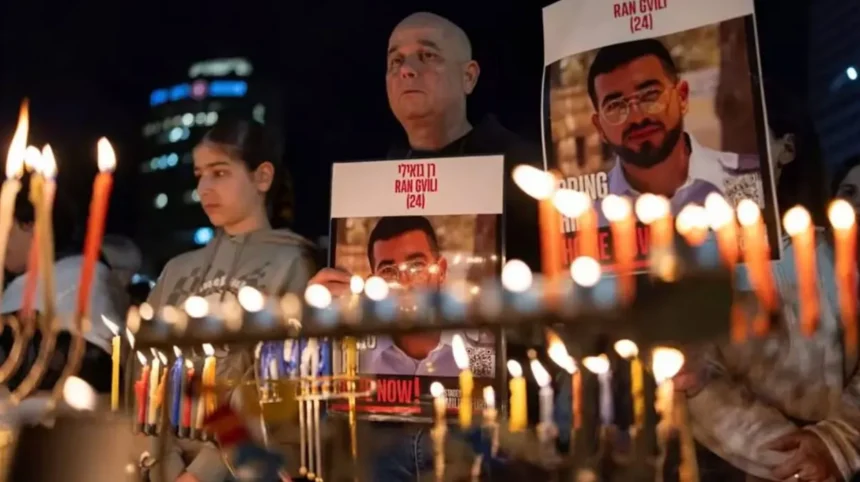
Israel has confirmed that the remains of police officer Ran (Rani) Gvili, described by officials as the last Israeli hostage in Gaza, have been recovered and returned for burial, closing a key chapter in the post–October 7 hostage crisis. According to Reuters, the Israeli military said on Monday that Gvili’s remains were identified after a recovery operation in Gaza and will be handed over to his family for interment.
As reported by Patrick Werr and additional reporters of Reuters, Gvili was taken to Gaza after he was killed during the Hamas-led assault on Israel on October 7, 2023, in which about 1,200 people were killed and around 250 others abducted. According to The Washington Post, Israeli authorities have framed the recovery as a symbolic end to a “dark and painful” period dominated by efforts to locate and bring home hostages seized that day. CNN reports that this is the first time since 2014 that Israel says no Israeli hostages remain in Gaza, whether alive or deceased.
According to the BBC, the Israel Defense Forces (IDF) said they had been searching for Gvili’s remains since a ceasefire with Hamas took effect in October as part of a wider deal on hostage releases and prisoner exchanges. The Associated Press (AP) reports that Israeli officials say the recovery clears the way for a new phase of the ceasefire arrangement, including steps tied to border arrangements and security coordination.
How Are Officials and Families Reacting?
According to the BBC, Israeli Prime Minister Benjamin Netanyahu called the recovery of Gvili’s remains “an extraordinary achievement” and said Israel had fulfilled its commitment to bring back “the very last captive.” AP reports that Israeli leaders have highlighted the operation as both a moral obligation to the families of hostages and a prerequisite for moving forward with more complex stages of the ceasefire framework.
CNN notes that Gvili was posthumously promoted to the rank of first sergeant, a decision intended to honor his service and acknowledge the ordeal faced by his family throughout his more than two-year absence. According to The Washington Post, the return of his remains has been described by Israeli commentators as both a moment of closure for the hostage families’ movement and a reminder of the traumatic impact of the October 7 attacks.
As reported by AP, relatives of other hostages and victims of the assault have reiterated calls for full transparency over the circumstances of captivity and recovery efforts, even as they welcomed the end of the active hostage file in Gaza. According to CNN, officials and families’ representatives have stressed that the focus now must also remain on long-term rehabilitation for survivors and bereaved communities.
Supporting Details and Wider Ceasefire Context
According to CNN, the October ceasefire agreement between Israel and Hamas included commitments for Hamas to return all hostages taken to Gaza on October 7, both living and deceased, in stages tied to the release of Palestinian prisoners and adjustments in military deployments. The BBC reports that under the deal, Hamas was obligated to return all remaining hostages, with Israeli and international mediators tracking compliance as a condition for moving to later phases of the accord. AP notes that by late October, 20 living Israeli hostages and the remains of dozens of others had been returned, but Gvili remained unaccounted for until the latest operation.
As reported by Reuters, the recovery of Gvili’s remains comes amid early implementation of a broader strategy backed by US President Donald Trump, which links the ceasefire to gradual security changes in and around Gaza. The BBC adds that the IDF said new intelligence enabled them to locate and recover Gvili’s remains from a cemetery area near Gaza City, described as being close to a boundary line defined in the ceasefire arrangements.
According to AP, Israeli officials have also tied the hostage file to ongoing discussions about reopening key crossings, including Rafah, under tightened security and monitoring mechanisms involving regional and international actors. CNN reports that for many Israelis, the hostage issue has shaped public debate over the conduct and goals of the conflict, with the resolution of the last case potentially shifting domestic and diplomatic priorities.
What Are the Implications and Next Steps?
According to AP, Israel has indicated that the recovery of the last hostage’s remains removes a major obstacle to entering the next, more politically sensitive phase of the ceasefire, which could involve changes in the deployment of forces and the operation of Gaza’s border crossings. Reuters reports that Israeli officials have linked progress in these steps to security guarantees, the prevention of renewed attacks, and monitoring arrangements supported by Washington and regional partners.
The BBC notes that the development also serves as a test of Hamas’s compliance with the initial hostage commitments, as mediators assess how fully the group has adhered to the agreed timelines and conditions. According to CNN, Hamas has publicly framed the return of remains, including that of Gvili, as evidence of its adherence to the first phase of the deal, while pressing Israel to implement all agreed measures without delay.
As reported by The Washington Post, the closing of the active hostage file in Gaza may shift international diplomatic attention toward longer-term questions, including governance, reconstruction, and security arrangements in and around the enclave. AP adds that further negotiations are expected to focus on sustaining the ceasefire, addressing humanitarian access, and defining mechanisms intended to prevent a return to large-scale hostilities.
The recovery and return of Ran Gvili’s remains formally ends Israel’s search for hostages in Gaza, more than two years after the October 7 attacks that reshaped the conflict. According to multiple outlets, it provides a measure of closure for his family and for many Israelis while opening a new, uncertain phase in ceasefire implementation, border arrangements, and regional diplomacy tied to the conflict’s future trajectory.

