


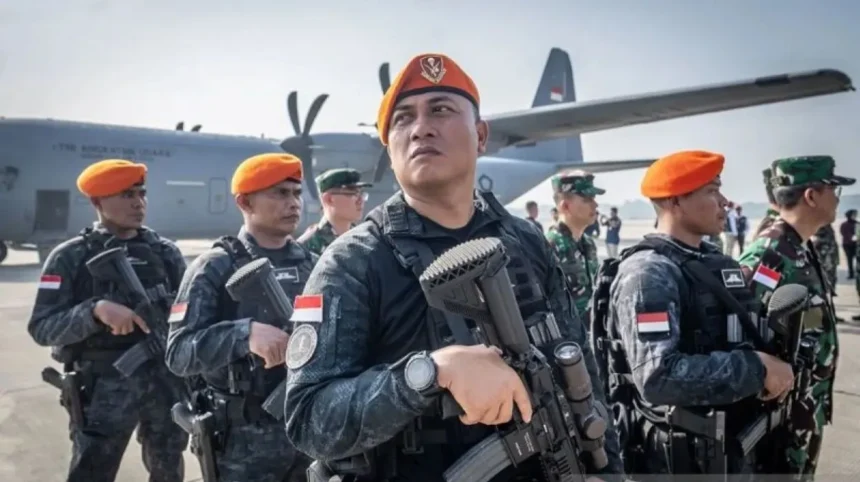
Indonesia is positioning itself as a major contributor to a proposed multinational peacekeeping force in the Gaza Strip, signaling willingness to send a large contingent of troops if an international mandate is secured. According to Reuters, Indonesian officials have discussed a force that could total about 20,000 personnel, with Jakarta estimating it could contribute several thousand soldiers as part of an international stabilization mission. As reported by Reuters, Indonesian leaders have framed the potential deployment as a humanitarian and peacekeeping effort that would require agreement from all parties and a clear mandate, likely from the United Nations Security Council.
As reported by The Diplomat’s Sebastian Strangio, President Prabowo Subianto said in 2024 that Indonesia was prepared to send “significant peacekeeping forces” to Gaza to help enforce a ceasefire, if requested by the UN. He described the mission as aimed at maintaining and monitoring any future ceasefire and providing protection and security to all sides. According to The Diplomat, Prabowo also emphasized that Indonesia was willing to evacuate and treat wounded Palestinian civilians in Indonesian hospitals, underscoring Jakarta’s focus on humanitarian support alongside any security role.
According to Reuters and other international outlets, Indonesia, the world’s largest Muslim‑majority country, has long supported Palestinian statehood and has no diplomatic relations with Israel. Indonesian officials have repeatedly condemned Israeli military operations in Gaza and stressed that any troop deployment would be contingent on an international peace framework. As reported by Reuters, Foreign Minister officials have indicated Indonesia would seek a clear legal mandate and political consensus before sending troops into an active conflict zone.
Why Are There Concerns Over Indonesia’s Military Record?
Concerns around a possible Indonesian troop deployment to Gaza center on the Indonesian military’s long‑documented human rights record in domestic conflicts. According to Human Rights Watch, the armed forces, known as Tentara Nasional Indonesia (TNI), have for decades been implicated in serious abuses in regions such as Aceh and Papua, including extrajudicial killings, enforced disappearances, arbitrary arrests, and torture. Human Rights Watch has also reported persistent impunity, noting that officers accused of abuses have frequently avoided prosecution and in some cases have been promoted.
As documented by Human Rights Watch and other rights groups, the TNI’s history in Aceh during anti‑separatist operations included reports of mass displacement, summary executions, and intimidation of local human rights activists. Rights organizations and international observers have argued that weak accountability mechanisms within the military justice system have hindered efforts to investigate and punish alleged perpetrators. These past records are prompting questions from human rights advocates about whether the same institution can credibly serve in a sensitive peacekeeping and civilian‑protection role in Gaza.
According to Human Rights Watch’s more recent assessments, Indonesia has taken some steps toward security sector reform since the fall of Suharto, but concerns remain about the military’s influence in civilian affairs and the slow pace of accountability for past abuses. Analysts cited in rights reports argue that any high‑profile overseas mission would place Indonesia’s human rights practices under renewed global scrutiny. This has fed debate among diplomats, activists, and policy experts about the safeguards needed if Indonesian forces were to deploy to Gaza.
Context and Reactions: What Are Stakeholders Saying?
According to Reuters, Indonesian officials have publicly presented the potential Gaza deployment as a way to support Palestinians and contribute to international peace efforts, a stance widely popular among the Indonesian public. Domestic support for Palestine is strong across the political spectrum, and large pro‑Palestinian demonstrations have been held in major Indonesian cities during the Gaza war. Indonesian leaders have suggested that participation in an international mission could align the country’s foreign policy principles with concrete action on the ground.
Human rights organizations, however, have reacted cautiously to the prospect of an Indonesian‑led or heavily Indonesian peacekeeping presence. As reported by Human Rights Watch in its country reports, advocacy groups stress that any deployment should be accompanied by strict vetting of personnel, robust civilian‑protection rules, and clear accountability mechanisms. They argue that without such safeguards, there is a risk that historical patterns of abuse seen in domestic operations could recur in an international setting.
Regional and international analysts have also weighed in on the political and diplomatic dimensions. According to coverage in The Diplomat, Indonesia’s interest in Gaza is part of a broader ambition to play a larger role in global security and to position itself as a key voice for the Muslim world. Commentators note that taking on a prominent role in such a high‑profile conflict zone could enhance Jakarta’s international standing, but any missteps on civilian protection or conduct by troops could quickly damage its reputation.
Supporting Details and Expert Commentary
As reported by international media, discussions of a Gaza stabilization force have emerged in the context of broader ceasefire and postwar planning efforts advanced by major powers. According to Reuters, peace proposals have envisaged an international stabilization force tasked with securing key areas, assisting reconstruction, and supporting local governance after large‑scale hostilities. In that context, countries like Indonesia and Pakistan have been mentioned as potential contributors, while some European states have signaled reluctance to send combat troops.
Experts on peacekeeping and civil‑military relations say the design of the mission will be critical. Analysts cited in global coverage stress that the rules of engagement, reporting lines, and oversight mechanisms will determine how effectively any force can protect civilians and avoid becoming a party to the conflict. They note that peacekeepers’ credibility often depends on their perceived neutrality and their adherence to international humanitarian and human rights law. For Indonesia, this would mean demonstrating that its troops are properly trained, disciplined, and accountable.
Human rights specialists point out that Indonesia already has experience in UN peacekeeping missions, including in Lebanon and the Democratic Republic of Congo, where its contingents have generally operated under UN command structures. According to Human Rights Watch and other observers, these missions have not erased concerns about the TNI’s domestic record but do provide a framework of international standards and monitoring. Some experts argue that a similar framework in Gaza, with strong external oversight, could help mitigate risks associated with Indonesia’s historical record.
What Are the Implications and Next Steps?
Key questions now focus on whether a formal international mandate for a Gaza stabilization or peacekeeping force will emerge and what role Indonesia will ultimately play. According to Reuters and other outlets, any large deployment would likely require a UN Security Council resolution or comparable international agreement, which remains uncertain amid geopolitical divisions over the Gaza conflict. The scope of the force’s responsibilities, including whether it would handle only humanitarian and reconstruction tasks or also security and policing duties, is also still under discussion.
For Indonesia, participation in such a mission could mark a significant moment in its foreign and defense policy. Analysts cited in international coverage say a deployment could showcase Indonesia’s willingness to take on difficult security responsibilities beyond its immediate region and reinforce its identity as a supporter of Palestinian rights. At the same time, it would expose the TNI to unprecedented scrutiny regarding its conduct, command discipline, and compliance with international law.
Human rights advocates and policy experts argue that the way Jakarta addresses concerns about the military’s record will shape both the mission’s legitimacy and Indonesia’s global image. They contend that transparent vetting of units, clear accountability mechanisms, and cooperation with international monitoring bodies would be essential steps if Indonesian troops deploy to Gaza. Any final decision will likely depend on the evolution of ceasefire efforts, negotiations over postwar governance, and the willingness of international actors to back a robust, civilian‑centered peacekeeping framework.
In sum, Indonesia’s potential deployment of thousands of soldiers to Gaza sits at the intersection of its long‑standing support for Palestine, its aspirations for a larger global role, and a complex legacy of military human rights concerns. The balance it strikes between these factors—through the design of any mission, the behavior of its forces, and the safeguards it adopts—will determine how the initiative is received both in Gaza and on the international stage.

