


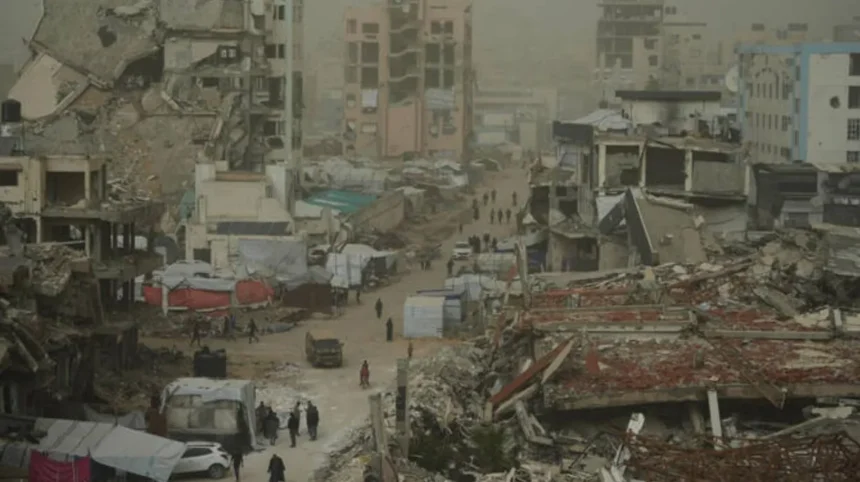
Indonesia’s military says it expects up to 8,000 troops to be ready by the end of June for a potential deployment to Gaza as part of a humanitarian and peace mission. As reported by The Associated Press, the Indonesian National Armed Forces, known as TNI, has finalized a proposed troop structure and timeline even though the government has not yet decided whether or when the deployment will take place.
Army spokesperson Brig. Gen. Donny Pramono said the force is being organized as a composite brigade that can be dispatched on short notice once the government grants formal approval. According to the Associated Press account, Pramono emphasized that the troops are prepared to be assigned “anywhere” and that readiness does not automatically mean they will depart. The deployment remains contingent on political decisions in Jakarta and on international mechanisms governing any mission to Gaza.
The planning follows a meeting held on February 12, during which Indonesian defense officials outlined the troop composition and preparatory steps. As reported by AP, Pramono stated that the schedule includes health checks and administrative preparations throughout February, followed by a force readiness review at the end of the month. Under this plan, around 1,000 personnel are expected to be ready as an advance team by April, with the remaining troops prepared by June.
Indonesian authorities have framed the prospective mission strictly in humanitarian terms. According to officials cited by AP, the proposed contribution would focus on civilian protection, medical services, and reconstruction efforts in Gaza. The Indonesian side has stressed that its troops would not engage in combat operations or actions that might bring them into direct confrontation with armed groups.
The prospective deployment is tied to a broader international effort to stabilize Gaza after years of conflict. The AP report notes that Indonesia would be the first country to formally prepare troops for the security mission envisaged under a postwar reconstruction initiative that includes a structure referred to as a Board of Peace for Gaza. This effort is linked to plans promoted by Washington for post-conflict arrangements in the territory, where a fragile ceasefire between Israel and Hamas has been in place since October 11 after two years of devastating war.
Indonesia, the world’s most populous Muslim-majority nation, does not maintain formal diplomatic relations with Israel and has long backed a two-state solution to the Israeli-Palestinian conflict. According to AP’s reporting, Indonesia has been deeply involved in humanitarian support for Gaza, including financing a hospital there. Indonesian officials argue that participation in the Board of Peace framework is necessary to defend Palestinian interests from within, especially given that Israel is part of the board while there is no direct Palestinian representation.
Indonesia also brings a long record of experience in peacekeeping operations. As reported in the AP dispatch, the country is among the top contributors to United Nations missions, including deployments in Lebanon. That background is seen in Jakarta as a basis for taking on a larger role in international stabilization efforts, including in Gaza if the political and legal conditions for such a mission are met.
What reactions and context surround Indonesia’s Gaza plan?
Reactions to Indonesia’s preparations are shaped by its longstanding support for the Palestinian cause and its domestic political dynamics. According to the Associated Press, Indonesian officials have presented the potential mission as consistent with the country’s foreign policy, which combines solidarity with Palestinians, adherence to international law, and an emphasis on humanitarian relief. They have also framed the initiative as a way to channel Indonesia’s peacekeeping experience toward a crisis that resonates strongly with public opinion at home.
Indonesia’s decision to prepare troops for a Gaza mission comes against the backdrop of sustained calls from its political and religious leaders for greater international protection of Palestinian civilians. As reported by AP, the government has repeatedly stated that any role it plays in Gaza must remain non-combat and focused on protecting civilians, providing medical support, and contributing to reconstruction. This approach aims to align the mission with Indonesia’s constitutional principles and its foreign policy doctrine of “free and active” engagement in world affairs.
The reference to the Board of Peace mechanism reflects Indonesia’s attempt to influence postwar arrangements from within an evolving multilateral framework. According to AP’s account of Indonesian officials’ statements, they believe that joining such a structure is necessary because Israel is represented in the body while Palestinians are not. By participating, Jakarta argues that it can advocate for Palestinian interests more effectively than if it remained outside, while still adhering to its policy of not recognizing Israel diplomatically.
Domestically, the Gaza conflict has remained a sensitive and closely watched issue in Indonesia, where large demonstrations and public expressions of solidarity with Palestinians have been common during previous escalations. As reported by AP, the government has tried to balance these domestic expectations with a cautious approach to any overseas military deployment, making clear that final decisions will depend on both internal political approval and international legal frameworks.
Indonesia’s emphasis on humanitarian objectives also reflects its broader positioning in global diplomacy. According to AP, the country has sought to present itself as a mediator and supporter of international peace efforts in various conflicts, often through contributions to United Nations peacekeeping missions. The potential Gaza deployment is being framed in this context, highlighting Indonesia’s role as a Muslim-majority democracy willing to participate in multilateral efforts under agreed international mandates.
Supporting details and expert perspectives
Indonesia’s military planning for Gaza builds on decades of participation in multinational peace operations. As reported by AP, Indonesia is among the top ten troop contributors to UN peacekeeping missions worldwide, with active deployments in places such as Lebanon. That experience includes working in complex environments where ceasefires are fragile and where peacekeepers must coordinate closely with humanitarian agencies and local authorities.
Experts on Indonesian foreign policy have often noted that the country uses peacekeeping contributions as a way to increase its international profile while supporting conflict resolution. According to analyses cited by AP and other international coverage of Indonesia’s role in peacekeeping, Jakarta views such missions as consistent with its constitutional mandate to contribute to world peace. The planning for a Gaza deployment fits within that tradition, while also addressing strong public concern about the humanitarian situation in the Palestinian territories.
Operationally, the creation of a composite brigade of 8,000 personnel reflects the scale of the potential mission. As detailed in AP’s reporting, the unit would undergo medical checks and administrative processing, followed by a readiness review before any deployment decision. The prospect of an advance team of about 1,000 troops being ready by April suggests that Indonesia aims to be able to move quickly if and when international and domestic approvals are granted.
The insistence that Indonesian forces would not engage in combat is consistent with prevailing norms for peacekeeping and humanitarian deployments. According to AP’s account of Indonesian officials’ statements, the mission would prioritize the protection of civilians and the provision of medical and reconstruction support. This aligns with international expectations that any external force entering Gaza should operate under clear rules of engagement and in coordination with relevant authorities to avoid escalating tensions.
From a legal and diplomatic perspective, the reference to “international mechanisms” underscores that Indonesia will not act unilaterally. As reported by the Associated Press, Brig. Gen. Donny Pramono stressed that actual deployment would depend on political decisions and broader frameworks, which could include United Nations resolutions or other multilateral arrangements. This highlights the importance of international consensus on any foreign presence in Gaza, given the territory’s sensitive status and the complex regional dynamics.
What are the implications and possible future developments?
If the deployment proceeds, Indonesia’s involvement could mark a significant step in the evolution of postwar arrangements in Gaza. According to AP’s reporting, Indonesia would be the first state to formally prepare troops for the security mission envisioned under the Board of Peace initiative associated with post-conflict reconstruction plans. This could encourage other countries, particularly from the Muslim world and the Global South, to consider contributing to a similar mission.
The readiness timeline set out by Indonesian military planners suggests that key decisions may be required in the coming months. As reported by AP, the projected readiness of an advance contingent by April and the full 8,000-strong brigade by June indicates that Jakarta anticipates potential international moves toward formalizing a mission in Gaza within that timeframe. Whether this materializes will depend on developments in the ceasefire, negotiations between Israel and Palestinian representatives, and the positions of major powers.
There are also implications for Indonesia’s relations with other states involved in Gaza diplomacy. According to AP, Indonesia’s decision to align its preparations with a broader international initiative reflects an effort to work with partners while maintaining its longstanding support for Palestinian statehood and rights. Participation in a formally structured mission could deepen its engagement with Middle Eastern and Western governments on security and humanitarian issues.
The fragile ceasefire that has held since October 11 remains a key variable. As reported by AP, the truce followed two years of devastating conflict between Israel and Hamas, and its durability will shape any future security arrangements in Gaza. If the ceasefire holds and political negotiations progress, the need for an international presence focused on protection and reconstruction could grow, enhancing the relevance of Indonesia’s planned contribution.
At the same time, Indonesian officials have underscored that their preparations are not a guarantee of deployment. According to AP’s account, Brig. Gen. Donny Pramono and other officials have stressed that readiness is a prerequisite, but final decisions depend on political approval and internationally agreed mechanisms. This cautious stance reflects both domestic sensitivities and the uncertain trajectory of diplomatic efforts around Gaza.
Indonesia’s preparation of up to 8,000 troops for a possible peacekeeping and humanitarian mission in Gaza represents one of the clearest indications to date of a country positioning itself for a role in postwar stabilization there. As reported by the Associated Press, the Indonesian military has structured a composite brigade, outlined a detailed readiness timeline, and emphasized that any mission would focus on civilian protection, medical services, and reconstruction rather than combat. The initiative builds on Indonesia’s extensive peacekeeping experience and its long support for the Palestinian cause, while remaining conditional on domestic political approval and the emergence of appropriate international mechanisms for deployment.

