

As reported by The Media Line, Gaza’s newly established National Committee for the Administration of Gaza has been presented internationally as a neutral, technocratic body tasked with overseeing reconstruction, basic services, and civilian governance after more than two years of war. According to The Media Line, the committee’s formal mandate covers security, electricity, water, healthcare, education, housing, finance, justice, religious affairs, municipal services, and tribal affairs, resembling the structure of a full civilian government.
Speaking to The Media Line, Dr. Harel Chorev of Tel Aviv University’s Moshe Dayan Center described the body as “barely a committee,” arguing that it functions more as a façade than a sovereign authority. He said the committee is effectively “a band-aid” over continued Hamas control behind the scenes, stressing that it has no realistic prospect of operating independently in a territory where Hamas remains the dominant military, political, and social actor.
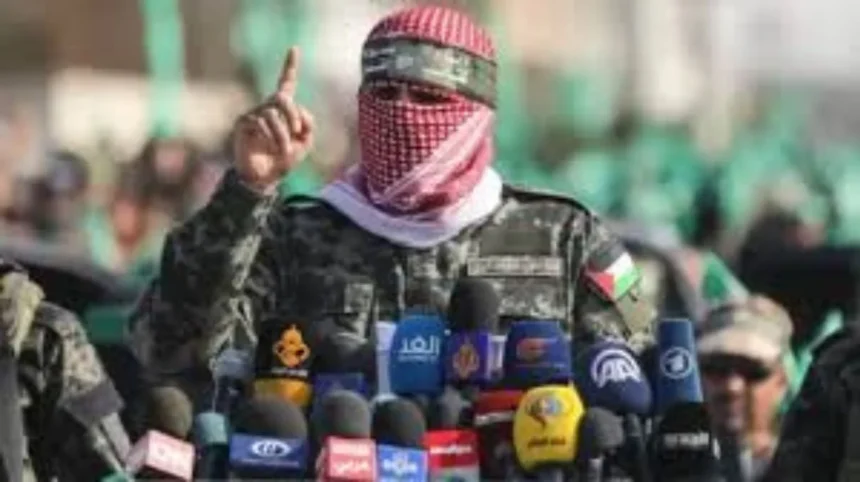
According to The Media Line, the limits of the committee’s authority became evident quickly, with Hamas reportedly demanding that at least 10,000 of its operatives be integrated into the new policing force. Chorev told The Media Line this would amount to the Izz ad-Din al-Qassam Brigades becoming legally embedded in a civilian security framework without being dismantled, reinforcing the movement’s grip on coercive power.
The Media Line further reported that Hamas prevented the appointed interior security official of the committee from entering Gaza, forcing him to operate from outside the territory. Chorev said this incident underscored that Hamas has no intention of relinquishing control, characterizing the entire arrangement as “a puppet theater” in which the committee is constrained by Hamas’ underlying command structures.
Context and Reactions: How Is Power Really Distributed?
According to The Media Line, internal documents published by Israel’s public broadcaster Kan show Hamas issuing instructions to Palestinian civil servants, directing them to follow the movement’s orders. These instructions reportedly emphasize discipline, loyalty, and coordination, suggesting that any administrative body in Gaza remains subordinate to Hamas regardless of formal labels or international backing.
The Media Line reported that symbols of authority have also become a point of contention, particularly after the committee introduced a logo resembling that of the Palestinian Authority. Israel’s Prime Minister’s Office publicly rejected the use of Palestinian Authority symbols, stating that the Authority would have no role in Gaza’s administration, highlighting the sensitivities around claims of legitimacy and representation.
Chorev told The Media Line that in Palestinian political culture, symbols play a central role in signaling legitimacy, and the committee’s logo was read in that context. At the same time, he noted that everyday concerns for Gaza’s population—such as livelihood and basic services—compete with these symbolic disputes, even as “everywhere they look, they still see Hamas,” reflecting the movement’s pervasive presence in institutions and daily life.
In a separate assessment, Kobi Michael, a senior fellow at the Misgav Institute for National Security and a senior research fellow at the Institute for National Security Studies in Tel Aviv, described the technocratic government to The Media Line as “an empty, hollow entity” as long as Hamas remains intact. Michael said the committee is currently in a largely declarative phase of announcements and meetings, lacking the enforcement power needed to alter realities on the ground while Hamas continues to reconstitute its military capabilities.
Supporting Details and Expert Commentary
As reported by The Media Line, Michael argued that the committee’s dependence on Gaza’s existing professional workforce—engineers, doctors, teachers, and municipal staff—further entrenches Hamas’ influence. He noted that reconstruction and public services necessarily rely on personnel already embedded in Hamas’ organizational and social environment, estimating that “all of these systems in the Gaza Strip will be operated by people who are affiliated or influenced or controlled by Hamas.”
The Media Line highlighted that other potential Palestinian power brokers, such as Mohammed Dahlan, have been discussed in relation to Gaza’s future political landscape. However, Michael told the outlet that Dahlan is “not a very significant player at this moment,” despite his local legitimacy and regional connections, and that the Palestinian Authority likewise “is not a player,” asserting that Hamas remains the only influential and significant actor.
According to The Media Line, Michael also pointed to public opinion as reinforcing Hamas’ dominance, saying that many young people in Gaza are willing to join the movement and fight. He noted that these youths “still believe in the armed resistance” and are “very reluctant with regard to the right of the state of Israel to exist at all,” arguing that administrative adjustments alone are unlikely to produce meaningful political change in such an environment.
The Media Line additionally reported on the past statements of Ali Shaath, the chair of the technocratic committee, drawing on material compiled by Palestinian Media Watch (PMW). PMW founder and director Itamar Marcus told The Media Line that an April 2025 podcast interview with Shaath, resurfaced after his appointment, included uncompromising language about Israel and described his participation in demonstrations and stone-throwing confrontations near Israeli checkpoints in Khan Yunis during his youth.
Implications and Future Developments: What Comes Next for Gaza’s Governance?
According to The Media Line, Shaath’s recorded comments included characterizations of Israel as “a colonialist who was planted by America and Western Europe” after the Balfour Declaration and repeated references to Israel as “the occupation,” aligning with a narrative that rejects Jewish historical ties and the state’s legitimacy. Marcus told The Media Line he views these positions as indicative of a deeper ideological framework, warning that such outlooks would shape any future governance led by Shaath even if overt rhetoric becomes more muted.
Marcus argued to The Media Line that no administrative reform in Gaza can succeed without a fundamental ideological shift in Palestinian leadership toward recognizing Jews as indigenous to the land with thousands of years of history and a right to exist alongside Palestinians. In his view, absent that change, efforts to restructure Gaza’s governance risk “wasting time” on an experiment that leaves core dynamics of the conflict untouched.
The Media Line reported that among interviewed experts, there is a divergence in how they interpret the current technocratic experiment and its trajectory over time. Chorev emphasized what he described as a phased approach, suggesting that patience and sequencing could eventually lead to more decisive moves against Hamas, framing the present arrangement as an interim stage rather than a final outcome.
By contrast, Michael told The Media Line that the framework is structurally incapable of producing real change as long as Hamas remains an organized military and governmental entity, insisting that dismantling Hamas must precede any viable new governance model. Marcus, meanwhile, warned that even a post-Hamas administration could reproduce similar patterns of conflict unless underlying ideology shifts, underscoring the depth of the challenges facing any attempt to reshape Gaza’s political order.
Taken together, the reporting by The Media Line portrays Gaza’s technocratic committee as operating within boundaries defined by Hamas’ enduring military, organizational, and ideological influence. Analysts interviewed by the outlet broadly agree that, for now, the new structure remains constrained, with the central question being whether it can evolve into a meaningful governing authority or remain, as Chorev put it, a “puppet theater” as long as Hamas holds decisive power.

