


As reported by Aboo Bakr of Countercurrents, Gaza’s post-war reconstruction is being framed through large-scale investment schemes that raise questions about who will control land, resources, and political decision-making in the territory. According to Countercurrents, these plans emerge after two years of extensive destruction and mass civilian casualties in Gaza, alongside diplomatic initiatives that link reconstruction to ceasefire arrangements and security guarantees for Israel. The article notes that proposed frameworks envision Gaza as a hub for foreign-backed infrastructure, industrial projects, and special economic zones, with private capital and external states playing a central role.
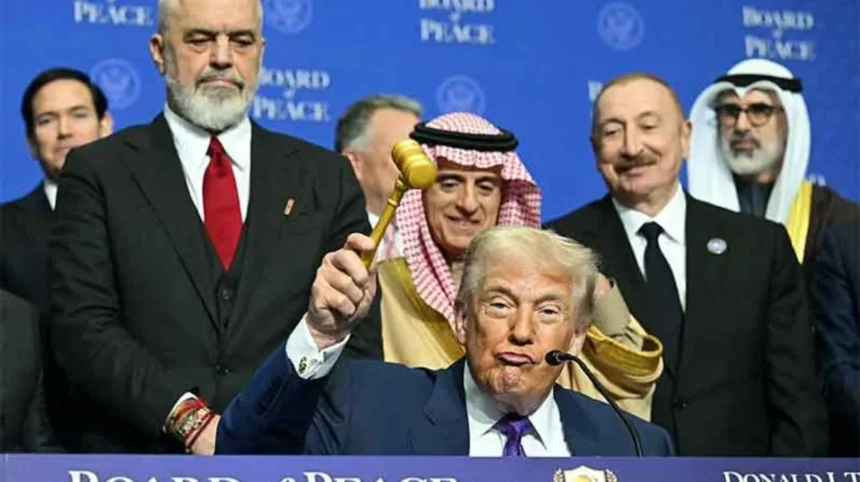
According to analysis published by the Business & Human Rights Resource Centre, one prominent reconstruction vision is built around a “Trump Economic Development Plan” that positions international corporations and investors at the heart of Gaza’s recovery. This plan, the analysis explains, is tied to a broader political initiative often referred to as a Trump Peace Plan, which has been criticized for sidelining Palestinian leadership and self-determination in defining Gaza’s future. As reported in related research by Noria Research, UN Security Council Resolution 2803 and similar proposals situate Gaza under transitional governance arrangements in which a “Board of Peace,” chaired or heavily influenced by foreign powers, would supervise reconstruction and security.
According to Noria Research, these governance schemes effectively suspend or constrain Palestinian political agency during a critical phase of territorial and economic restructuring. The research argues that policies such as extensive privatization, foreign-directed investment, and new security zones are being advanced within what scholars describe as a “disaster capitalism” framework. In this view, reconstruction is not only about rebuilding homes and infrastructure, but also about reshaping Gaza’s political economy, territorial governance, and class structures in ways that can entrench external control.
Who shapes reconstruction? Regional actors, corporations, and governance plans
As reported by Aboo Bakr of Countercurrents, post-war proposals place heavy emphasis on mobilizing capital from regional powers and international financial institutions to fund housing, ports, energy projects, and logistics corridors in and around Gaza. According to Countercurrents and policy analysis from the Policy Center for the New South, these discussions include ideas for special economic zones and cross-border industrial areas that could integrate Gaza into wider regional supply chains. Analysts note that such schemes often promise job creation and economic revival, but they also risk creating enclave economies that are disconnected from local development needs and democratic oversight.
According to the Business & Human Rights Resource Centre, one red flag in the economic vision attached to the Trump Peace Plan is the proposed creation of a Special Economic Zone in or near Gaza, with generous tax and tariff exemptions for investors. The analysis warns that these zones, as seen in other contexts, can lead to low-wage, weakly regulated labor markets that generate profits without building sustainable domestic institutions or revenue bases. The article further argues that if revenues and decision-making are concentrated in foreign hands or aligned local elites, reconstruction could entrench socio-economic inequalities rather than alleviate them.
As reported by Noria Research, Resolution 2803 and related reconstruction frameworks envision a Board of Peace structure that channels decision-making authority to international actors, consultants, and a newly empowered economic elite aligned with external priorities. According to this analysis, such arrangements risk marginalizing grassroots Palestinian organizations, unions, and civil society groups that have historically advocated for rights-based approaches to rebuilding. The research suggests that the convergence of foreign states, private investors, and local intermediaries could reconfigure Gaza’s governance into a model that resembles a “trusteeship” rather than self-determined reconstruction.
Context and reactions: Is reconstruction a path to recolonization?
Are Palestinians central to decision-making?
As reported by Aboo Bakr of Countercurrents, critics argue that Palestinians have been largely sidelined from key negotiations and planning processes that will determine Gaza’s reconstruction trajectory. According to Countercurrents, many Palestinian commentators and international legal experts contend that tying reconstruction to external security demands, including demilitarization conditions, risks legitimizing the preceding military campaign and ongoing restrictions. A separate analysis carried by Countercurrents on linking reconstruction to demilitarization notes that delayed or conditional rebuilding may fall within the scope of prohibitions under the Genocide Convention when it perpetuates destruction or displacement.
According to Noria Research, the proposed Board of Peace and security arrangements—including an indefinite Israeli “security perimeter” and a strengthened border regime—could confine or regulate the return of displaced residents and the reconstruction of certain areas. The research suggests that these measures align with a broader “settler-colonial logic of elimination,” in which territorial reorganization, security belts, and controlled mobility are used to reshape who can live where and under what conditions. Analysts cited in the study argue that, under such conditions, reconstruction could double as a mechanism for demographic engineering and long-term spatial control.
According to the Business & Human Rights Resource Centre, human rights advocates insist that any reconstruction strategy must be rooted in Palestinian leadership, meaningful consultation with affected communities, and adherence to international human rights and humanitarian law standards. The organization reports that civil society groups warn against a model that treats Gaza primarily as a risk-managed investment site, rather than as a society that requires justice, accountability, and rights-based rebuilding. The analysis emphasizes that without robust participation and oversight by Gazan institutions and communities, reconstruction risks reproducing patterns of dispossession and dependency that have characterized earlier post-war efforts.
How do experts view the economic model?
As reported by the Policy Center for the New South, Gaza’s reconstruction follows at least four previous, partially incomplete rounds of rebuilding since 2008, each constrained by repeated military escalations, blockade measures, and fragmented aid coordination. According to this policy analysis, past reconstruction efforts often suffered from delays in disbursement, restrictions on construction materials, and a lack of coherent governance frameworks capable of ensuring transparency and sustainability. Experts cited in the paper argue that repeating these patterns—while layering on more complex financial instruments and private-sector driven models—could deepen public mistrust and fuel instability.
According to Noria Research, security-heavy economic frameworks, such as those promoted by some neoconservative think tanks and policy institutes, link investor protection and capital flows to expanded policing, surveillance, and external military presence. The research notes that proposals from organizations like the Vandenberg Coalition and RAND Corporation envision multinational security forces operating closely with Israel to maintain what they describe as “stability” for investment. Analysts warn that such arrangements risk institutionalizing militarized governance structures that prioritize capital over human security and civil rights.
As reported by the Business & Human Rights Resource Centre, there is concern that investors could approach Gaza’s reconstruction as a “lucrative opportunity” underwritten by public funds, while shifting legal and reputational risks onto local communities. The analysis recalls experiences from other post-conflict and disaster-affected regions, where unregulated privatization and weak accountability mechanisms led to abuses, land grabs, and long-term socio-economic dislocation. Advocates cited in the piece argue that robust human rights due diligence, binding standards for businesses, and enforceable accountability mechanisms are necessary to ensure that reconstruction contributes to rights-based recovery rather than exploitation.
Supporting details and expert commentary
According to Noria Research, the governance arrangements envisioned in Resolution 2803 would place Gaza under a transitional system where a Board of Peace, chaired by the United States and involving other foreign actors, oversees core aspects of security, border management, and economic policy. The research argues that this board would function as a “puppet administration” if it sidelines representative Palestinian political bodies and concentrates power in foreign-appointed structures. It further notes that, under such an arrangement, reconstruction could become a vehicle for reconfiguring Palestinian political life to align with external strategic interests.
As reported in the Noria study, the resolution’s security provisions include an expanded Israeli security perimeter, new monitoring technologies at borders and crossing points, and a multinational security force tasked with enforcing movement controls. The analysis connects these measures to a broader pattern in which security infrastructures are used to facilitate investment in “stabilized” zones while restricting local residents’ mobility and political voice. Scholars cited by the research describe this as combining the logics of disaster capitalism and settler colonialism—using reconstruction to entrench new forms of control.
According to the Business & Human Rights Resource Centre, civil society actors insist that reconstruction must prioritize rebuilding public institutions and essential services, such as healthcare, education, and water and sanitation systems, rather than focusing predominantly on profit-generating projects. The analysis highlights calls for robust labor protections, fair wages, and tax regimes that provide sustainable revenue for Palestinian authorities, rather than relying heavily on tax-free zones that primarily benefit foreign companies. It also cites warnings that without accountability and inclusive governance, reconstruction funds could entrench elite networks and corruption, undermining both human rights and long-term stability.
Implications and future developments: Reconstruction or a new phase of control?
As reported by Aboo Bakr of Countercurrents, critics of current reconstruction proposals argue that the trajectory of Gaza’s rebuilding will determine whether the ceasefire period becomes an opportunity for genuine recovery or a transition into a new form of externally managed control. According to Countercurrents and accompanying legal analysis, linking reconstruction to demilitarization and externally imposed security arrangements may normalize ongoing constraints on movement, land use, and political organization. Analysts warn that, if implemented without substantive Palestinian leadership, these frameworks could resemble “recolonization” under the language of peace and development.
According to the Policy Center for the New South, avoiding the mistakes of previous reconstruction rounds will require clear governance mechanisms, transparent financial management, and coordination that respects Palestinian institutions and priorities. The policy paper emphasizes that international donors and regional partners will face sustained scrutiny over whether pledged funds translate into tangible, rights-based rebuilding on the ground. It notes that the durability of any ceasefire and political arrangements will be closely tied to whether reconstruction addresses underlying grievances, including displacement, economic marginalization, and restrictions linked to the blockade.
According to Noria Research, the implementation of Resolution 2803 and associated economic and security plans will be a key indicator of the direction Gaza’s reconstruction will take. The research suggests observers will be watching whether decision-making power shifts toward representative Palestinian bodies or remains concentrated in the Board of Peace and external actors. Analysts underline that the design of land-use plans, special economic zones, and security perimeters will shape not only Gaza’s built environment but also its political and social landscape for decades.
In sum, reporting and analysis from Countercurrents, the Business & Human Rights Resource Centre, Noria Research, and the Policy Center for the New South indicate that Gaza’s reconstruction is unfolding at the intersection of humanitarian need, geopolitical strategy, and competing economic visions. Whether this process ultimately supports Palestinian self-determination and rights-based recovery, or consolidates new structures of external control and profit-driven development, will depend on how governance, accountability, and participation are structured in the months and years ahead.

