


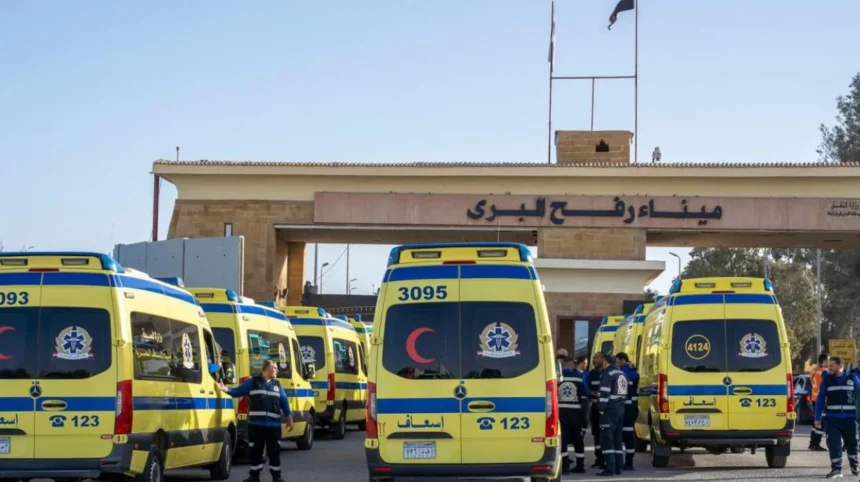
Gaza’s Rafah border crossing with Egypt reopened on Monday for limited traffic, marking a significant step in the implementation of the current ceasefire between Israel and Hamas, according to Egyptian and Israeli security officials cited by The Associated Press and other outlets. As reported by journalists for The Associated Press, the reopening is tightly controlled, with movement largely symbolic at this stage and no goods allowed to pass through. According to Reuters, Rafah, which Israel seized in May 2024, is Gaza’s main gateway to Egypt and the outside world and had been shut to most Palestinians for months.
An Egyptian official involved in ceasefire implementation talks said that around 50 Palestinians would be allowed to cross in each direction on the first day of operations, speaking on condition of anonymity to discuss the sensitive arrangements. Gaza health authorities say about 20,000 Palestinians, including many in urgent need of medical treatment, are hoping to leave the devastated territory via Rafah, while thousands stranded abroad are seeking to return home. According to AP reporting cited by multiple outlets, the current phase of the truce also includes provisions for increased humanitarian aid and a partial pullback of Israeli forces, alongside negotiations over longer‑term political and security arrangements.
What are the reactions and on-the-ground realities?
State-run Egyptian media and an Israeli security official confirmed that Rafah has reopened “for both entry and exit,” but only for a small number of people and under strict vetting procedures. According to Reuters and AP, the initial priority is medical evacuees, with hospitals in Egypt’s North Sinai and beyond preparing to receive wounded and critically ill Palestinians from Gaza. Officials and aid groups describe the crossing’s reopening as a limited lifeline rather than a full restoration of freedom of movement, given that commercial goods and large-scale relief supplies are still barred from passing through Rafah.
Egypt has repeatedly stressed that the crossing must not be used to permanently push Palestinians out of Gaza, emphasizing that Rafah should facilitate both entry and exit for residents of the enclave. According to reporting by Le Monde and other outlets, Egyptian authorities say they remain “100% ready” for medical evacuations and are coordinating with international agencies to manage patients and any accompanying family members. For many Palestinians, the partial reopening offers a rare, tightly rationed opportunity to seek treatment, reunite with relatives, or return to homes damaged or destroyed during more than two years of war.
Supporting details and broader ceasefire context
According to reporting cited by The Associated Press, the current ceasefire followed more than two years of conflict that began with the Hamas-led attack on southern Israel on October 7, 2023, and subsequent Israeli military operations across Gaza. The truce’s first phase focused on exchanging hostages held in Gaza for Palestinians detained in Israel, scaling up humanitarian deliveries, and repositioning Israeli forces away from some densely populated areas. Media coverage of US and regional diplomacy indicates that Rafah’s reopening is a key element of the second phase of a broader US‑brokered plan, which also envisions eventual disarmament of Hamas, governance by Palestinian technocrats, and the deployment of an international security presence in Gaza.
Israeli officials have previously linked the timing of Rafah’s reopening to the recovery of the remains of hostages held in Gaza, delaying earlier proposals to restore traffic through the crossing. As reported by regional outlets and international wire services, negotiations over the ceasefire and border arrangements remain fragile, with periodic allegations of truce violations and continued concerns over airstrikes and tunnel activity around Rafah. Diplomatic sources quoted by Gulf and European media say that while the current opening is limited, it is seen as a test case for more sustained movement of people and, eventually, goods if the truce holds.
What are the implications and possible next steps?
According to Reuters and AP, the immediate impact of Rafah’s reopening will be measured by how many medical evacuees and vulnerable civilians can leave Gaza safely in the coming days and whether those stranded abroad are permitted to return without new disruptions. Security officials quoted in international media say that further easing of restrictions at Rafah will depend on the durability of the ceasefire, progress on hostage-related issues, and agreement on who controls and monitors the crossing.
Analysts and diplomats cited in regional coverage note that a fuller reopening of Rafah, including the flow of goods, would be crucial for Gaza’s reconstruction and for any long-term political settlement, but warn that these steps remain contingent on sensitive negotiations over Hamas’s future role and international security arrangements. In the short term, humanitarian agencies are expected to push for expanded medical evacuations and longer daily opening hours, while Egypt, Israel, and international mediators assess whether the limited border traffic can proceed without triggering renewed violence.
The reopening of Gaza’s Rafah crossing with Egypt, even under strict limits, marks a notable but cautious step in advancing the truce and addressing urgent humanitarian needs, offering a narrow corridor for movement as broader questions over governance, security, and reconstruction remain unresolved.

