


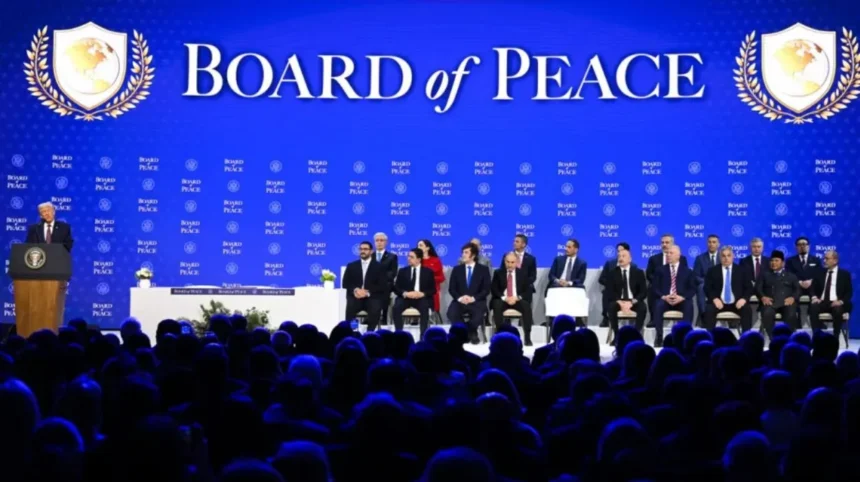
As reported by Dr Mustafa Fetouri of Middle East Monitor, the Board of Peace was launched by United States President Donald Trump as part of a post-war framework for the Gaza Strip while the United States and Israel wage a large-scale military campaign against Iran that began on 28 February 2026. According to Middle East Monitor, Fetouri argues that the initiative has been presented as a mechanism to stabilise and reconstruct Gaza, but is unfolding in parallel with continued Israeli military operations in the enclave and regional escalation with Iran.
According to reporting by Zvika Klein in the Jerusalem Post, the Board of Peace is already operating as an official entity with an initial budget of between 60 million and 70 million dollars, issuing tenders for refugee villages in Gaza, a base for international troops and a management headquarters in Israel. The Jerusalem Post notes that five countries have agreed in principle to contribute troops to an International Stabilization Force intended to secure Gaza, support reconstruction and eventually enable an Israeli withdrawal, under Trump’s broader Gaza plan.
As reported by Reuters, envoys from Trump’s Board of Peace have held talks with Hamas representatives in Cairo aimed at safeguarding a fragile Gaza ceasefire, even as US-Israeli strikes on Iran continue and border restrictions affect the territory. Reuters adds that Hamas officials have warned the Board that Israeli restrictions introduced since the Iran campaign began could undermine the group’s previous commitments under the ceasefire arrangements linked to Trump’s plan.
How has the initiative been portrayed and criticised?
As reported by Middle East Monitor, Fetouri contends that despite its title, the Board of Peace has been closely associated with military and security structures, including the proposed international troop presence and continued Israeli control over large parts of Gaza. According to Middle East Monitor’s description of the analysis, Fetouri argues that the Board functions less as a neutral reconstruction mechanism and more as an instrument aligned with US and Israeli strategic goals in Gaza and the wider confrontation with Iran.
According to the Jerusalem Post, Israeli officials have framed the same initiative as an opportunity to weaken Hamas by leveraging Iran’s reduced regional capacity, saying that shifting “geopolitical powers” in the Middle East could help force the group to disarm. Reuters reports that Hamas and associated Palestinian officials, by contrast, fear that Israel is using the war with Iran to evade obligations under Trump’s Gaza plan while maintaining restrictive measures on Gaza’s borders.
Middle East Monitor reports that Fetouri characterises the Board’s public diplomacy as emphasising peace, reconstruction and international involvement, while critics see it operating alongside intensified military action in both Gaza and Iran. According to Middle East Monitor’s coverage, the author suggests that this contrast between rhetoric and operational context has led opponents to describe the Board as a tactical smokescreen for an expanding regional war.
Supporting details and expert commentary
As reported by the Jerusalem Post, sources close to the initiative say the Board of Peace has progressed beyond diplomatic planning into early implementation, with tenders already issued and organisational structures in place. The same report notes that funding is said to come from regional entities rather than directly from the US or Israel, adding another layer of complexity to assessments of the Board’s independence and intentions.
According to Reuters, the Iran conflict has repeatedly disrupted diplomatic efforts around Gaza, including meetings that were scheduled between Hamas and mediators from Egypt, Qatar and Turkey, with some sessions postponed or cancelled after air strikes began. Reuters cites Palestinian officials who say that the group’s willingness to abide by ceasefire understandings may be affected by how Israel applies border and security measures during the Iran campaign.
Middle East Monitor reports that Fetouri situates the Board of Peace within a broader pattern in which large-scale military operations are accompanied by diplomatic or institutional initiatives that are officially framed as peace-building steps. According to Middle East Monitor’s summary of his argument, such initiatives can, in critics’ view, provide political cover and international legitimacy for ongoing or future military action in Gaza and against Iran.
What are the implications and possible future developments?
According to the Jerusalem Post, officials involved in Trump’s Gaza plan believe that the war with Iran could accelerate one of the most sensitive components of the initiative: the disarmament of Hamas militants in exchange for amnesty and a staged Israeli military withdrawal. Reuters reports that the durability of the current Gaza ceasefire and the role of the Board of Peace in enforcing or revising its terms will depend on decisions taken by Hamas, Israel and regional mediators as the Iran conflict evolves.
As reported by Middle East Monitor, Fetouri warns that if military escalation in Iran and Gaza continues under the umbrella of the Board of Peace, regional distrust of US-led frameworks may deepen, affecting future diplomacy and reconstruction efforts. According to Middle East Monitor’s account, the analysis suggests that the way the Board operates in the coming months—whether it prioritises demilitarisation, reconstruction or continued coordination with military campaigns—will shape perceptions of whether it represents a genuine peace mechanism or a tactical instrument in a wider war.
Without adopting the author’s conclusions, available reporting indicates that the Board of Peace currently sits at the intersection of Trump’s post-war Gaza vision, active US-Israeli military operations against Iran and contested efforts to stabilise Gaza under international oversight. Verified accounts from Middle East Monitor, the Jerusalem Post and Reuters show that while the Board advances tenders and diplomatic contacts, it does so amid continuing air strikes, shifting ceasefire calculations and competing regional narratives about whether it serves peace or war.

