
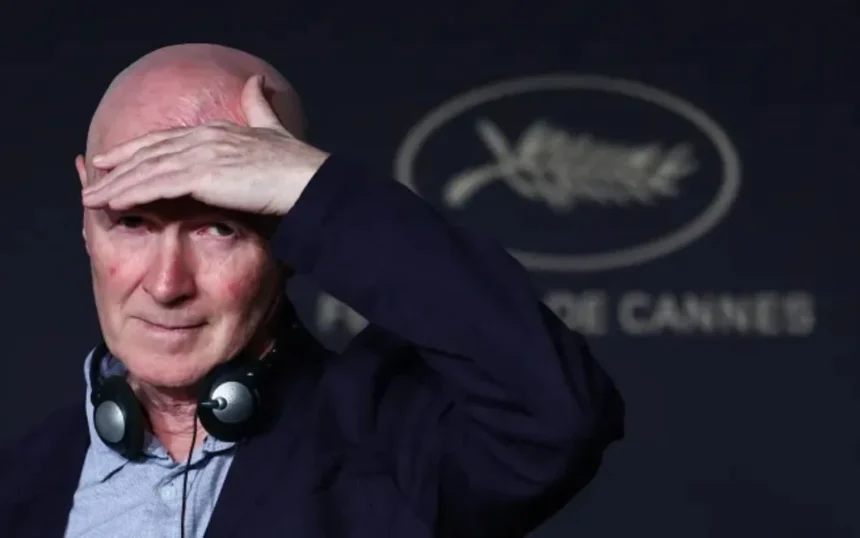
A member of the main competition jury at the 2026 Cannes Film Festival has publicly criticized Hollywood for allegedly blacklisting actors who have spoken out against Israel’s war in Gaza. As reported by Al Jazeera, screenwriter Paul Laverty, a two‑time Cannes winner best known for his collaborations with director Ken Loach, used the festival’s opening‑day jury press conference to condemn what he described as an industry‑wide boycott of performers who oppose the conflict. Laverty singled out Academy Award‑winning actor Susan Sarandon, Oscar‑nominated actor Javier Bardem, and actor Mark Ruffalo, saying they had been sidelined in Hollywood because of their stance on Gaza.
According to Al Jazeera and multiple entertainment outlets, Laverty’s remarks came moments after he praised the festival’s official poster, which prominently features Sarandon, Bardem, and other artists. He then noted that the same individuals whose images glorify Cannes had been effectively blacklisted in parts of the Hollywood system for advocating for a ceasefire and criticizing the killing of women and children in Gaza. Laverty told reporters that there was a “shameful” contradiction between celebrating those actors on the festival’s poster and punishing them professionally for their views back in the United States.
What did the Cannes juror say?
Laverty’s comments were carried live by Al Jazeera’s news‑feed and later corroborated by Variety and other entertainment‑industry outlets. As reported by Al Jazeera’s coverage, he ended the press conference with an unsolicited statement in which he said, “Shame on Hollywood people who do that,” referring to the actors’ alleged blacklisting. Laverty added that he held “total solidarity” with Sarandon, Bardem, and Ruffalo, calling them “the best of us” and wishing them luck, before joking that the festival might “get bombed” for displaying their faces on the official poster—a remark he framed as dark humor about the political sensitivities surrounding Gaza.
Several outlets, including the Hindustan Times and NDTV, report that Laverty’s intervention drew applause from members of the press and fellow jury members. The coverage notes that his remarks were not part of the scheduled questions and answers, but rather a closing add‑on, which he introduced by saying, “Can I just leave one tiny thing?” This phrasing, repeated by multiple outlets, suggests that Laverty’s comments were a deliberate, last‑minute denunciation of what he perceives as censorship and professional retaliation in the entertainment‑industry mainstream.
What evidence supports the boycott claims?
Reports by Al Jazeera and other outlets refer back to earlier public statements by Susan Sarandon herself. As reported by Al Jazeera and the Hindustan Times, Sarandon said in a recent interview that she had been fired by her agency “specifically for marching and speaking out about Gaza, for asking for a ceasefire.” She described losing representation as a professionally isolating experience, and characterized it as a direct consequence of her political activism. The coverage notes that Sarandon has been an outspoken critic of the Gaza war and has participated in protests calling for an end to Israeli military operations in the enclave.
In addition to Sarandon, Laverty also invoked Javier Bardem and Mark Ruffalo, both of whom have previously signed public letters condemning the humanitarian crisis in Gaza and calling on the film industry to break its silence on the conflict. As reported by Al Jazeera and other outlets, more than 370 actors and filmmakers, including Bardem and Ruffalo, signed a 2025 Cannes‑related letter criticizing what it described as “genocide” in Gaza and Israel’s killing of Palestinian civilians, including Gaza‑based photojournalist Fatima Hassouna. The letter, which circulated within the festival that year, was widely covered by international media and is cited as evidence of the actors’ public commitment to Gaza‑related causes.
What are industry observers saying?
U.S. entertainment trade outlets have echoed the notion that some actors have faced professional repercussions for their Gaza‑related statements. As reported by Variety, industry insiders have described cases where outspoken actors have seen roles dry up, agencies drop clients, or studios quietly avoid casting choices that might be seen as “politically risky.” However, the same outlets note that Hollywood rarely makes such decisions explicit, and that many actors must rely on anecdotal reports and personal accounts to confirm that they have been blacklisted. Laverty’s comments at Cannes are notable precisely because they bring that informal, often unspoken, system of professional retaliation into an open, high‑profile forum.
Broader coverage by outlets such as The Wrap and NDTV observes that Laverty’s stance fits into a larger pattern of cultural figures at Cannes challenging the entertainment‑industry‑status‑quo on Gaza. The coverage notes that in 2025, several high‑profile actors, including Joaquin Phoenix, Pedro Pascal, Juliette Binoche, and others, added their names to a letter condemning the film industry’s silence on Gaza and accusing Israeli institutions of complicity in what they called “genocide.” Those earlier interventions, combined with Laverty’s 2026 remarks, suggest that a segment of the global film‑community is increasingly willing to push back against what it sees as professional punishment for Gaza‑related activism.
How is Hollywood responding?
Responses from Hollywood studios and talent agencies have been muted and indirect. As reported by Al Jazeera and other outlets, major studios have not publicly acknowledged any formal policy of blacklisting actors over Gaza‑related statements, and representatives have typically declined comment or pointed to internal privacy rules. Some industry lawyers and agents, quoted anonymously in entertainment‑news reports, say that casting decisions are influenced by a range of factors, including marketability, audience demographics, and risk‑aversion, but insist that no official directive exists to target activists. At the same time, they acknowledge that “toxicity” surrounding certain political stances can make some executives reluctant to hire or promote outspoken figures, especially in highly polarized environments.
Meanwhile, advocacy groups aligned with Palestinian rights and artists’‑rights organizations have welcomed Laverty’s remarks. As reported by Al Jazeera and related coverage, some of these groups argue that the Gaza war has become a litmus test for censorship and double standards in Hollywood, noting that actors who support Israeli government policies are rarely subjected to the same level of professional backlash. The groups highlight that Laverty, as a two‑time Cannes‑winning screenwriter and current jury member, wields significant cultural credibility, and that his public denunciation of the blacklisting pattern may encourage other creatives to speak out more openly.
What are the wider implications for the film industry?
The controversy underscores growing tensions between artistic freedom, political speech, and commercial pressures in global cinema. As reported by Al Jazeera and other outlets, filmmakers and actors at the 2026 festival have repeatedly referenced Gaza in interviews and Q&A sessions, even as the festival’s organizers have sought to maintain a careful balance between artistic expression and political neutrality. Laverty’s decision to explicitly nameNames such as Sarandon, Bardem, and Ruffalo and to accuse Hollywood of shunning them for their Gaza‑related views injects a direct political critique into the usually glamorous, escapist context of the red carpet.
Media‑analysis pieces in outlets such as The Wrap and NDTV suggest that Laverty’s remarks could influence casting patterns and agency decisions over time, especially if more jurors, directors, and actors follow his lead in speaking out. The coverage notes that Cannes, with its global audience and star‑studded lineup, serves as a powerful platform for setting moral and ethical norms within the film world. Laverty’s statement may push more industry‑insiders to question whether blacklisting actors over Gaza‑related statements is compatible with the values of free expression that the festival claims to uphold.
In practical terms, Laverty’s comments at Cannes are unlikely to reverse any individual actor’s professional situation overnight, but they do formalize a public record of alleged retaliation for Gaza‑related activism. As reported by Al Jazeera and supporting outlets, his denunciation of the Hollywood boycott of actors such as Susan Sarandon, Javier Bardem, and Mark Ruffalo has been widely circulated across social‑media and entertainment‑news channels, bringing renewed attention to claims that the U.S. film‑industry establishment has punished performers who oppose the Gaza war. The incident also highlights the extent to which the Gaza conflict continues to shape careers, alliances, and reputations far beyond the battlefield, even on the gilded steps of the Palais des Festivals.
Love how easy it is to access this on my phone. The app is lightweight and the slots are super addictive. slotphpapp is my go-to mobile spot.
I feel like my luck has finally changed since I started playing here. The games are fun and the community is great. Check out lucky33gameonline