


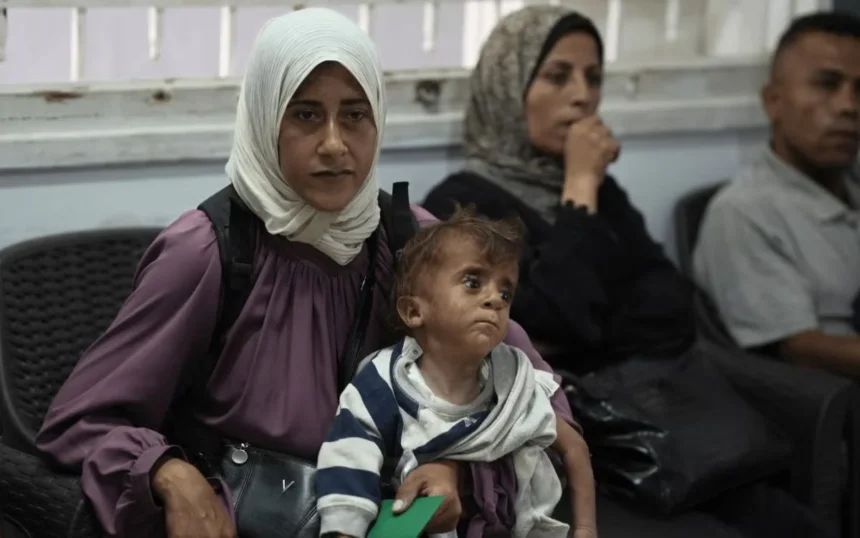
An aid‑group analysis released in early May 2026 warns that Israel’s restrictions on food and humanitarian aid have triggered a rapidly worsening malnutrition emergency in the Gaza Strip, with especially severe consequences for pregnant women and newborns. As reported by Al Jazeera, the medical‑humanitarian organization Doctors Without Borders (Médecins Sans Frontières, or MSF) describes the crisis as “completely artificial,” noting that malnutrition in Gaza was virtually absent before the large‑scale military campaign that began in October 2023. The organization attributes the current situation to a systematic blockade of commercial goods and humanitarian supplies, combined with insecurity and the destruction of civilian infrastructure.
According to MSF, its medical teams first began observing cases of child malnutrition in Gaza in January 2024, just three months into the conflict. The group’s latest report, posted on its official website in early May 2026, draws on data collected between November 2023 and June 2025 at four health facilities that MSF either managed or supported in Gaza. The analysis indicates that restrictions on food, water, and medicine, together with widespread displacement and the collapse of local markets, have led to alarmingly low caloric intake and a sharp rise in undernutrition among vulnerable groups.
How did the crisis unfold?
MSF’s analysis highlights that the Gaza Strip entered the conflict with a functioning, though constrained, food‑security and health system, where generalized malnutrition was not a major public‑health problem. According to MSF’s medical referent for emergencies, Dr. Rocío Panigua, the current malnutrition emergency is directly linked to Israel’s maintenance of strict controls on the entry of goods and fuel, as well as repeated attacks on civilian infrastructure. She stated that the “systematic blockade of humanitarian aid and commercial goods, coupled with insecurity, has severely limited access to food and clean water,” turning what was once a relatively stable situation into a protracted malnutrition crisis.
Al Jazeera, citing MSF’s findings, reports that insecurity, displacement, and the destruction of homes and markets have forced many families to rely on limited, poor‑quality rations or to skip meals altogether. The group notes that many households are now surviving on a narrow diet of flour, sugar, rice, and occasionally canned food, with little access to fresh produce, dairy, or protein sources. In some areas, cooking has become extremely difficult due to fuel shortages and the targeting or damage of bakeries, further reducing the ability of families to prepare even basic meals.
What do the medical findings show?
The core of MSF’s update is a detailed look at the impact of malnutrition on pregnant and breastfeeding women and their babies. According to the organization, data from two hospitals in southern Gaza show that over half of the pregnant women treated at those facilities were malnourished at some point during their pregnancies, and more than a quarter remained malnourished at the time of delivery. The analysis further indicates that among babies born to these malnourished mothers, fully 90 percent were premature and 84 percent had low birth weight, both of which are strong risk factors for neonatal mortality and long‑term developmental problems.
As reported by Al Jazeera, MSF flagged several alarming trends, including increased rates of miscarriage, premature birth, and infant mortality linked with maternal malnutrition. The group notes that low‑birth‑weight infants are at far higher risk of dying in the first weeks of life, as well as of experiencing stunted growth and impaired cognitive development if they survive. The World Health Organization has previously stated that low‑birth‑weight babies are roughly 20 times more likely to die in infancy than heavier infants, a statistic that MSF cites to underscore the severity of the situation in Gaza.
Why are women and infants most affected?
MSF’s analysis emphasizes that pregnant and breastfeeding women are uniquely vulnerable to the effects of food shortages because their nutritional needs are higher, and any deficit is often passed on to the fetus or infant. According to the organization, when women do not receive enough calories, protein, and essential micronutrients, they are more likely to miscarry, deliver prematurely, or give birth to underweight babies. The report also notes that many pregnant women in Gaza are forced to dilute infant formula or breastfeed children beyond recommended ages because there is simply no alternative source of nutrition, further straining both mothers and babies.
Several humanitarian‑news outlets, including Al Jazeera and TRT World, report that MSF teams have observed women skipping meals so that their children or elderly relatives can eat, a pattern that compounds their own nutritional deficits. The organization also documents cases where women in advanced pregnancy are too weak to walk or perform basic household tasks, yet have no access to specialized prenatal nutritional support because health‑system capacity has been eroded by the conflict. In some cases, MSF notes, women have been forced to deliver in suboptimal conditions, such as in tents or overcrowded shelters, where postnatal nutrition and newborn care are extremely limited.
What are aid groups and experts saying?
MSF has been explicit in its characterization of the crisis, stating that the malnutrition emergency in Gaza is not a natural disaster but a man‑made one. As reported by Al Jazeera, Dr. Rocío Panigua told journalists that “the malnutrition crisis is completely artificial,” and that before the conflict it “was virtually non‑existent.” She added that the situation is the result of deliberate policy choices that have restricted the flow of food and aid, disrupted markets, and damaged health‑care facilities, rather than of any inherent inability of the territory to feed its population.
Other outlets covering the MSF report, including Arab News and TRT World, note that the group has urged international actors to hold Israel accountable for the humanitarian consequences of its restrictions. MSF has called for the immediate and sustained opening of humanitarian corridors, the protection of civilian infrastructure, and the resumption of a reliable supply of food, fuel, and medical supplies needed to treat malnutrition. The organization warns that without these measures, the current generation of children born in Gaza will face lifelong health and cognitive impairments, with ripple effects on the territory’s long‑term development.
What are the wider humanitarian implications?
The expanding malnutrition crisis in Gaza has become a central concern for several UN agencies and international aid groups. As reported by Al Jazeera, the World Health Organization and other UN bodies have echoed MSF’s alarm about the rising number of low‑birth‑weight and premature infants, and have called for increased shipments of therapeutic foods and micronutrient supplements. The UN’s humanitarian-coordination reports for 2025 and 2026 describe Gaza as one of the most acute food‑security emergencies in the world, with a large proportion of the population dependent on international aid for basic sustenance.
MSF’s analysis also notes that the collapse of local markets and the disruption of agricultural activity have made it difficult for Gaza to recover even if hostilities were to ease. The organization warns that years of displacement, limited access to seeds and tools, and the contamination or destruction of farmland have eroded Gaza’s ability to produce food domestically, deepening its dependence on imports. In the absence of durable ceasefire arrangements and unhindered humanitarian access, MSF and other agencies concerned that the malnutrition crisis will not only persist but worsen, with higher rates of child stunting and adult chronic illness.
What happens next for Gaza’s health system?
Looking ahead, MSF and other health‑cluster partners have outlined several priorities to address the malnutrition emergency. According to MSF’s report and supporting coverage by Al Jazeera and Arab News, those priorities include expanding therapeutic‑feeding programs for pregnant women and children, increasing the availability of ready‑to‑use therapeutic foods and micronutrient supplements, and strengthening community‑based nutrition‑screening networks so that cases can be detected early. The organization also calls for the protection and repair of water and sanitation systems, arguing that safe water and hygiene are as essential as food for preventing malnutrition and related diseases.
At the same time, aid groups warn that any meaningful improvement will depend on political and security conditions. As reported by TRT World and other outlets, MSF insists that the most critical step is to lift or significantly ease Israel’s restrictions on food and aid, and to ensure that humanitarian convoys can move safely and predictably across Gaza. The group notes that even when some aid does enter, distribution is often hampered by checkpoints, insecurity, and the destruction of roads and warehouses, which further delays the delivery of life‑saving supplies to the most vulnerable.
In practical terms, MSF’s May 2026 update confirms that tens of thousands of people in Gaza are now living in conditions that make sustaining adequate nutrition nearly impossible, particularly for pregnant and breastfeeding women and their infants. The organization’s data show that more than half of the pregnant women treated at two hospitals were malnourished, and that the majority of their babies were born prematurely and underweight. With the blockade and fighting still restricting food and aid flows, MSF and its partners warn that the “manufactured” malnutrition crisis will continue to deepen, with long‑term physical, cognitive, and socioeconomic consequences for Gaza’s population and health‑care system.
Finally found a site that actually works smoothly. The login process is super fast and I didn’t encounter any glitches. Definitely a top choice for anyone looking for a reliable experience. Check out youwinlogin
Great vibes and even better rewards. I feel like I actually have a chance to win big here compared to other sites. krlucklandcasino is the real deal.
Quick and easy access to my account every time. The login process is seamless at ggg777login, which is exactly what I need.
Really enjoy the VIP feel they provide. It makes the whole gaming experience much more exciting. Check out 777betvipfun
Best betting odds I have come across in a long time. The market options are vast and the layout is very clean. I highly recommend brbetinacional to everyone.
Great vibes and easy registration process. I really appreciate the transparency they have over at phfj777.
Finally found a site that doesn’t lag during peak hours. The login process is quick and the games are top notch. Great job on the optimization! jiligo88login