


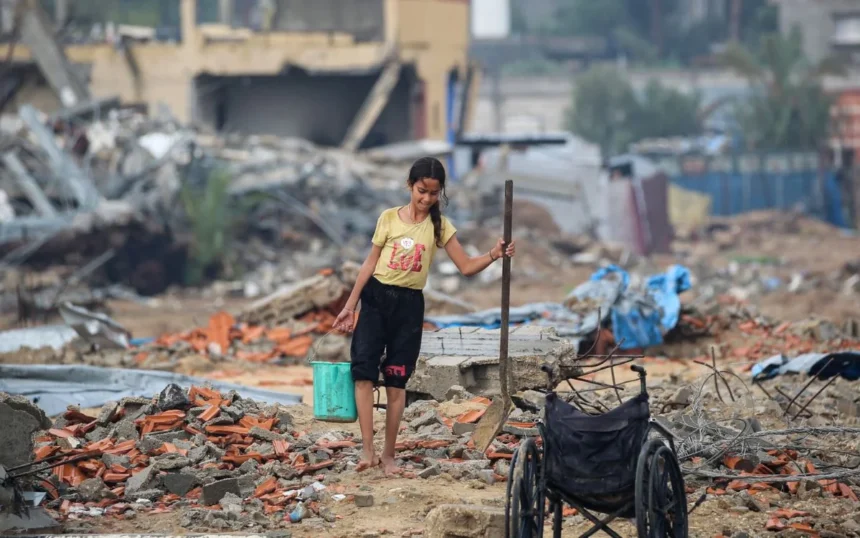
The Guardian’s editorial board has argued that the so‑called ceasefire in the Gaza Strip is largely a fiction, asserting that Israel has never genuinely stopped killing Palestinians despite repeated declarations of truces overseen by the U.S.-led Board of Peace. According to the newspaper’s 7 May 2026 editorial, the Trump‑chaired Board of Peace has indicated it will not hold Israel to the original ceasefire terms unless Hamas agrees to a specific disarmament framework. The paper cites a document accessed by the Times of Israel showing that a correspondence from Nickolay Mladenov, the Board’s high representative for Gaza, and senior U.S. official Aryeh Lightstone told Palestinian technocrats that Israel would not be required to cease military attacks or facilitate humanitarian aid if Hamas rejects the planned second‑phase disarmament plan.
The Guardian notes that, in practice, this has allowed Israel to continue aerial bombings, artillery fire and targeted raids in Gaza even after the formal ceasefire took effect. The paper points to figures from the Gaza Government Media Office, which has documented hundreds of alleged ceasefire violations by Israeli forces, resulting in the deaths and injuries of hundreds of Palestinians, including many children. The editorial repeats data from Al Jazeera and other outlets indicating that Israeli forces have carried out thousands of violations since the ceasefire announcement in October 2025, including repeated invasions of residential areas, strikes on homes and infrastructure, and demolitions of properties beyond the “yellow line” that purportedly marks the ceasefire boundary.
How the Board of Peace is shaping Gaza’s conflict
The Guardian’s analysis focuses on the role of the U.S.-led Board of Peace in formalising this permissive security environment. The paper reports that the Board of Peace has made clear it will not treat Israel as bound to the initial ceasefire commitments if Hamas does not accept the disarmament structure laid out in the so‑called “phase two” plan. The paper quotes the Board’s internal correspondence as signalling that, under those conditions, Israel would still be allowed to conduct attacks and could restrict the flow of aid into Gaza. The Guardian characterises this arrangement as effectively undermining the ceasefire’s binding nature and turning it into a flexible security framework that shifts responsibility for any collapse back onto Hamas.
The editorial also highlights that Israeli support for armed groups opposing Hamas inside Gaza does not promote disarmament or stability. The paper argues that such backing deepens factional violence and creates an environment in which any unified security structure is harder to build. The Guardian says that, taken together, these elements—Israeli military operations, the Board of Peace’s conditional stance and the encouragement of rival armed factions—make the term “ceasefire” a misleading label for a reality in which killings continue on a near‑daily basis. The paper notes that senior Israeli officials have not denied the continued strikes, instead framing them as necessary security measures against residual militant activity.
Reactions from Gaza and international observers
The Guardian’s editorial draws on reporting from Gaza‑based government bodies and independent media outlets to underscore the impact of ongoing strikes on civilians. Quoting the Gaza Government Media Office and Al Jazeera, the paper points out that local authorities have repeatedly accused Israel of systematically violating the ceasefire, killing hundreds of Palestinians and injuring many more in the months after the truce was announced. The paper describes how these continued attacks have kept Gaza in a state of partial emergency, with residents confined to roughly 42 percent of the Strip behind the “yellow line” and living under persistent fear of renewed full‑scale bombardment.
The Guardian also cites United Nations and humanitarian‑monitoring figures indicating that thousands of homes have been damaged or destroyed since the ceasefire, even as international agencies describe the territory as still devastated by earlier bombardments. The editorial notes that eyewitness accounts and local media reports describe children among the dead, hospitals struggling to treat the wounded, and families displaced yet again after being told fighting would end. The paper frames these conditions as evidence that the ceasefire has failed to produce the promised return to normal life, even as global leaders continue to refer to the situation as a truce or “postwar” phase.
Supporting expert commentary on accountability and double standards
The Guardian’s editorial highlights broader concerns about accountability and double standards in how international actors respond to violence linked to Gaza. The paper reports that Israel has moved quickly to investigate and punish soldiers accused of disrespecting Christian religious sites during operations in Lebanon, invoking the need to uphold moral and legal standards. By contrast, the Guardian notes that there has been little or no meaningful accountability for abuses, killings or disappearances of Palestinians in Gaza, even as international organisations document repeated Israeli violations of ceasefire and humanitarian rules. The paper questions why similar public outrage and institutional responses have not materialised in Gaza.
The editorial also references commentary from human‑rights and legal experts cited by the newspaper and other outlets, who argue that repeated violations of the ceasefire erode the norms of international humanitarian law. These experts are quoted in related reporting as saying that treating ceasefires as optional or conditional sets a dangerous precedent for future conflicts, where powerful states may similarly couch ongoing attacks as “self‑defence” or security exceptions. The Guardian notes that this pattern weakens the credibility of international institutions and threatens the legitimacy of any future peace or security framework in Gaza and the wider region.
What this means for U.S. and European policy
The Guardian’s editorial turns its critique directly toward the United States and European governments, arguing that they have effectively turned their backs on the ongoing violence in Gaza. The paper points out that President Donald Trump appears focused primarily on Iran and its impact on his domestic standing, and that he is unlikely to intervene in Gaza unless an escalated Israeli offensive threatens his broader regional calculations. The editorial notes that Europe, while voicing concern, has not translated its moral condemnations into concrete measures, such as suspending trade agreements or imposing significant sanctions on Israeli officials linked to ceasefire violations.
The Guardian quotes its own reporting and that of other outlets to argue that allies must stop treating Israel’s actions in Gaza as a secondary issue and must instead treat any further escalation as unacceptable. The paper warns that if major powers continue to shield Israel from consequences, the current ceasefire framework will remain fragile and the risk of a return to widespread, unchecked destruction will grow. The editorial urges governments to convert their public statements into tangible steps, including binding conditions on arms sales, aid flows and political support until Gaza’s truce violations are genuinely halted and humanitarian access is secured.
How this affects the prospects for lasting peace
The Guardian’s analysis concludes that the current situation in Gaza under the Board of Peace‑overseen truce is unlikely to produce a stable or lasting peace unless the killing stops and accountability is enforced. The paper argues that as long as Israel can continue lethal operations under the cover of a conditional ceasefire, any disarmament or security‑state project for Gaza will be built on an unstable foundation. The editorial warns that rival armed groups, encouraged or tolerated by multiple actors, will be able to exploit this environment, making it harder to establish a unified, professional security force or civilian administration acceptable to both Palestinians and the international community.
The Guardian also notes that the longer this pattern continues, the more disillusioned Gaza’s population may become with external actors, including the United States, the European Union and the United Nations. The paper cites growing frustration among Palestinian residents, who say they are told the war is over while they still see Israeli strikes and experience ongoing restrictions on movement and aid. The editorial contends that without a clear break with this status quo, the label “ceasefire” will remain a fiction, and any attempt to present Gaza as a postwar success story will fail to match the reality on the ground. The paper calls on allies to reject further escalation, to enforce the ceasefire properly and to ensure that Israel is held to the same standards expected of any other state violating international humanitarian law.
I won a decent amount yesterday and the withdrawal was processed almost instantly. Total game changer. Visit phjili988 for the win.
The data and insights here are incredibly helpful for my strategy. It is a must visit for anyone serious about their game. Check idpaitoangka
I appreciate the transparency and the fair odds on this platform. It makes the betting experience much more enjoyable. Definitely trust 45555bet.
The bonuses are actually legit here. I managed to hit a decent win last night and the withdrawal was super quick. phjiliboss is my new favorite spot.