


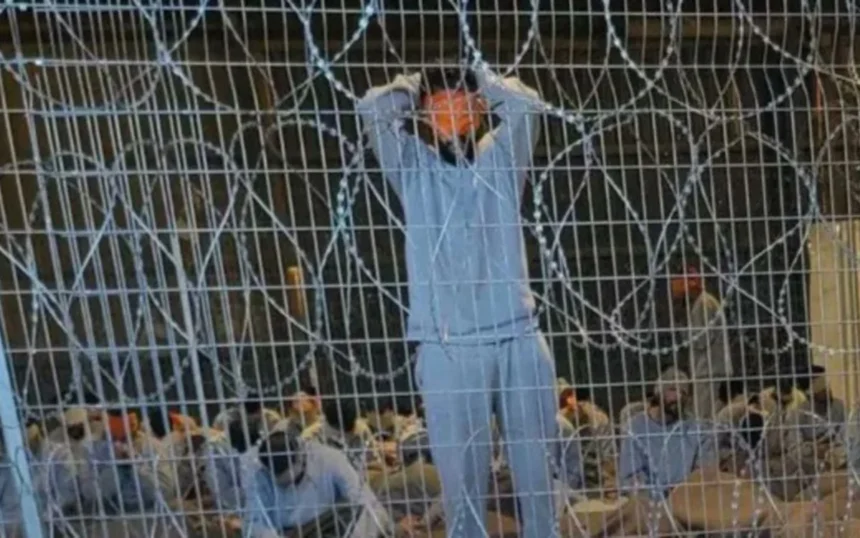
The Council on American‑Islamic Relations (CAIR) has called on the American Medical Association (AMA) to publicly demand the release of Palestinian doctors and other medical workers detained by Israel in Gaza and the occupied West Bank. As reported by CAIR in its national press release, the Muslim civil‑rights group described the detentions as part of a broader pattern of targeting healthcare professionals who have continued to provide care under siege and bombardment. CAIR urged the AMA to leverage its standing in the global medical community to press Israel for the safe release of those still in custody and to speak out against the perceived politicisation of medical practice in occupied territories.
According to CAIR’s statement, Israeli authorities are holding dozens of Palestinian healthcare workers, including doctors, nurses and paramedics, many of whom were captured during or after Israeli military operations in and around hospitals. The release notes that advocacy groups and human‑rights monitors, such as Health Workers Watch, have documented that Israel continues to detain Palestinian medical staff from Gaza and the West Bank, often without formal charges or with proceedings held in military courts. CAIR characterises these detentions as a violation of international humanitarian law protections for medical personnel and facilities, and argues that they hinder the already‑strained health‑care system in Gaza.
Why CAIR is focusing on the AMA
CAIR’s appeal to the AMA is framed as part of a broader campaign to mobilise professional medical associations to address the humanitarian and legal implications of holding Palestinian healthcare workers. As described in CAIR’s press release, the group has previously pushed U.S. institutions and officials to intervene on behalf of besieged medical professionals in Gaza, and now sees the AMA as a key player that can lend its voice to calls for release and accountability. CAIR points out that the AMA has historically spoken out on issues affecting the safety and rights of physicians, including in conflict zones, and argues that the situation in Gaza warrants a similar public stance.
The release also notes that CAIR has highlighted specific cases of detained Gazan doctors, including senior hospital directors and specialists, whose absence has been cited by local and international health organisations as a major blow to Gaza’s capacity to provide lifesaving care. CAIR’s statement does not claim that any AMA resolution has yet been passed but underscores that the association’s endorsement of a call for release could influence both U.S. policy debates and Israel’s treatment of medical detainees. The press release calls on AMA members and affiliated bodies to contact the association’s leadership and urge the adoption of a formal demand for the release of Gaza and West Bank medical workers.
Reactions from medical and human‑rights groups
CAIR’s appeal is echoed by other organisations that monitor the treatment of Palestinian healthcare workers. According to Health Workers Watch, an advocacy group tracking such detentions, Israel continues to hold scores of Palestinian medical personnel from Gaza and the occupied West Bank, many of whom were seized while working in hospitals or on ambulances. The group has stated that Israeli authorities have often treated these workers as “unlawful combatants” under Israel’s combatant‑law framework, which allows for prolonged administrative or military detention without conventional criminal‑court protections. Health Workers Watch has warned that this practice risks undermining the neutrality and safety of medical staff in armed conflicts.
Journalists and outlets covering Gaza, including Al Jazeera, Reuters and PBS, have reported that Israel has released some Gazan healthcare workers as part of broader prisoner‑exchange or ceasefire‑related measures, but that significant numbers remain in Israeli detention. Al Jazeera, citing Health Workers Watch, reported that as of late 2025, Israel was still holding 95 Palestinian healthcare workers, including 80 from Gaza and 15 from the West Bank. The outlet noted that many of those detained had been captured during hospital raids and that several had been held for more than a year without formal charges. Reuters and PBS similarly reported that while some doctors and nurses were among those freed in mid‑2025, over 100 medical staff were still listed as detained, with some prominent hospital directors remaining in custody.
Supporting details and expert commentary
Medical‑rights groups and international health organisations have warned that the continued detention of Gaza’s healthcare workers has serious consequences for the territory’s already‑collapsed health system. According to documented statements from groups such as Health Workers Watch and Physicians for Human Rights – Israel, the withdrawal or imprisonment of experienced doctors, surgeons and hospital administrators has left Gaza dangerously short‑staffed, particularly in specialties such as trauma, anesthesia and intensive care. These groups argue that the targeting of medical personnel, whether through detention, attacks on facilities or threats of prosecution, weakens the capacity of hospitals to function during and after hostilities and may deter volunteers from entering or remaining in Gaza.
Human‑rights organisations and legal experts have also highlighted that international humanitarian law, including the Geneva Conventions, affords special protections to medical personnel and facilities. According to commentaries cited by outlets such as Al Jazeera and the BBC, detaining healthcare workers simply for carrying out their duties in besieged areas may constitute a violation of these protections unless they are credibly suspected of direct participation in hostilities. Health‑workers‑rights advocates have told reporters that they see Israel’s treatment of Gazan and West Bank medical staff as inconsistent with these standards and have called for independent investigations into allegations of abuse, prolonged detention without fair‑trial guarantees, and the use of military‑court systems for civilian health workers.
Implications for the AMA and U.S. medical community
The question of how the AMA will respond to CAIR’s call is likely to influence perceptions of the American medical establishment’s engagement with the Gaza conflict. CAIR’s release emphasises that the AMA has previously issued statements on the safety of healthcare workers in other conflict zones and has condemned attacks on medical facilities, and it argues that a similar stance is now warranted for Palestinian doctors and nurses held by Israel. The group suggests that an AMA‑issued demand for the release of Palestinian medical workers would not only pressure Israeli authorities but also signal to U.S. medical educators, students and practitioners that the profession is taking a principled stand on medical‑personnel rights in Gaza.
Other U.S.‑based medical‑rights and advocacy groups, including Physicians for Human Rights – Israel and related international networks, have called for greater solidarity from American medical associations. Those groups have told media outlets that professional medical organisations have a responsibility to speak out when colleagues are detained or targeted in ways that appear to violate international norms. They argue that silence or inaction risks normalising the treatment of healthcare workers as security threats rather than neutral actors, which could set a troubling precedent for future conflicts. CAIR’s press release does not specify a timeline for AMA action but underscores that the group is launching a public campaign addressed both to the AMA and to its individual members, urging them to advocate for a formal call for release.
What this campaign might mean for detained doctors
The direct impact of CAIR’s campaign on the status of Gaza’s detained medical workers will depend on how strongly and quickly the AMA and other major medical bodies choose to respond. CAIR’s national statement notes that similar pressure has helped secure the release or safer conditions for other detained medical professionals in the past, including in earlier rounds of U.S.‐led advocacy. The group highlights recent cases in which American doctors and nurses trapped in Gaza were eventually allowed to exit through crossings such as Karam Abu Salem, after sustained public pressure and diplomatic engagement. CAIR frames the current call as a logical extension of that kind of advocacy, applied now to Palestinian colleagues who remain in Israeli detention.
Beyond immediate release, CAIR and allied organisations argue that any AMA‑led statement should also address the broader conditions under which medical workers in Gaza and the West Bank operate. The press release notes that doctors in Gaza have continued to work despite severe shortages of medicines, electricity and equipment, as well as repeated attacks on hospitals and ambulances documented by human‑rights groups. CAIR contends that international medical associations have a role not only in condemning the detention of healthcare workers but also in supporting efforts to restore functioning, adequately supplied health systems in Gaza and the West Bank. The campaign presented in CAIR’s release is therefore framed as part‑political, part‑professional: it seeks concrete action on behalf of detained doctors while also challenging the wider structures that make Gaza’s medical system so fragile.
How this fits into the broader Gaza and West Bank context
The issue of detained Palestinian healthcare workers sits within a larger pattern of conflict‑related repression and humanitarian crisis in Gaza and the occupied West Bank. Reporting by outlets such as Al Jazeera, PBS and Reuters indicates that Israeli military operations have repeatedly damaged or shut down hospitals, disrupted medical supply chains and restricted the movement of medical teams and patients. Human‑rights groups and local health‑workers’ organisations have documented that these measures have compounded the impact of the 2023–2025 war, leaving Gaza with a decimated medical infrastructure and a generation of traumatized patients and providers.
At the same time, campaigners argue that detained doctors and nurses represent a particularly sensitive category of prisoner. Unlike combatants, they are widely perceived as having been on the front lines of care rather than of armed resistance, and their continued detention is seen by many health‑rights advocates as symbolic of a broader political strategy toward Gaza. CAIR’s press release suggests that by demanding the release of these workers, medical associations such as the AMA can help shift the narrative from one of pure security‑based detention to one that recognises the humanitarian and ethical stakes of imprisoning those who have tried to save lives under extreme conditions. The organised campaign targeting the AMA is built on the assumption that such a shift is possible, but it also reflects the current reality that, as of late 2025 and early 2026, many Palestinian healthcare workers remain in Israeli custody without clear or widely accepted legal pathways to release.
Finally found a site that actually has the games I was looking for. The interface is super intuitive and easy to navigate. Highly recommend pasar123slot to everyone.
I have been searching for a reliable gaming platform for a while and finally found my favorite spot. The interfaces are super smooth and the customer support responds really quickly. I always feel safe playing here and the withdrawals are processed without any hassle. Highly recommend checking it out if you want a top notch experience. sahabetgen
Login is super fast and I never encounter any glitches. It is refreshing to find a site that actually works as intended. Go to pasar123login
I really enjoy the community vibe and the competitive games. It is my go to spot for relaxing after work. Check out brwingdas.