


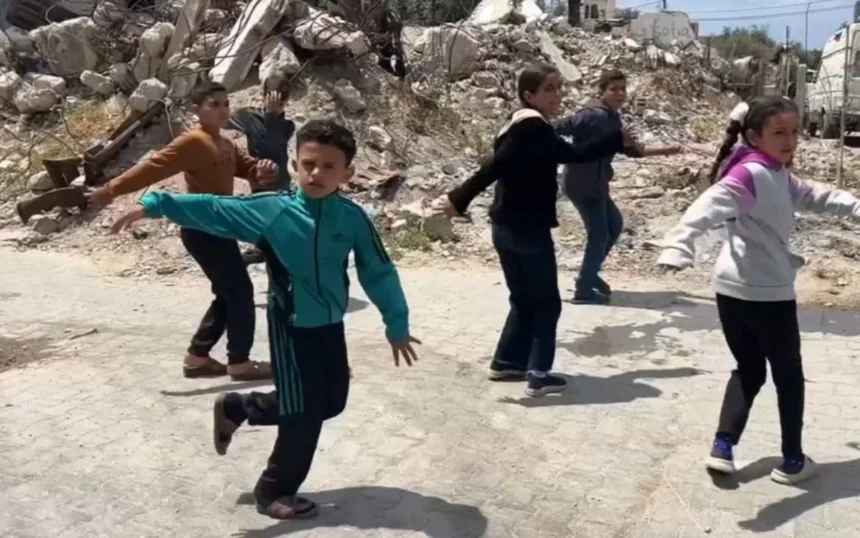
In the rubble‑lined streets of Gaza’s refugee camps, breakdancing is becoming a lifeline for children struggling to cope with the psychological toll of war. Breakdancing classes in places such as the Nuseirat refugee camp bring together boys and girls for weekly sessions where upbeat music, rapid spins, and acrobatic moves provide short but powerful breaks from the constant stress of bombings, displacement, and loss. As reported by Associated Press video coverage shown on outlets such as the Lufkin Daily News, these sessions are not framed as spectacle but as structured activities that help children release tension, rebuild a sense of control, and reconnect with peers in a shared, constructive space.
Instructors running the classes describe the work as a form of dance‑based emotional support, combining elements of physical exercise, rhythm, and group interaction to ease symptoms of anxiety, depression, and post‑trauma reactions. The Associated Press footage highlights how children in Gaza now look forward to these sessions as rare moments of relative normalcy, using movement to express fear, anger, and resilience that they may not be able to put into words. For many families, the programs represent one of the few accessible, non‑clinical options available in an environment where formal mental‑health services are stretched beyond capacity.
How do these programs work in practice?
In Nuseirat and other Gaza camps, breakdancing groups gather weekly in open spaces or makeshift community halls, turning uneven concrete or rubble‑lined courtyards into temporary dance floors. Older instructors and local breakdancing crews lead warm‑ups, teach basic steps such as top‑rocking and footwork, and help children progress to simple spins and floor‑based moves. The Associated Press reports that children participate in a structured way, with sessions typically opening with stretching and breathing exercises before moving into choreographed combinations that emphasize coordination, focus, and cooperation.
The physical act of dancing itself serves several purposes at once. As documented by reporting on similar initiatives in Gaza, rhythmic movement and structured exercise have been shown to help reduce stress‑related hormones and improve mood, even in severely distressed populations. For children in Gaza, who may spend long days confined in overcrowded shelters or damaged houses, the chance to move freely, sweat, and laugh with peers can be a powerful counterweight to the sense of confinement and helplessness many describe. In interviews relayed by other outlets, some dance instructors in Gaza have said they deliberately design classes to be energetic and repetitive, allowing children to focus intensely on the present moment and momentarily set aside thoughts of war.
What do children and families say?
Children who attend the breakdancing sessions often describe feeling less tense and more connected after a session, even as the war continues around them. As reported in AP‑linked coverage and other international reports, some children say they notice a change in their breathing, a loosening of tight shoulders, or a calmer feeling at the end of a class. Families in Gaza have told journalists that the programs give their children something positive to talk about at home, shifting conversations briefly from injuries, house collapses, and relatives’ deaths to steps they learned or routines they want to try again.
At the same time, local instructors acknowledge that the classes are not a cure‑all for trauma, but rather a complement to other forms of support. As one Gaza‑based breakdance coach told media outlets focused on the same phenomenon, he created his troupe explicitly to “relieve the children’s mental pressure,” even though he also recognizes that the risk of further strikes remains real. Class organizers point out that they must choose locations carefully, avoid large, permanent structures, and remain ready to pause or disperse if the situation deteriorates. These constraints underscore that the therapeutic power of the sessions exists within the broader, ongoing crisis, not apart from it.
What do mental‑health and humanitarian groups say?
Humanitarian organizations working in Gaza have long warned of an acute mental‑health emergency among children. As reported by UNICEF and other bodies, hundreds of thousands of children in Gaza are estimated to require some form of psychological support, with high rates of anxiety, depression, and trauma‑related difficulties. Experts in child mental health have told media outlets that non‑clinical interventions, such as movement‑based activities, art, and play, can play a meaningful role in mitigating the worst effects of protracted conflict, as long as they are stable, repeated, and delivered by trained facilitators.
Breakdancing and similar projects fit into what these groups call “psychosocial support”: structured, low‑threshold activities that build routine, social bonds, and a sense of competence. Reporting from outlets that have covered Gaza’s breakdancing crews notes that dance is used globally as a complementary tool to ease stress, anger, and post‑trauma reactions, often alongside counseling and other services. In Gaza, where the health system remains weakened and many traditional clinics are damaged or overflowing, community‑based programs such as breakdancing can reach children who might otherwise not sit in a formal therapist’s office.
What are the broader implications for Gaza’s youth?
The continued use of dance and physical expression as a response to war trauma reflects both the resilience of Gaza’s young people and the sheer scale of their unmet psychological needs. As documented by humanitarian and academic studies, children in Gaza have endured years of repeated conflict, displacement, and loss, with many exposed to direct violence or living in constant fear of strikes. The fact that breakdancing has gone from a subcultural pursuit to a recognized coping mechanism in refugee camps underscores how deeply war has reshaped daily life and how urgently communities are searching for ways to help children adapt.
Instructors and program leaders hope that, if the security situation stabilizes, breakdancing and other expressive activities could become part of a longer‑term strategy for rebuilding Gaza’s social and mental‑health infrastructure. As AP and other outlets have reported, there is growing interest among local and international actors in scaling up psychosocial programs that use movement, art, and sports, arguing that they can be both cost‑effective and culturally resonant. For now, the sessions in Gaza offer something more immediate: a chance for children to bend, spin, cheer, and forget, if only for a few minutes, that they live in one of the world’s most war‑torn territories.
I have been searching for a safe and reliable betting platform for quite a while and this place checked all my boxes. The app works perfectly on my phone and the live streaming feature is a game changer. Payouts are processed quickly and the staff is very professional. Definitely my go to site now. melbetnepal
I have been placing my weekly wagers here for over half a year and the consistency really impresses me. They offer a massive selection of markets and the odds are always competitive compared to other sites I have tested. Cash out features work flawlessly which saves me during those unpredictable matches. Customer service actually reads my messages and solves issues on the first try. Stop by comaradeportes
Perfect for those who want a reliable and fast service. The layout is clean and the payment methods are very flexible. Love it! krbeetwiner
Found this through a friend and I am glad I did. It is a very welcoming community and the site is incredibly stable. Cheers to sahabat11login for the great experience.
I was looking for a stable place to get the app and this worked perfectly. The installation was smooth and everything runs great on my device. Check it out at juan365downloadapk
I just discovered this spot and honestly the experience has been incredibly smooth. The games load fast and customer support actually replies within minutes. If you are looking for a reliable place to unwind after work you really need to check this out. 99kl99
I’ve tried a few sites lately but this one really stands out. The games load fast and the payouts are legit. Highly recommend checking out fk77casino for a great experience.
Found this site through a friend and I am glad I did. The bonuses are generous and the customer support is actually helpful. Give ph95jili a shot.
Honestly the best gaming platform I have used in a while. Everything is so intuitive and the rewards are actually fair. Highly recommend vnluk88 to everyone.