


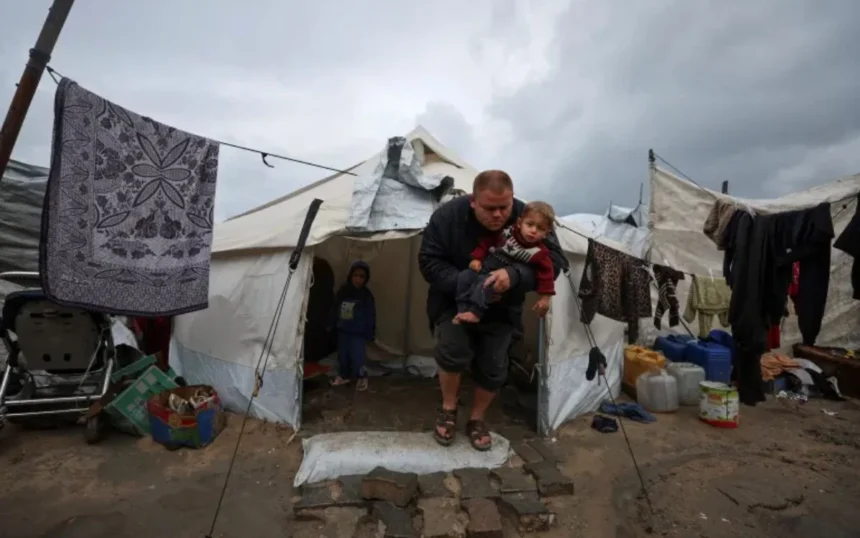
As summer draws closer, skin diseases are spreading rapidly through Gaza’s overcrowded refugee and displacement camps, with United Nations agencies and local health workers warning of a worsening public‑health emergency. According to Al Jazeera, the United Nations agency responsible for Palestinian refugees, UNRWA, has reported that the incidence of skin infections has tripled in recent months across densely populated camps. Rising temperatures, overcrowding, and crumbling sanitation systems are creating ideal conditions for highly contagious conditions such as scabies and chickenpox, especially among children.
In March 2026, UNRWA reported that cases of skin infections in its managed displacement sites had more than tripled compared with earlier in the year, underlining the accelerating pace of the outbreak. A UN spokesperson, Stephane Dujarric, told reporters that on‑the‑ground teams continue to document growing numbers of pests and skin infections among Gaza’s displaced population. “On‑the‑ground teams report that pests and skin infections among Gaza’s population are continuing to rise,” Dujarric said during a recent news conference. “In March, the number of such infections in our UN‑managed displacement sites has more than tripled.”
What conditions are driving the outbreak?
The current surge in skin diseases follows years of conflict, displacement, and infrastructure destruction in the Gaza Strip. Over the past year, repeated Israeli military operations have forced tens of thousands of Palestinians into temporary camps and tent settlements, many of which lack running water, functioning toilets, and adequate shelter. The World Health Organization and other humanitarian partners have previously documented that more than 150,000 people in Gaza contracted skin infections since the start of Israel’s war, with scabies, chickenpox, lice, and impetigo among the most common diagnoses.
Local health workers in central Gaza describe patients arriving with rashes, blisters, and intense itching that cover their arms, legs, torsos, and, in some cases, faces. At makeshift clinics in Deir el‑Balah, pharmacists report that entire groups of children in one tent or shelter often present with the same lesions, indicating rapid transmission within close quarters. Crowded tents, shared bedding, and limited access to clean water make it nearly impossible to break the chain of infection, doctors say.
Why are health workers so alarmed?
The timing of the outbreak is especially worrisome because the peak of summer heat is still ahead. Higher temperatures increase sweating and skin irritation while encouraging the breeding of pests that can both transmit infections and aggravate existing skin conditions. UN and NGO health officials have previously warned that the same conditions that enabled skin infections to spread in 2024—poor hygiene, overcrowding, and a crippled health system—are still present today.
According to Al Jazeera, UN human‑rights and humanitarian agencies have noted that almost half of the displacement sites in Gaza are now affected by some form of skin disease. At the same time, rodent and insect infestations plague roughly 80 percent of these sites, further compounding the risk of infection and secondary complications such as bacterial dermatitis. Health‑cluster reports from the United Nations Office for the Coordination of Humanitarian Affairs (OCHA) state that these deteriorating conditions are directly contributing to a broader public‑health collapse inside the camps.
What are patients and families doing?
With hospitals and clinics operating far below capacity and many imported medicines either blocked or unavailable, many families have resorted to homemade remedies and over‑the‑counter treatments that may not fully address the underlying infections. Palestinian residents such as al‑Najjar, cited by Al Jazeera, described using traditional pastes, herbal washes, and shared lotions in a desperate attempt to soothe their children’s rashes and itching. At some makeshift clinics, displaced pharmacists dilute whatever calamine or antiseptic creams remain and apply them carefully, knowing that full treatment courses are often out of reach.
Doctors in Gaza say the lack of medicines extends beyond topical creams to essential antiparasitic and antiviral drugs. Scabies, for example, can be treated with specific oral and topical medications, but these items are frequently listed among the supplies restricted or delayed by the Israeli blockade. Senior health officials have also pointed out that proper recovery from skin infections requires adequate nutrition, clean bedding, ventilation, and access to showers—conditions that many in the camps do not enjoy.
How are authorities trying to respond?
Local municipalities and UN agencies have launched disinfection campaigns in an attempt to slow the spread of infections. In Khan Younis, in southern Gaza, health workers have been spraying disinfectants in thousands of tents, focusing on areas where children and families are most densely concentrated. A municipal spokesperson told journalists that over 50,000 tents had been treated in 26 days, but that the campaign still covered only a fraction of the roughly 200,000 tents in the area. The official warned that the operation was being hampered by shortages of pesticides and disinfection chemicals, which are reportedly scarce or unavailable in local markets.
UNRWA and OCHA teams have distributed hygiene kits, soap, and basic first‑aid supplies where possible, but they acknowledge that these measures are insufficient to reverse the underlying drivers of the outbreak. Humanitarian partners have repeatedly called for the lifting of restrictions on the entry of medical supplies, fuel, water‑treatment equipment, and infrastructure‑reconstruction materials, arguing that without these inputs, the health crisis will continue to deepen.
What are the long‑term risks for Gaza?
The current wave of skin diseases is not an isolated incident but part of a wider pattern of public‑health deterioration in Gaza. Previous WHO and humanitarian reports have shown that children in the Strip already suffer from high rates of malnutrition, respiratory infections, and diarrheal diseases, all of which weaken immune systems and make them more vulnerable to skin infections. When children are exposed to poor hygiene, extreme heat, and crowded shelters, the risk of severe or recurrent outbreaks increases significantly.
Some clinicians have also expressed concern about the possible emergence or spread of more serious conditions such as leishmaniasis, a parasitic skin disease that can leave lasting scars and, in severe forms, become life‑threatening. Médecins Sans Frontières (MSF) and other medical groups have warned that chronic malnutrition and repeated infections can create a “syndemic” in Gaza—one in which multiple diseases interact, each worsening the impact of the others.
What comes next in Gaza’s camps?
For the coming months, the focus of international and local health actors is on preventing the summer outbreak from spiraling into a full‑scale epidemic. UN agencies and humanitarian groups have called for urgent additional funding, expanded access for medical convoys, and the repair of Gaza’s water and sanitation infrastructure to allow more frequent showers and laundry. They stress that without meaningful improvements in shelter conditions, food security, and medical access, the rate of skin infections is unlikely to decline.
At the same time, Palestinian health workers in Gaza continue to treat patients with whatever supplies remain, often improvising solutions and sharing limited stocks among neighboring families. Their accounts, relayed by UN and media reports, paint a picture of a population bracing for another summer of heat, displacement, and disease. As Al Jazeera and other outlets have documented, the link between deteriorating living conditions and the spread of skin diseases in Gaza’s refugee camps is now unmistakable, and the question for many residents is not whether infections will continue, but how severe the next wave will be.
Fast deposits and even faster withdrawals. That is all I really care about and they nailed it. Big thanks to bdnag777 for the great service.
The app is lightweight and doesn’t lag even on my old phone. Really impressed with pkwinpkrapk and their customer support.
Great vibes and even better rewards. I appreciate how they treat their regular players. Keep it up bdhi999!
Really enjoying the game selection here. The payouts are fair and the interface is super smooth. Definitely my new favorite spot for slots! Check out m4winslot for a great time.
The variety of slots here is insane. I spent the whole weekend exploring different games and I am impressed by the graphics. Love playing at uuu555casino.