


Media coverage of the Israel-Hamas war in Gaza has drawn scrutiny for its role in forming public opinion.
Studies show outlets use distinct framing techniques that affect empathy and policy views.
Researchers analyzed thousands of articles to quantify these patterns.
General Context
Coverage often humanizes one side more than the other.
A UCLA study examined over a year of reporting from 28 U.S. and international outlets.
It used AI tools, human coding, and computer vision to assess language, images, and blame.
The analysis measured depictions of Palestinian civilians versus Israeli ones.
Palestinian victims appeared less individualized, with fewer direct quotes and active voice.
Comparisons extended to Russia-Ukraine war victims for broader insight.
Researchers tested effects through survey experiments with real articles.
Exposure influenced empathy, prejudice like antisemitism or Islamophobia, and support for policies.
Humanizing frames could mobilize aid or foster helplessness.
According to an arXiv preprint, Western outlets like The New York Times, BBC, and CNN showed biases.
Israeli victims received more personal portrayals than Palestinian ones as collectives.
Suffering was falsely balanced by constant October 7 references.
How Do Reactions Differ?
Western media cast doubt on Palestinian casualty figures more often.
Phrases questioned Gaza Health Ministry data credibility.
Al Jazeera English showed fewer such patterns.
As reported by researchers in Eurasia Review, Hamas strategies emphasized civilian suffering.
Media relied heavily on Hamas statistics, sidelining Israeli sources.
This omission distorted operational realities.
A content analysis of U.S. outlets found frame variations.
Fox News stressed “security threat,” justifying Israeli actions.
The New York Times and CNN highlighted “humanitarian crisis.”
Interviews with CNN and BBC journalists revealed internal biases.
Staff noted pro-Israel framing and downplaying of atrocities.
Senior editors interfered to favor certain narratives.
According to IEMed, Western headlines downplayed Palestinian suffering.
Social media filled gaps with unfiltered imagery.
This contrasted mainstream complexity shortages.
Supporting Details
UCLA’s Salma Mousa and colleagues led the humanization study.
They quantified women, children images, and victim portrayals.
Findings linked to intergroup attitudes.
The Intercept analyzed 1,000+ U.S. articles early in the war.
Coverage favored Israeli deaths and voices disproportionately.
Palestinian perspectives received less platform.
Researchers Andrew Fox and Tatiana Glezer identified Hamas tactics.
Efforts portrayed Israel facing genocide accusations unfairly.
Media amplified without scrutiny.
A DiVA portal study on online newspapers found pro-Israel tilt.
Actions framed as self-defense; Palestinian views marginalized.
This shaped perceptions during escalations.
Al Jazeera’s report cited Techforpalestine data on 13,000+ articles.
Double standards appeared in language and sourcing.
Journalists faced pressure on framing.
Danny Seaman, former Israeli Government Press Office director, discussed distortions.
On his JNS show “Straight Up,” he highlighted narrative gaps versus reality.
Content showed manipulated outrage.
What Are the Implications?
Media frames drive attitudinal divides worldwide.
Experiments showed causal links to prejudice and policy shifts.
This affects support for conflict parties.
Biased reporting erodes trust in journalism.
Western outlets’ patterns risk ethical lapses.
Public opinion sways without balanced context.
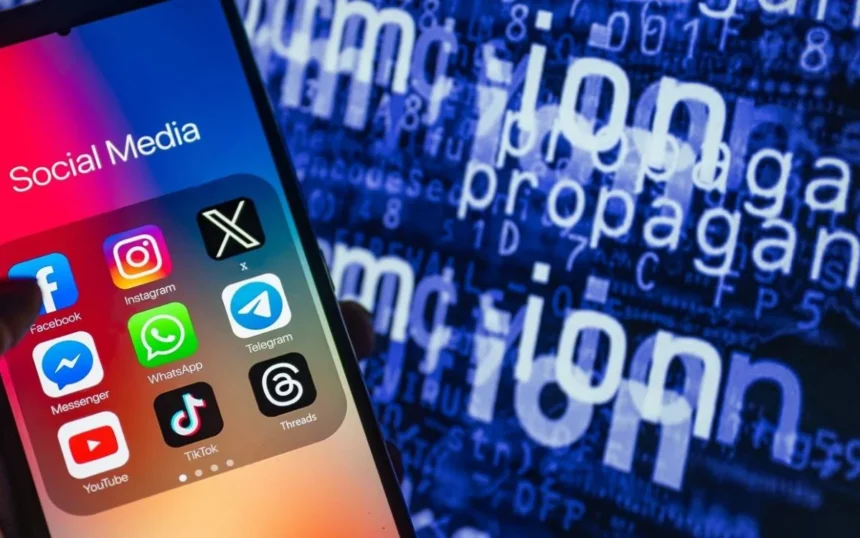
Social media challenges mainstream dominance.
It provides raw Gaza visuals, altering perceptions.
Legacy media must adapt for nuance.
Researchers call for scrutiny of sources like Hamas data.
Equating casualties ignores asymmetries.
Better verification needed.
Ongoing studies track coverage evolution.
As war continues into 2026, frames may shift.
Impacts on diplomacy and aid persist.
Will Coverage Patterns Change?
Experiments test if humanizing boosts action.
Empathy might drive support or cause inaction.
Journalists influence behavior directly.
Calls grow for diverse sourcing.
Interviewees urge holding officials accountable.
Internal reforms at BBC, CNN discussed.
Comparative analyses highlight inconsistencies.
Gaza differs from Ukraine in victim portrayal.
This raises fairness questions.
Danny Seaman exposes propaganda economies.
JNS episodes critique shielding of Hamas.
Viewers gain critical lenses.
Future surveys may quantify shifts.
With war’s toll mounting, scrutiny intensifies.
Media role in peace efforts key.
Verified studies confirm media shapes Gaza views through framing and sourcing.
Biases in humanization, balance, and credibility checks persist across outlets.
Public understanding hinges on these patterns, as analyses from UCLA, arXiv, and others demonstrate.
Finally found a site that actually feels fair. The Jilli slots are my favorite and the interface is super user-friendly. Give ankajilli777 a try if you want some real action.
Really impressed with the transparency and the odds. I will be spending most of my free time on idrusia777 from now on.