


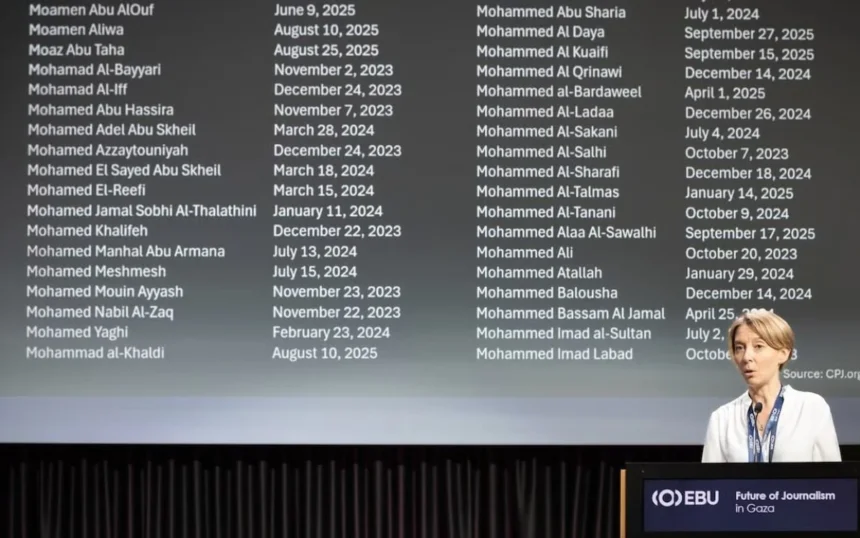
Israel has killed hundreds of Palestinian journalists in Gaza since October 7, 2023, marking one of the deadliest periods for media workers in modern history. According to Al Jazeera, survivors feel abandoned by the international community they inform. The Committee to Protect Journalists notes that the Israeli military has barred foreign reporters while treating local journalists as collateral or targets.
As reported by Al Jazeera English, more than 260 Palestinian journalists have died since the war began, with newsrooms destroyed and coverage now reliant on young, untrained locals working amid rubble. UNESCO reports that over 50% of journalist killings in 2023 occurred in conflict zones like Gaza, reversing prior declines. The Media Freedom Coalition urges Israel to allow independent foreign media access to spotlight the humanitarian catastrophe.
What Are the Reactions?
“The Israeli media decided, and decides anew every day, that we will not report on the humanitarian situation,” Haaretz reporter Nir Hasson told the Committee to Protect Journalists. Independent journalist Samir Abdulhadi stated, “Every Arab reporter is guilty… as long as you speak Arabic, then you are guilty”. Ayala Panievsky of the Israeli think tank Molad noted journalists modify language like avoiding “occupation” to evade being labeled traitors.
Supporting Details
The Israeli military censor reached its highest rate in over a decade in 2024, averaging 21 reports retracted or modified daily, per +972 Magazine. An October 2025 Molad report found only 3% of Channel 12’s early war coverage referenced Gaza’s humanitarian crisis. Palestinian journalists in Israel face equipment seizures, verbal threats, and smears as terrorists.
What Lies Ahead for Journalists?
UN Special Rapporteur Irene Khan described Gaza as “the deadliest conflict ever for journalists” in September. Despite restrictions, local reporters continue in makeshift shelters, with foreign access vital to avoid “zones of silence,” as UNESCO warns. The Media Freedom Coalition opposes all attempts to block press entry during conflicts.
Journalists risk escalating censorship, harassment, and self-censorship amid government pressures under Prime Minister Netanyahu. Coverage persists through local fixers and determined reporters, though infrastructure destruction and communication blackouts persist. International calls grow for protections under Geneva Conventions treating journalists as civilians.
The payment options are so flexible and secure. I didn’t have any issues topping up my account. Everything is top notch at idhokipay
The app version is so much more convenient than the browser. I can play anywhere and anytime now. Get the jiliokloginapp today.
The customer support is top notch and they solved my deposit issue in minutes. Great service and fair odds at okebet36.
The payment methods are very convenient and the deposits are processed almost instantly. It makes the whole experience much more enjoyable. Check out hokipaylogin today.
Really impressed with the game variety here. It is definitely my new go-to spot for some weekend fun. Highly recommend giving auronplaygame a try if you love gaming.
Fast deposits and even faster withdrawals. That is all I really care about and this site delivers. 1pra1bet is a winner in my book.
Finally found a platform that doesn’t lag during peak hours. The game variety is impressive and I had a great run last night. Give pkluckywingame a shot!
Finally found a platform that doesn’t lag during peak hours. The game variety here is top notch and I really enjoy the bonus offers. Check out ph6899jili if you want a great experience.
The local support is top notch and they actually answer your questions quickly. It makes the whole experience much better. Give phjljl72 a try.