


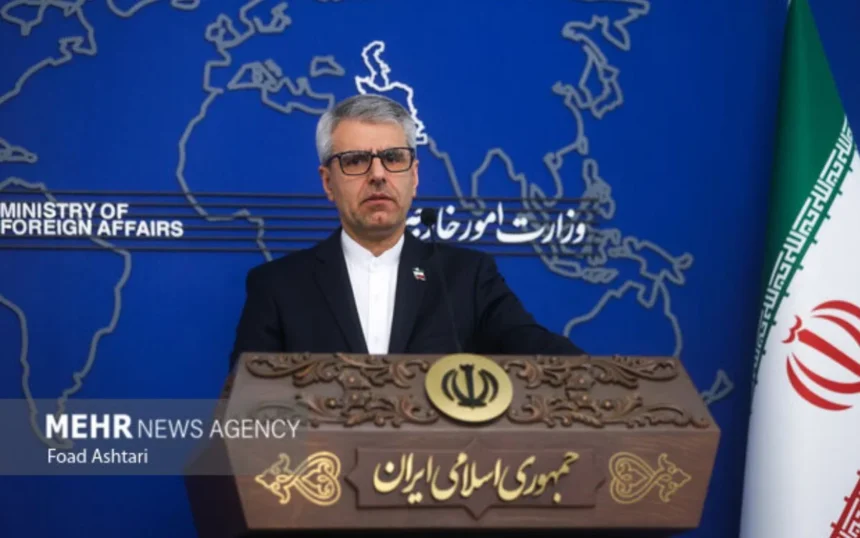
Iran has escalated its criticism of Western coverage of the Gaza war, accusing mainstream media of helping to normalize and justify Israeli military action in the territory. According to state‑controlled Mehr News Agency, which quotes the Iranian Foreign Ministry Spokesman Esmaeil Baghaei, Tehran believes that large Western outlets have not merely shown bias but have actively facilitated what it calls Israel’s “genocidal war” in Gaza. The statement was issued on Baghaei’s X account on May 1–2, 2026, and has been widely reproduced by Iranian and allied outlets.
As reported by Mehr News Agency, Baghaei cited the book “How to Sell a Genocide” by journalist Adam Johnson, arguing that it demonstrates how Western outlets have systematically framed Israel’s operations in Gaza as defensive or legitimate. He stated that through specific word choices, selective facts, and repeated repetition of Israeli and U.S. government claims, Western media have “sanitized horrors, downplayed human suffering, and whitewashed Israel’s atrocities.” According to the same report, the Iranian spokesman accused the outlets of hiding behind the label of “professional journalism” while providing a platform that, in his view, shields Israeli actions from meaningful scrutiny.
How Iran describes Western media bias
As reported by Mehr News Agency, Iran’s official narrative portrays Western coverage as part of a broader political alignment with Israel and the United States. Baghaei’s remarks echo statements from Iranian media groups that have repeatedly accused Western outlets of presenting Israel’s military operations as “self‑defense” while downplaying or normalizing high civilian casualties. According to Iranian‑based commentators referenced by Mehr, this framing allegedly contributes to a global perception that minimizes the scale and severity of damage in Gaza.
According to Tehran‑based reporting, Iran also points to Western governments’ diplomatic and military support for Israel as evidence that media narratives are politically coordinated rather than neutral. Iranian officials have previously argued that Western outlets together with allied governments bear shared responsibility for what they describe as ongoing violence and alleged genocide in Gaza. Some Iranian media echo critiques raised by international press‑freedom advocates and independent analysts, who argue that certain Western outlets have marginalized Palestinian voices or simplified the conflict into a binary of “terrorism” versus “security.”
Reactions from Western and international actors
Independent fact‑checking and media‑analysis organizations have pushed back against the term “genocide,” noting that while Israel’s Gaza campaign is heavily contested, legal determinations require formal judicial processes. Western officials and many mainstream outlets reject Iran’s characterization of their coverage as a coordinated effort to justify atrocity, instead describing themselves as adhering to editorial standards and safety protocols in conflict reporting. At the same time, some international journalists and press‑freedom groups have acknowledged that Western newsrooms need to confront documented pro‑Israel bias and uneven sourcing, especially in how they present Palestinian casualties and civilian infrastructure damage.
What this means for media and diplomacy
Iran’s latest condemnation appears to be part of a broader diplomatic campaign to isolate Israel and its Western allies in both public and institutional arenas. By directly targeting Western media, Tehran aims to undermine the credibility of what it sees as a pro‑Israel information ecosystem and to bolster its own narrative at forums such as the United Nations and regional organizations. Western governments and media organizations in turn are likely to treat such accusations as part of Iran’s wider information‑warfare strategy, even as they face growing internal calls for more balanced coverage of Gaza and better protection for local journalists.
The dispute over framing and responsibility will likely continue to shape how the Gaza conflict is reported and perceived globally, with Iran using its diplomatic channels, state media, and allied outlets to reinforce its view of Western complicity. Western outlets, meanwhile, face pressure from both governments and civil‑society actors to demonstrate greater transparency about sourcing, language choices, and editorial decisions in their coverage of the war.
Found this site through a friend and I am glad I did. The customer support is very responsive and the winning streaks are real. Check out bdgv999 if you want a great experience.
I love how easy it is to navigate through the different categories. No lag and the graphics are top notch. I am spending a lot of my free time on idodin188 lately.