


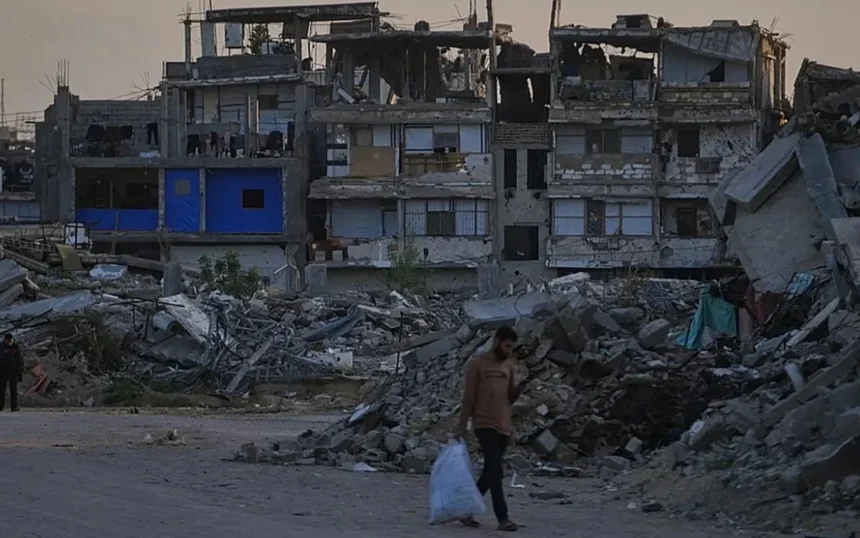
The European Union, United Nations, and World Bank released the final Gaza Rapid Damage and Needs Assessment (RDNA) on April 20, 2026. According to the joint press release from the UN Office, recovery and reconstruction needs in Gaza total $71.4 billion over the next decade following 24 months of conflict. This includes $26.3 billion required in the first 18 months to restore essential services, rebuild critical infrastructure, and support economic recovery.
Physical infrastructure damages are estimated at $35.2 billion, with economic and social losses at $22.7 billion, as reported in the assessment. The hardest-hit sectors encompass housing, health, education, commerce, and agriculture. Over 371,888 housing units have been destroyed or damaged, more than 50% of hospitals are non-functional, and nearly all schools affected.
What Are the Key Reactions?
According to Euronews, the EU and UN described more than two years of war in Gaza as leading to “unprecedented loss of life and a catastrophic humanitarian crisis.” The assessment notes that human development in Gaza has been set back by 77 years due to deprivation in living conditions, livelihoods, food security, and social inclusion. Around 1.9 million people, nearly Gaza’s entire population, have been displaced, often multiple times, with over 60% losing their homes.
The report emphasizes that recovery efforts must run parallel with humanitarian action for an effective transition to large-scale reconstruction covering Gaza and the West Bank.
Supporting Details
Gaza’s economy has contracted by 84%, according to the RDNA findings reported by the UN and EU. Women, children, persons with disabilities, and other vulnerable groups bear the greatest burden from the crisis. The assessment provides the foundation for early recovery planning aligned with UN Security Council resolutions, including UNSCR 2803.
What Lies Ahead for Reconstruction?
The EU and UN stress that recovery must be Palestinian-led, incorporating “building-back-better” approaches to support governance transition to the Palestinian Authority per UNSCR 2803. Essential enabling conditions include a sustained ceasefire, unimpeded humanitarian access, free movement of people and goods, and clear governance structures. Without these, recovery and reconstruction cannot succeed, and progress ties directly to implementing UNSCR 2803 and pursuing a two-state solution.
Debris clearance, explosive ordnance management, and protection of housing rights are prerequisites, with international resource mobilization needed in a coordinated manner. The EU and UN commit to supporting Palestinians toward dignity, self-determination, and lasting peace.
Great customer support and a very friendly community feel. It makes the whole gaming experience much more enjoyable. Love using indwin7login.
If you love high-energy gameplay and quick results, you gotta try this. The graphics are sharp and the luck is on my side here. Love pkc999game.