


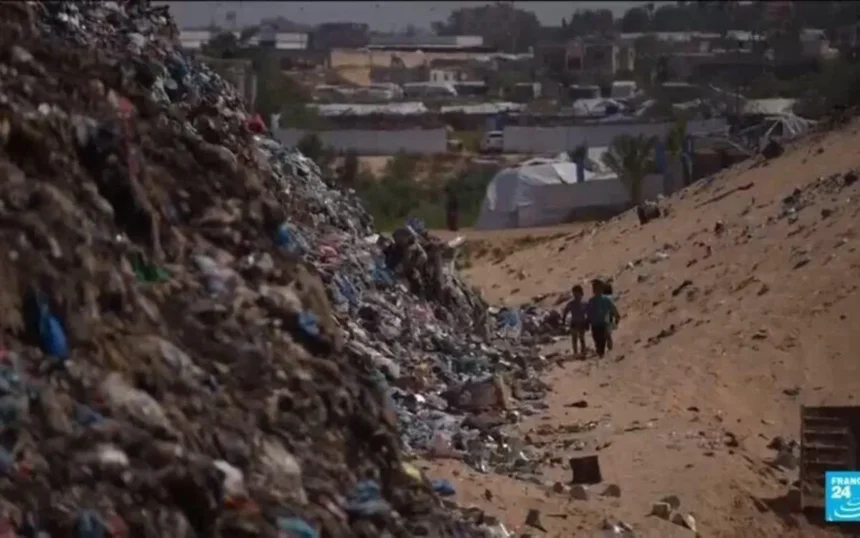
The Gaza Strip is facing a severe public‑health emergency driven by a massive accumulation of solid waste and the near‑collapse of sanitation infrastructure. As reported by multiple international agencies and aid groups, uncollected garbage now lines streets, fills rubble‑strewn alleys, and surrounds makeshift tent camps where hundreds of thousands of internally displaced Palestinians live in overcrowded conditions. In the absence of functioning landfills or regular waste‑collection services, decaying waste mixes with raw sewage and contaminated water, creating fertile ground for infectious diseases.
How the waste crisis unfolded
According to the United Nations Development Programme (UNDP), the enclave previously generated roughly 1,700 tonnes of solid waste per day even before the latest hostilities, handled by a limited number of over‑capacity landfills located near the border with Israel. UNDP officials say that three major landfill sites are now inaccessible due to military operations and restrictions, leaving municipal authorities with no safe place to deposit daily refuse. As a result, waste increasingly piles up in open spaces, former market areas, and along roadsides, sometimes mixed with construction debris and sewage.
Reports from Gaza‑based municipal and human‑rights groups indicate that well over 200,000 tonnes of solid waste have accumulated in the Strip, with some estimates suggesting upward of 2 million tonnes when including rubble and unmanaged debris. The Union of Municipalities of the Gaza Strip told rights investigators that garbage has flooded streets and encroached on displacement‑camp tents, where residents lack basic sanitation facilities. In one documented case, the Gaza City municipality turned the historic Firas Market site into a temporary landfill, turning the area into what local officials describe as a public‑health and environmental hazard.
Growing health and disease risks
According to the UN and humanitarian organizations, the breakdown of water and sanitation systems has sharply increased the risk of waterborne and vector‑borne diseases. With most wastewater‑treatment plants and sewage‑pumping stations non‑functional, untreated sewage flows into the environment, mixing with standing water and piled garbage. Health workers and aid groups report rising cases of diarrheal illnesses, skin infections, and other gastrointestinal conditions linked to exposure to contaminated water and polluted living spaces.
Action Against Hunger and other NGOs have warned that piled‑up waste decomposing in Gaza’s heat poses a heightened threat of outbreaks this summer, particularly cholera, typhoid, and hepatitis‑related infections. The UN health agency has described the overall public‑health situation in Gaza as “catastrophic,” noting that hospitals are overwhelmed and that shortages of medicines and clean water further compound the impact of sanitation failures. In some areas, people say they are forced to drink from farm wells or other untreated sources, far below the World Health Organization’s recommended minimum of 50–100 litres of safe water per person per day.
Reactions and international response
Speaking to reporters, a UNDP official in Gaza said the scale of untreated waste creates immense risks for both the environment and human health, particularly for a population already weakened by prolonged conflict and displacement. Human‑rights investigators and local municipalities have attributed the garbage‑and‑sanitation crisis to both the destruction of infrastructure and long‑standing restrictions that limited access to fuel, equipment, and spare parts for waste‑management systems. Aid groups such as Oxfam and UNICEF have called for urgent entry of water‑and‑sanitation supplies and for the restoration of basic waste‑collection services to prevent the outbreak of epidemics.
Diplomatic and humanitarian channels have repeatedly flagged the situation to Israeli authorities and international donors, stressing that safe waste disposal and access to clean water are essential to preventing mass disease among Gaza’s roughly 2.2 million people. Yet several aid organizations report that new registration requirements and delays at border crossings continue to slow the delivery of heavy‑duty trucks, generators, and other equipment needed to clear waste and rehabilitate treatment plants. In the meantime, municipal workers and volunteers say they are operating with minimal fuel and protective gear, often unable to keep pace with the volume of refuse generated each day.
What the crisis implies for Gaza’s future
The prolonged accumulation of waste and sewage threatens long‑term contamination of Gaza’s already‑depleted coastal aquifer, which supplies much of the enclave’s drinking water, according to UNDP and environmental analysts. If untreated waste continues to seep into groundwater and the sea, the risk of chronic waterborne disease and loss of agricultural land could persist well beyond the current conflict. Health authorities and aid agencies warn that even a ceasefire will not immediately resolve the crisis, as decommissioned landfills must be secured, treatment plants rebuilt, and new waste‑management systems established.
Humanitarian officials stress that any sustainable recovery plan for Gaza will require large‑scale investment in solid‑waste infrastructure, water‑treatment facilities, and disease‑surveillance systems, alongside guaranteed access for fuel and construction materials. Without such measures, the World Health Organization and other bodies say the population will remain highly vulnerable to outbreaks whenever temperatures rise or rains wash waste and sewage into populated areas. For now, Gaza’s residents continue to live in the shadow of two overlapping emergencies: the aftermath of intense bombardment and an unfolding garbage‑driven public‑health catastrophe.
I hit a decent jackpot yesterday and the withdrawal process was seamless. It is rare to find such a transparent site these days. Love mpotenslot so much!
Really loving the vibe here. The games are exciting and I’ve managed to hit a few decent wins already. It is just a great place to hang out and play. Visit bancanohuonline
Everything about this place feels high quality. From the graphics to the payment options, it is all spot on. Try your luck at br1cassino.
Super easy to navigate and the rewards system is actually rewarding. I love how simple it is to start playing. Download okplayslotapp
Super love the interface here. It is very easy to navigate and the bonuses are actually helpful for new players. Highly recommended! ph688jili