


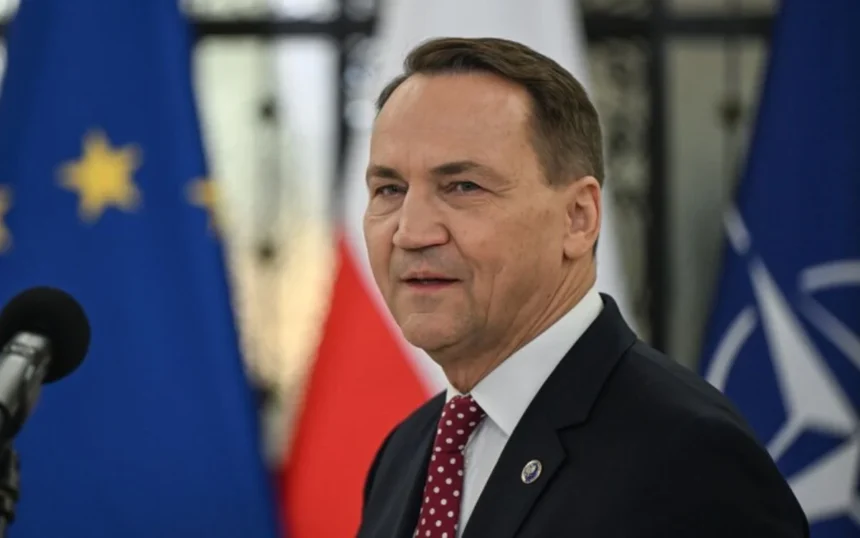
Poland has formally condemned what it describes as Israeli abuses and violations of international humanitarian law in the Gaza Strip, according to a statement by Polish Foreign Minister Radosław Sikorski reported by the Turkish state‑linked outlet Anadolu Agency. Speaking on April 16, 2026, Sikorski stated that “Israel is committing abuses and violating international humanitarian law in Gaza,” marking one of Warsaw’s most direct public rebukes of Israel’s conduct in the conflict.
The comments come amid a prolonged military campaign in Gaza that has produced widespread civilian casualties and a deepening humanitarian crisis, details of which have been documented by multiple international bodies and media outlets. The Polish government has repeatedly stressed that Israel’s actions must conform to the standards set out in the Geneva Conventions and other pillars of international humanitarian law, which strictly regulate the treatment of civilians and the conduct of hostilities.
What Poland’s statement signals
Poland’s criticism echoes a broader pattern of European unease over Israel’s conduct in Gaza, including concerns raised within the European Union about the scale of civilian deaths and restrictions on aid. According to the Polish Ministry of Foreign Affairs, Warsaw has consistently called for Israel to ensure full protection of civilians and to increase the flow of humanitarian assistance into Gaza, describing the current situation as having “unacceptable humanitarian consequences” for the enclave’s population.
At the same time, Polish officials have reiterated that Hamas’ October 2023 attack on Israel, which sparked the war, also involved serious violations of international law and that the group must release all remaining hostages it is holding. Sikorski has previously described the Gaza war as a “terrible tragedy” but has stopped short of using the term “genocide,” while still insisting that Israel must abide by its obligations under international humanitarian and human rights law.
How this fits in the wider diplomatic landscape
Poland’s position places it within a group of European states that have publicly criticized aspects of Israel’s military operations while also affirming Israel’s right to self‑defense. In recent United Nations and UN‑related statements, Polish diplomats have maintained that no state or non‑state actor may employ policies that result in civilians dying of hunger or being subjected to collective punishment, framing such practices as incompatible with international law.
The remarks also reflect internal political currents in Warsaw, where successive governments have sought to balance support for Israel’s security with growing parliamentary and public concern over Gaza’s humanitarian toll. Within the EU, Poland has participated in efforts to coordinate economic and political measures aimed at pressing Israel to adjust its tactics, although no final, unified sanctions package has yet been adopted.
What could come next for Poland and Israel
Poland’s latest condemnation does not outline specific punitive measures against Israel but adds diplomatic pressure within European and multilateral forums. As the European Union continues its internal deliberations on Gaza‑related measures, Polish officials have indicated that Warsaw will support steps that are consistent with international law and aimed at restoring humanitarian access and protecting civilians.
Publicly, Polish diplomacy is expected to continue calling for a durable ceasefire and a negotiated political settlement, while maintaining that any settlement must address both Israeli security concerns and Palestinian rights. As long as the military situation in Gaza continues to generate high civilian casualties and aid restrictions, Poland’s more critical stance toward Israel’s conduct is likely to remain a visible element of its Middle East policy.
I’ve been playing here for a few weeks and the payouts are surprisingly fast. Definitely one of my new favorite spots to hang out and win. Check it out at phjlj555
The interface is so user-friendly and it loads quickly on my phone. I had a blast playing last night. Definitely give kr39korwin a try if you love winning big.
The excitement here is unreal. I have tried many sites but this one has the best energy and rewards. Head over to vnbb88 now.