


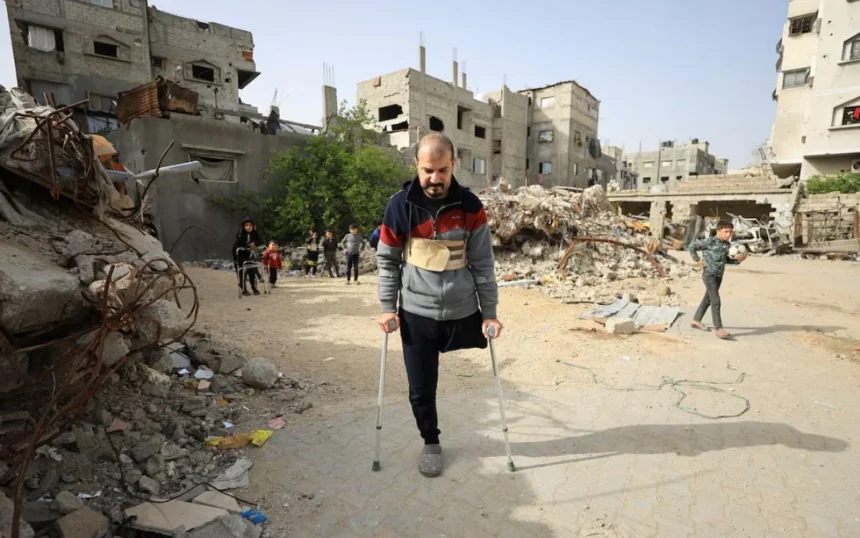
Gaza’s 5,000 to 6,000 war amputees face a critical shortage of prosthetic limbs. Israel has restricted medical supplies throughout the conflict. Despite a ceasefire in October 2025, only limited shipments have entered Gaza.
As reported by journalists Hana and Khaled of the Associated Press, amputees like Haneen al-Mabhouh wait in vain for treatment abroad. According to the World Health Organization, 25% of amputees are children. The Artificial Limbs and Polio Center in Gaza City has provided limbs for 250 cases but supplies are depleting.
What Are the Reactions?
Amputees report lives on hold, unable to work or care for families. “For the past year and a half, I have been unable to move around, to live like others,” said Haneen al-Mabhouh. Yassin Marouf stated, “If I want to go to the bathroom, I need two or three people to carry me.”
Nevin Al Ghussein, acting director of the Artificial Limms and Polio Center, noted no premade prosthetics have entered. Loai Abu Saif of Medical Aid for Palestinians said Israel’s procedures cause delays. The WHO called for new medevac routes to the West Bank.
Supporting Details
Gaza has only eight prosthetists able to fit limbs. Some 42,000 Palestinians suffered life-changing injuries, including brain trauma and burns. Medical evacuations average five per day post-ceasefire, up slightly from three.
Local centers craft limbs from recycled materials amid blockades. The WHO reported a recent shipment of supplies, the first significant one in two years. Assistive products like wheelchairs remain in short supply.
What Lies Ahead?
Patients need bone grafts and surgeries unavailable in Gaza. Israel proposed using Rafah crossing, but Egypt demands it open for returns too. The UN backlog includes 16,500 waiting for treatment abroad.
Amputees like Mohamed al-Naggar seek prosthetics to resume studies. Centers explore mobile services despite risks. Humanitarian groups urge unrestricted supply access.
Thousands of Gaza amputees endure daily struggles without prosthetics due to restricted imports. Ceasefire aid flows slowly, prolonging hardship for children and adults alike.
Finally found a site that doesn’t lag during the big wins. The customer support is actually helpful and responsive. Great experience so far with bd96xbajee.
Really enjoyed the vibe of this site. It feels classic but runs on modern tech. Winning feels much more frequent here. Give lawas777login a go.
Logging in is a breeze and the account management is very straightforward. No complicated steps just pure entertainment. See you at batpkrgamelogin