


As reported by JNS Staff of the Jewish News Syndicate, Nickolay Mladenov, the Board of Peace’s high representative for Gaza, has presented a five-point framework designed to secure the implementation of U.S. President Donald Trump’s Gaza peace plan. According to JNS, the plan, referred to as the “Comprehensive Plan,” was unveiled during Mladenov’s address to the U.S. Security Council and is backed by the United States, Egypt, Turkey and Qatar as guarantor states.
According to JNS, the central objective of the framework is to apply the principle of “one authority, one law, and one weapon” to all armed groups in the Gaza Strip, including newer irregular formations that have challenged Hamas’s control. JNS reports that the U.S.-backed plan links demilitarization with large-scale reconstruction of the devastated enclave, aiming to reduce the armed threat while opening the way for rebuilding.
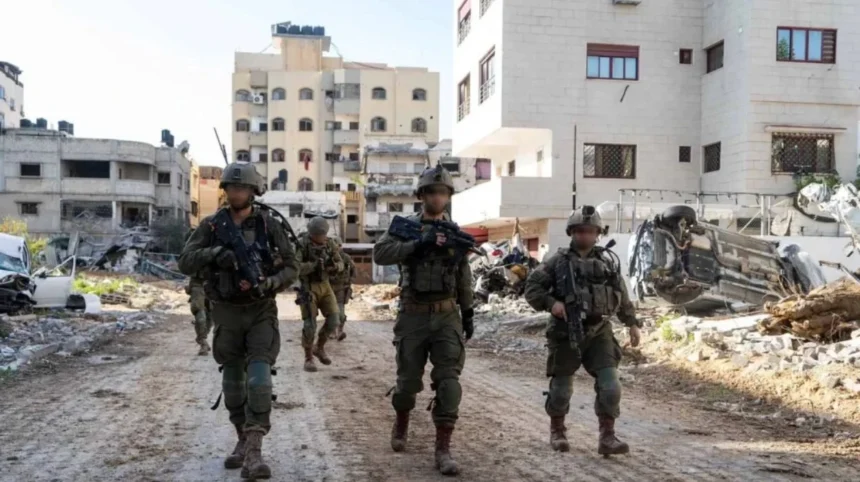
As reported by JNS, Mladenov stated that the first point of the plan calls for a simultaneous demilitarization process and withdrawal of the Israel Defense Forces (IDF) from the eastern part of Gaza. According to JNS, the second point requires addressing heavy weapons such as rockets, munitions, explosive devices and assault rifles, as well as neutralizing underground tunnel networks.
JNS further reports that Mladenov explained how personal weapons would be dealt with later under a registration and collection process, separating heavier armaments from individual arms. According to JNS, the third point of the framework stipulates that verification of the “decommissioning stages” is required before the launch of reconstruction efforts in Gaza.
As reported by JNS, the fourth point of the plan proposes pathways for individuals affiliated with terrorist groups to reenter civilian life “with dignity,” reflecting an effort to facilitate reintegration rather than mere disarmament. According to JNS, the fifth point emphasizes flexibility in the timelines for implementation, with Mladenov noting that realities on the ground may not match the schedules set out on paper.
According to JNS, Mladenov argued that for Israel, the plan’s benefits lie in verified decommissioning combined with a new professional police force exerting full control over the use of force and a civilian administration focused on stability and reforms. JNS reports that Mladenov contended this combination would permanently eliminate the terrorist threat more effectively than relying solely on military force.
As reported by JNS, Mladenov added that some observers maintain only military action can dismantle Gaza’s terrorist organizations, but he countered that “the evidence of the last 20 years says the opposite.” According to JNS, he stressed that ending the conflict requires a comprehensive effort to challenge the ideologies that fuel violence and must be grounded in recognition of the rights of both Israelis and Palestinians.
How are stakeholders reacting and what context shapes the plan?
According to JNS, the disclosure of the “Comprehensive Plan” mechanism comes after a period in which the details of implementation for Trump’s Gaza peace proposal had not been fully revealed publicly. As reported by JNS, the agreement of the four guarantor states—the United States, Egypt, Turkey and Qatar—indicates coordinated regional and international backing for linking demilitarization with reconstruction.
JNS reports that Mladenov’s remarks at the U.S. Security Council highlight a focus on consolidating control under a single authority in Gaza, a significant shift from the current landscape of multiple armed factions and emergent groups. According to JNS, his reference to “irregular armed formations” underscores concern about new organizations that have appeared alongside established groups like Hamas, complicating governance and security.
As reported by JNS, Mladenov framed the plan as not only a security framework but also a political and social roadmap that seeks to integrate former combatants into civilian life while constructing a professional police force. According to JNS, his comments suggest a belief that sustainable calm depends on a combination of verified disarmament, institutional reform and ideological change rather than military campaigns alone.
Supporting details and implementation elements
According to JNS, the sequencing built into the plan ties each phase of reconstruction to verifiable steps in the decommissioning of weapons and military infrastructure. As reported by JNS, this includes specific attention to rockets, heavy munitions, explosive devices and tunnels before addressing personal weapons through registration and collection.
JNS reports that the plan envisions a reconstruction process that begins only after inspectors or relevant bodies confirm progress in disarmament, making verification a central condition. According to JNS, Mladenov also underlined that timelines remain deliberately adaptable to respond to conditions in Gaza, signaling that rigid deadlines could undermine the process.
As reported by JNS, the proposal for reintegration pathways aims to enable individuals tied to armed or terrorist organizations to transition into civilian roles, with an emphasis on maintaining dignity. According to JNS, the framework anticipates that a new, professional police force and a reform-focused civilian administration would assume responsibility for maintaining order and managing the use of force in the Strip.
What are the implications and possible next steps?
According to JNS, if implemented as described, the framework could establish a direct link between measurable disarmament in Gaza and the flow of reconstruction resources, potentially reshaping incentives for parties on the ground. As reported by JNS, Mladenov’s description implies a long-term process in which security, governance reform and economic rebuilding advance in tandem rather than in isolation.
JNS reports that the requirement for verified decommissioning before reconstruction begins places significant weight on monitoring mechanisms and on the willingness of armed factions to relinquish heavy weaponry and tunnels. According to JNS, Mladenov’s emphasis on ideological change and recognition of both peoples’ rights indicates that the framework is seen as one component of a broader effort to address underlying causes of the conflict.
As reported by JNS, the involvement of the United States, Egypt, Turkey and Qatar as guarantors suggests that any next steps will likely involve coordinated diplomatic engagement, security arrangements and reconstruction planning. According to JNS, Mladenov’s presentation to the U.S. Security Council positions the plan within a multilateral arena where further discussions, endorsements or modifications may emerge.
According to JNS, Mladenov’s five-point framework outlines a phased approach that couples demilitarization with IDF withdrawal from eastern Gaza, conditions reconstruction on verified decommissioning and provides avenues for former militants to reenter civilian life under a unified authority. As reported by JNS, the plan’s emphasis on “one authority, one law, and one weapon,” along with flexible timelines and international guarantees, frames it as an attempt to translate Trump’s Gaza peace plan into an operational roadmap that addresses both security and governance in the Strip.