


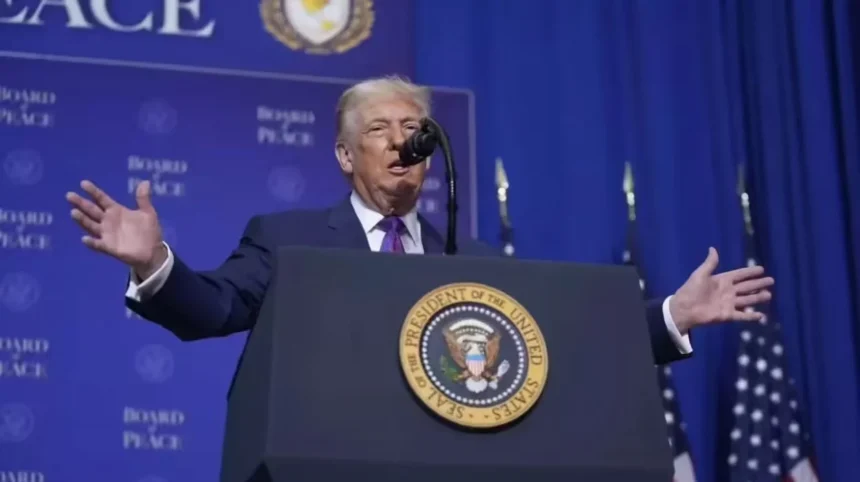
As reported by the Times of India, US President Donald Trump said his newly created Board of Peace will “almost be looking over the United Nations and making sure it runs properly,” positioning the body as an oversight mechanism for the UN. Speaking at the inaugural Board of Peace meeting in Washington, Trump pledged that the United States would work to “strengthen up the United Nations” and help ensure its facilities and finances are improved. According to Anadolu Agency, Trump described the UN as having “great potential” and vowed to work “very closely” with the organization while the Board of Peace focuses on Gaza and broader peace efforts.
Times of India reports that the Board of Peace was launched as part of Trump’s 20‑point peace plan aimed at ending the conflict in Gaza. The initiative brings together leaders from countries that have agreed to join the new platform, which Trump has previously suggested “might” replace the UN because he believes the world body has never lived up to its potential. At the meeting, he stressed that despite past criticism, the United States would remain engaged with the UN and provide financial support to keep it “viable.”
According to Anadolu Agency, Trump said the Board of Peace would “be looking over the United Nations” to ensure it runs properly, while reiterating that Washington intends to “bring them back” and make the UN stronger. He also emphasized the need for improved facilities and additional funding for the UN, saying the organization “needs help, and they need help money-wise.” Both outlets note that the United States remains the largest financial contributor to the UN, though it has accumulated several billion dollars in unpaid assessed contributions.
Trump told attendees he would soon speak with the UN Secretary‑General and highlighted what he called a good working relationship, according to the Times of India. He said the United States is “very closely working with the United Nations,” insisting that his new Board of Peace is meant to strengthen, not sideline, the world body. Anadolu Agency likewise notes that Trump framed the board as a partner intended to help the UN reach what he described as its “tremendous potential.”
How have Trump’s remarks and the UN role been framed?
According to the Times of India, Trump used the Board of Peace meeting to underline his long‑standing view that the UN has underperformed, stating it has “never lived up to its potential” despite what he sees as its importance. He said that “someday, I won’t be here. The United Nations will be,” adding that he expects the organization to be “much stronger” in the future, with the Board of Peace helping ensure it “runs properly.” Time magazine similarly reported that Trump characterized the Board as effectively overseeing the UN while he continues to work closely with the world body.
Times of India notes that Trump has previously been critical of the UN and withdrew the United States from several UN agencies in his earlier term, including the World Health Organization. Despite that history, he told the Board of Peace gathering that the UN is “really very important” and that he believes it will eventually “live up to potential.” Time’s reporting also highlights Trump’s argument that the Board will help the UN operate more effectively by pushing for better management and increased support.
Anadolu Agency reports that Trump stressed the Board of Peace would not operate in isolation from existing institutions, saying “we’re going to be working with the United Nations very closely.” He presented the Board as a vehicle to channel resources and political backing into UN‑related peace and reconstruction efforts, particularly in Gaza. However, as Times of India notes, his earlier suggestion that the Board “might” replace the UN has raised questions about how the new structure could alter the balance of global governance.
At the same time, Times of India reports that a spokesperson for UN Secretary‑General António Guterres, Stéphane Dujarric, said he was not aware of any UN participation in the Board of Peace meeting. Dujarric emphasized that the UN continues to focus on implementing Security Council resolutions related to Gaza and remains engaged with actors affecting the humanitarian situation on the ground. This underscores that, for now, the Board of Peace operates separately from formal UN mechanisms.
Supporting details on funding, Gaza focus, and Trump’s record
According to the Times of India, Trump used the event to reiterate that the United States is the UN’s largest single financial backer, covering about 22 percent of the organization’s regular budget and around 25 percent of its peacekeeping budget. The outlet reports that Washington nonetheless owes an estimated 4 billion dollars in unpaid dues, reflecting years of delayed or withheld contributions. Trump said at the Board meeting that his administration would help the UN “money wise” to ensure it remains viable.
Times of India and Anadolu Agency both report that the Board of Peace is centered on Trump’s 20‑point plan to end the conflict in Gaza and oversee reconstruction. The body is described as a parallel platform bringing together participating states to coordinate financial support, political backing, and security arrangements in the Gaza Strip. Time magazine notes that Trump has presented the Board as a key instrument for managing Gaza’s post‑war recovery while keeping the United States in a leading role.
In his remarks, Trump said that during his second term he had “settled” eight wars without consulting the UN, according to the Times of India. He acknowledged that “in fact I should have spoken about all of them with the global body,” but used the example to argue that the UN has not always been central to US crisis diplomacy. This, he suggested, is part of the rationale for creating the Board of Peace as an additional forum for international coordination.
Anadolu Agency adds that Trump again described the UN as having “great potential” but in need of support and reform, while the Board of Peace would be “looking over” the world body to ensure it functions effectively. Time’s reporting notes that Trump’s comments fit a broader pattern of criticizing multilateral institutions while proposing alternative or parallel structures in which the United States exerts significant influence. Together, the accounts underscore how the Board of Peace is being framed as both complementary to and corrective of the UN system.
What are the implications for the UN and global diplomacy?
According to reports by the Times of India and Anadolu Agency, Trump’s statements signal an intention to keep the United States deeply involved in UN affairs while simultaneously elevating the Board of Peace as a quasi‑oversight structure. By saying the Board will “almost be looking over the United Nations” and ensure it “runs properly,” he has positioned the new body as a mechanism for shaping UN priorities and performance, particularly on Gaza. Time’s analysis notes that this approach could reinforce US influence over peace and reconstruction agendas while raising questions about the UN’s autonomy.
Times of India highlights that Trump’s earlier suggestion the Board “might” replace the UN has drawn scrutiny from observers who see the global body as central to international law and multilateral cooperation. While he now emphasizes partnership and strengthening the UN, the existence of a parallel structure devoted to Gaza and broader peace issues has led some diplomats and analysts to question whether the UN’s role could be diminished over time.
For the moment, UN officials have maintained that their focus remains on implementing Security Council resolutions and managing humanitarian operations, particularly in Gaza, independent of the new Board. As Times of India reports, the absence of official UN participation in the Board’s inaugural meeting suggests that the relationship between the two entities is still undefined. Future developments will depend on how frequently the Board convenes, how its decisions intersect with UN processes, and whether member states see it as complementing or competing with existing multilateral frameworks, as described in coverage by Times of India, Anadolu Agency, and Time.
In his remarks at the Board of Peace meeting, Trump framed the initiative as a long‑term effort, saying that although “someday I won’t be here,” he expects the United Nations to endure and become “much stronger.” According to the Times of India, he argued that with financial support, closer coordination, and the Board “looking over” its operations, the UN could eventually live up to what he called its “tremendous potential.” For now, the Board’s creation marks a significant new element in the landscape of international diplomacy, adding another forum through which the United States seeks to shape global responses to conflict and reconstruction.