


According to coverage by Arab News, Israel has announced it will halt shipments of aid to Gaza that are coordinated by the UN children’s agency UNICEF and originate from Egypt, after Israeli authorities said they foiled an attempt to smuggle tobacco and nicotine products in those consignments. The decision was conveyed by COGAT, the Israeli Defense Ministry body responsible for civilian affairs in the Palestinian territories, which oversees the inspection and entry of humanitarian aid into the Gaza Strip. In its statement, COGAT said it had informed the head of UNICEF about the suspension of aid shipments from Egypt following the discovery of the alleged smuggling attempt at the Kerem Shalom crossing.
Arab News reported that COGAT stated bottles containing nicotine substances were discovered concealed inside cartons of hygiene kits during an inspection of humanitarian aid coordinated by UNICEF. The agency released a photograph showing some of the seized items as part of its public statement on the incident. COGAT added that the suspension of UNICEF-coordinated shipments from Egypt would remain in place until the UN agency provides the findings of a full internal investigation as well as an official response regarding the matter.
The report noted that the incident occurred at Kerem Shalom, currently the only functioning entry point for humanitarian aid and commercial goods going into the Gaza Strip. The crossing, which sits at the intersection of Israel, Gaza and Egypt, has become a critical lifeline for basic supplies amid the extended blockade and ongoing humanitarian crisis in Gaza since the outbreak of war with Hamas in October 2023. Under a United States‑brokered ceasefire agreement reached in October 2025, Israel has retained control over nearly half of Gaza’s territory, including all border areas and crossings, giving it decisive authority over what enters the enclave.
How Have the UN and Other Actors Responded?
The UN Office for the Coordination of Humanitarian Affairs (OCHA) stressed in a statement, cited by Arab News, that Kerem Shalom is currently the only entry point through which humanitarian aid and commercial goods are reaching Gaza. OCHA said that UN agencies and their partners were able to collect food, hygiene kits, early childhood development kits, medicines and animal fodder from the crossing on the day before its statement, but emphasized that “more crossings must be opened to scale up the response.” This warning underscores UN concerns that any further restrictions at Kerem Shalom could severely affect the already limited flow of aid.
While the Arab News report did not provide a detailed public reaction from UNICEF itself, it indicated that COGAT’s decision was communicated directly to the agency’s leadership and that Israeli authorities are conditioning the resumption of UNICEF aid shipments from Egypt on the outcome of the organization’s internal investigation. Other outlets relaying the same announcement, including regional and international media, also noted that the suspension specifically targets UNICEF-coordinated consignments coming from Egypt rather than all UN aid shipments. As of the time of the reporting cited, no broader changes to the status of other UN agencies’ aid flows through Kerem Shalom had been detailed.
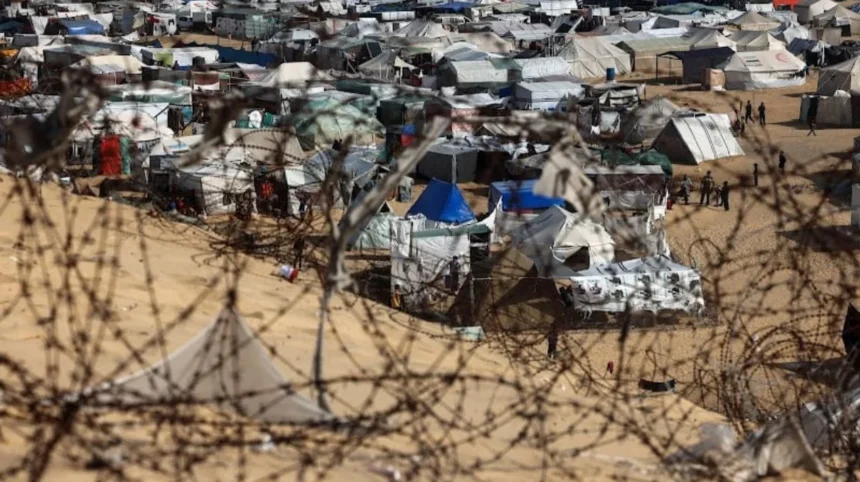
Humanitarian organizations and UN bodies have repeatedly warned that Gaza remains in dire need of increased aid volumes, with calls for Israel to allow more trucks and to open additional crossings beyond Kerem Shalom. These appeals have continued in parallel with Israeli security concerns about the misuse of aid channels, which Israeli authorities say justify stringent inspections at the border. The latest allegation of smuggling within UNICEF‑coordinated shipments has brought these tensions into sharper focus, as it pits Israel’s stated security priorities against the UN’s efforts to expand humanitarian access.
Supporting Details and Wider Humanitarian Context
Arab News reported that, under the US‑brokered ceasefire arrangement from October 2025, Israel’s continued control over border areas enables it to impose and maintain a “drastic blockade” that has been in place since the start of its war with Hamas in October 2023. UN agencies and international non‑governmental organizations have frequently called for more aid trucks to be allowed into Gaza, arguing that current volumes are insufficient to meet the needs of the enclave’s more than two million residents. Previous UN briefings have described parts of Gaza as facing famine‑like conditions, underscoring the importance of uninterrupted humanitarian supply lines.
The decision to suspend UNICEF‑coordinated shipments from Egypt comes in this context of chronic shortfalls and logistical bottlenecks. Kerem Shalom has been the primary entry point not only for food and medical supplies but also for hygiene products and materials needed to maintain basic services such as water and sanitation. Any reduction in the flow of hygiene kits or related items could therefore have knock‑on effects for public health, particularly for children, who are among the main beneficiaries of UNICEF‑supported programs.
Other media outlets that picked up the story, drawing on the same core information, reiterated that Israel’s move is focused on shipments coordinated by UNICEF and entering from the Egyptian side. These reports echoed COGAT’s description of finding nicotine products hidden in aid consignments and its demand for an investigation from UNICEF before any reversal of the suspension. The coverage collectively portrays an aid system under strain, where a single incident can trigger policy decisions with potentially broad humanitarian repercussions.
What Are the Implications and Possible Next Steps?
According to Arab News, Israeli authorities have made clear that the suspension of Gaza‑bound UNICEF shipments from Egypt will remain in effect until UNICEF completes and shares a full investigation into the alleged smuggling attempt and provides an official response. This condition suggests that the near‑term trajectory of these aid flows hinges on how quickly UNICEF can conduct its internal review and on whether its findings satisfy Israel’s security concerns. No specific timeline for this process was mentioned in the reporting available at this stage.
OCHA’s emphasis on the need to open more crossings to “scale up the response” points to a broader operational challenge that could be affected by any further disruptions at Kerem Shalom. If the suspension of UNICEF shipments is prolonged or expanded, humanitarian planners may need to explore alternative routes or adjust distributions to compensate for reduced supplies arriving through the Egyptian corridor. However, given Israel’s control over Gaza’s borders under the ceasefire framework, options for significant rerouting are limited and would likely require new political agreements.
In the medium term, the incident may influence how Israel, UN agencies and other aid partners design and monitor future shipments, potentially leading to tighter inspection regimes, revised packaging protocols or additional verification mechanisms. Humanitarian actors have consistently argued that while security checks are necessary, they must not unduly delay or restrict vital aid reaching civilians in Gaza. The balance between these priorities will be central to any negotiations that follow UNICEF’s investigation and to decisions on whether and how UNICEF‑coordinated shipments from Egypt can resume.
For now, Israel’s announcement marks a significant development in the management of humanitarian aid to Gaza, directly affecting one of the UN’s key child‑focused agencies and highlighting ongoing tensions between security concerns and emergency relief operations. The outcome of UNICEF’s internal probe, Israel’s assessment of its findings and any subsequent coordination measures will be critical in determining when, and under what conditions, these suspended aid shipments may be restored.