


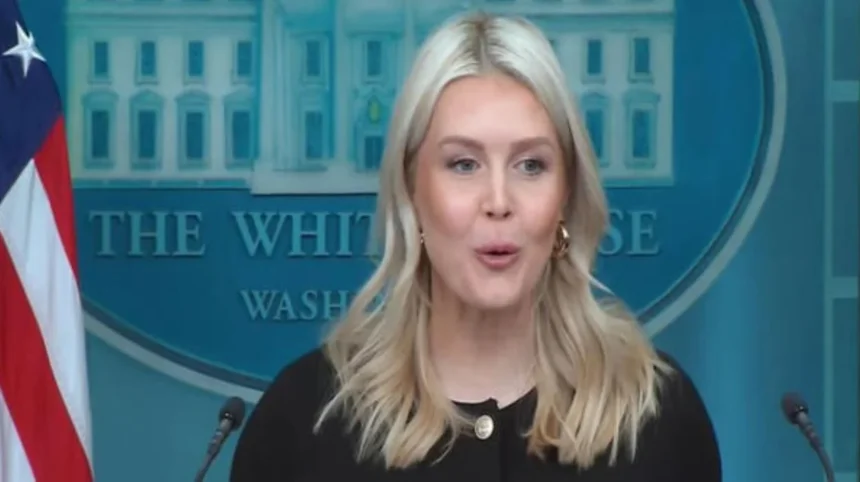
As reported by Deutsche Welle, United States President Donald Trump said member states of his newly created Board of Peace have pledged more than 5 billion dollars toward efforts in the Gaza Strip. According to The Wall Street Journal, Trump is expected to formally announce the 5 billion dollar package at the first Board of Peace gathering in Washington, which the White House has framed as the launch of a new global entity focused on peace in the Middle East and Gaza’s recovery. Public broadcaster All India Radio also reported that White House Press Secretary Karoline Leavitt said Trump will chair the Board of Peace meeting, which will focus on maintaining security in Gaza amid the ongoing war between Israel and Hamas.
According to coverage cited by Modern Diplomacy, the Board of Peace, chaired by Trump and attended by dozens of heads of state, has moved to allocate 5 billion dollars for Gaza as part of broader reconstruction and stabilization plans. Deutsche Welle reported that Trump, in a statement on his social media platform, indicated he would present the pledges during a Board of Peace session expected to draw representatives from more than 20 countries. Estimates from the United Nations, World Bank, and European Union place the total cost of Gaza’s reconstruction at around 70 billion dollars after more than two years of conflict, underlining the scale of the challenge relative to the pledged amount.
As reported by Al Jazeera, Trump originally unveiled the Board of Peace in connection with a Gaza ceasefire arrangement between Israel and Hamas, pitching it as a mechanism to manage governance, reconstruction, investment, and regional diplomacy linked to ending Israel’s military campaign. A draft charter circulated to around 60 countries, reviewed by Reuters and cited by Al Jazeera, described a body whose members must contribute 1 billion dollars in cash to remain on the board beyond a three‑year term, signaling expectations of sustained financial commitments. Al Jazeera also reported that Trump has promoted the board as a “bold new approach” to conflict resolution that could eventually extend beyond Gaza, while US officials quoted by The Associated Press have described such an expanded role as “aspirational.”
What Are Officials Planning and Saying?
According to All India Radio’s reporting, Press Secretary Karoline Leavitt told reporters that the Board of Peace meeting will center on how to maintain security in Gaza while the war with Hamas continues, with Trump expected to outline reconstruction plans and contributions of personnel. A video segment cited by Deutsche Welle and aired by international broadcasters stated that Trump would detail a financial package in which board member states have committed more than 5 billion dollars for humanitarian and reconstruction efforts, alongside thousands of personnel for an International Stabilization Force and support for local police. The Wall Street Journal likewise reported that participating nations are anticipated to put forward billions aimed specifically at rebuilding infrastructure, providing humanitarian aid, and contributing to an international security force tasked with sustaining a peace agreement.
Al Jazeera reported that invitations to join the Board of Peace were sent to a wide range of global leaders, with some diplomats telling Reuters the draft charter resembled a “Trump United Nations” with a broader agenda than the UN’s own charter. The same reporting noted that the United States has emphasized the Board of Peace is not intended to replace the United Nations, but rather to concentrate initially on Gaza while exploring a possible wider role in addressing global conflicts. Al Jazeera added that Trump has named former UK Prime Minister Tony Blair, along with senior US and regional officials, as founding executive members of an 11‑member executive board, signaling an effort to bring in high‑profile figures with experience in Middle East diplomacy.
Supporting Details and Expert Assessments
Modern Diplomacy reported that the inaugural Board of Peace meeting in the United States brought together more than 50 heads of state and focused heavily on Gaza reconstruction alongside broader themes of global peace and security. According to the same outlet, the White House has used the forum to promote implementation of the second phase of a Gaza ceasefire agreement, including provisions for a transitional administration, full demilitarization, and a regional framework for restoring peace. Analysis from the Arab Center Washington DC, examining the board’s mandate, highlighted concerns among regional experts over whether the new body will primarily serve Gaza’s reconstruction needs or advance a wider reconfiguration of global crisis management outside existing multilateral channels.
Deutsche Welle reported that United Nations, World Bank, and European Union estimates of a 70 billion dollar reconstruction bill indicate that the 5 billion dollar pledge, while significant, represents only a fraction of what will likely be required to rebuild homes, infrastructure, and public services in Gaza. Commentators cited by the Arab Center noted that the structure of the Board of Peace—requiring substantial financial contributions from member states and positioning the United States at its core—could reshape donor coordination and raise questions about accountability and oversight in the use of funds. These analyses point to a dual focus: immediate security and reconstruction in Gaza, and a longer‑term debate over how the Board of Peace fits into the broader international system.
What Are the Implications and Next Steps?
According to Deutsche Welle, Trump has said he intends to formally showcase the more than 5 billion dollars in pledges at an upcoming Board of Peace gathering in Washington, where representatives from over 20 countries are expected to discuss the next phase of support for Gaza. The Wall Street Journal reported that the meeting will effectively serve as the public debut of the Board of Peace as a new platform for organizing reconstruction funding and an international security presence tied to a Gaza peace arrangement. All India Radio indicated that Trump will use the session he chairs to present concrete plans for reconstruction and security, including contributions to an International Stabilization Force and support for local policing aimed at maintaining order for Gaza’s population.
Al Jazeera’s reporting, citing US officials, suggests that while the Board of Peace is currently focused on Gaza, the Trump administration views it as a potential test case for a broader “innovative strategy” for resolving conflicts globally. Analysts at the Arab Center Washington DC noted that the board’s evolution will be closely watched by governments and international organizations amid concerns about its relationship with the United Nations system and existing peacebuilding mechanisms. Future developments are expected to include further details on how pledged funds will be disbursed, how the international security force will operate on the ground, and how any transitional governance arrangements in Gaza will be structured and supervised.
The confirmed 5 billion dollar pledge from Board of Peace members marks a significant financial commitment toward Gaza’s reconstruction and security, even as independent estimates underscore the much larger sums required to rebuild the territory. With Trump set to formally announce the package in Washington, the focus now turns to how quickly and effectively funds and personnel can be deployed, how the new body will coordinate with established international institutions, and whether it can contribute to a durable peace and improved security conditions for people in Gaza.