


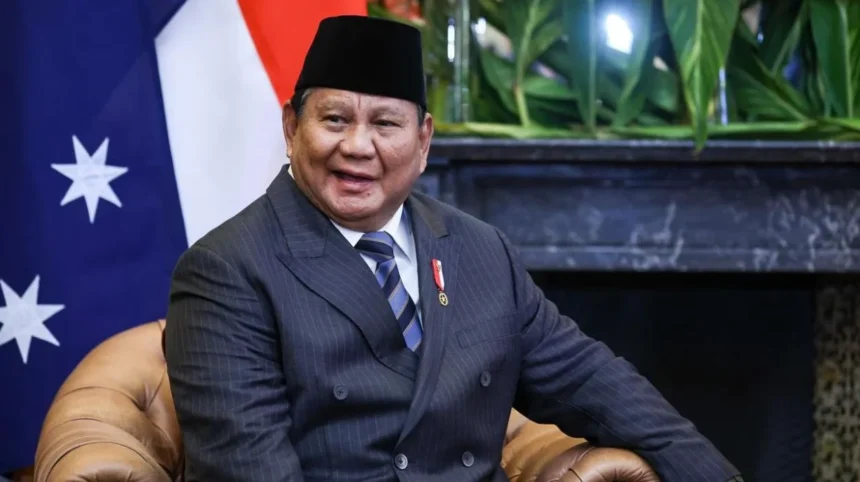
According to Reuters, Indonesian President Prabowo Subianto has put discussions with Donald Trump’s Board of Peace “on hold” as conflict between the United States, Israel and Iran escalates. Reuters reports that Indonesia had been preparing around 1,000 soldiers for potential deployment to Gaza by early April as part of a proposed multinational peacekeeping force, with the option to scale that contribution up to several thousand troops. As reported by Anadolu Agency, Prabowo’s government has now suspended all talks on the Board of Peace initiative, citing regional tensions and the need to reassess Jakarta’s role.
The New York Times previously reported that Indonesia’s armed forces had outlined plans to ready thousands of peacekeeping troops for Gaza under Trump’s Gaza plan, framing it as one of the most significant endorsements of the Board of Peace concept. In that reporting, military officials indicated an initial contingent of about 1,000 troops could expand to as many as 8,000, pending presidential approval. Anadolu Agency separately noted that Prabowo later publicly pledged “8,000 or more” troops for an International Stabilization Force in Gaza, underscoring Indonesia’s readiness to take a lead role if conditions were met.
As reported by The Diplomat, Prabowo had earlier told a security forum in Singapore that Indonesia was prepared to send “significant peacekeeping forces” to Gaza, but only under a United Nations mandate and in support of a “comprehensive and permanent ceasefire.” He linked any deployment to broader humanitarian commitments, including treating wounded Palestinian civilians in Indonesian hospitals, while reiterating Jakarta’s longstanding backing for Palestinian statehood.
How are Indonesian officials and domestic actors reacting?
According to Reuters, Indonesian Foreign Minister Sugiono has said that all discussions related to the Board of Peace have been paused because of the ongoing war involving Iran, stressing that Jakarta must first see progress toward de-escalation. Anadolu Agency similarly reports that Sugiono cited “military escalation in the Middle East” as the key reason for halting talks, signaling concern that the initiative might be overtaken by a wider regional conflict.
Domestic pressure has also intensified. Anadolu Agency notes that Indonesia’s participation has drawn criticism from political and religious groups who fear joining a body led by the Trump administration could undermine the country’s traditional support for the Palestinian cause. The Indonesian Ulema Council has publicly urged the government to withdraw from the initiative altogether, arguing the Board of Peace lacks effectiveness while military operations in the region continue.
Reuters reports that Hanif Alatas, a member of the presidential advisory circle, has said Prabowo would withdraw from the Board of Peace if it fails to benefit both Palestinian and Indonesian interests, reflecting sensitivity to domestic opinion. Nahdlatul Ulama leader Yahya Cholil Staquf, in a statement released by Prabowo’s office and cited by Reuters and Dawn, suggested Indonesia could declare the board’s agenda “suspended” until negotiations for de-escalation and peace related to the US‑Israeli conflict with Iran are underway.
Supporting details and broader background
Deutsche Welle reports that Indonesia agreed in principle to join the Board of Peace framework and send troops to Gaza, despite having no formal diplomatic relations with Israel and a strong tradition of pro‑Palestinian public sentiment. According to DW, Prabowo’s move was seen as politically risky at home but also as a way to position Indonesia as a major Muslim‑majority contributor to any Gaza stabilization effort. Al Jazeera has reported that Indonesia, along with Morocco, Kazakhstan, Kosovo and Albania, is among five countries that pledged troops to Gaza under Trump’s plan, highlighting the multinational character of the envisaged force.
Defence24, a security-focused outlet, notes that Indonesia had emerged as perhaps the most active member of the Board of Peace, signaling readiness to deploy up to 8,000 troops and framing its involvement as conditional on genuine support for the Gaza peace process. The outlet reports that in early March, as the US–Iran confrontation worsened, Jakarta temporarily suspended discussions on the board’s planned activities, including the Gaza mission, in order to closely monitor developments. It adds that calls inside Indonesia to reassess participation have grown, with politicians, civil society groups and religious leaders questioning the strategic and moral implications of a deployment tied so closely to Washington’s initiative.
What are the implications and what happens next?
Reuters reports that the immediate effect of Prabowo’s decision is to delay any deployment of Indonesian troops to Gaza, since the Board of Peace discussions and agenda are now formally on hold. Defence24 suggests that, assuming the US–Iran confrontation is not quickly resolved, postponement of Indonesian participation in the Gaza stabilization plan now appears “almost inevitable,” creating uncertainty around both the mission’s timeline and Jakarta’s future role.
According to Anadolu Agency, critics inside Indonesia argue that continued association with the Board of Peace could damage Jakarta’s credibility on Palestine if the initiative fails to halt violence on the ground. At the same time, DW and The Diplomat note that Prabowo has tried to balance domestic expectations by emphasizing that any Indonesian deployment must support a durable ceasefire, Palestinian self‑determination and a two‑state solution.
For now, Indonesia’s government has signaled that it will watch regional developments—particularly the Iran‑related escalation—before making any final decision on whether to fully join, suspend, or withdraw from the Board of Peace. Officials and advisers quoted by Reuters and other outlets indicate that Prabowo’s bottom line is whether the framework can tangibly advance Palestinian interests while safeguarding Indonesia’s own security and diplomatic standing.