


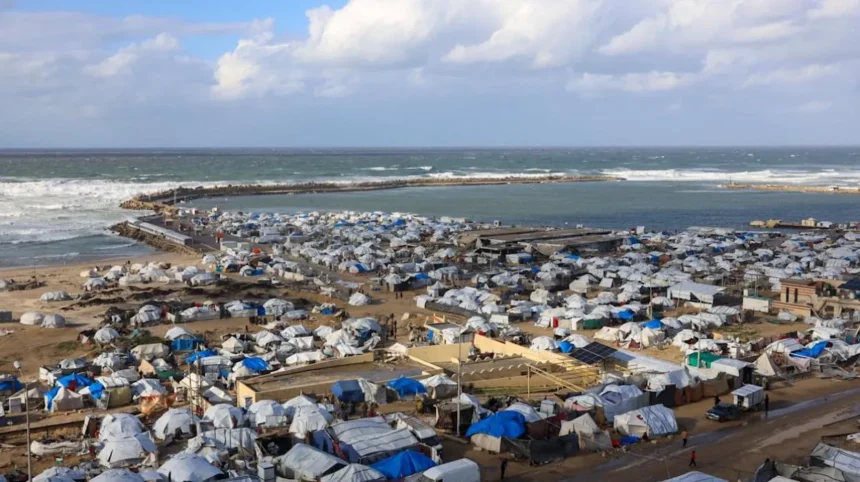
According to AOL, the US-backed cease-fire plan for Gaza has formally moved into its second phase, shifting the focus from frontline hostilities toward governance and reconstruction arrangements in the territory. As reported by staff writers at NDTV, this phase proceeds despite ongoing disputes between Israel and Hamas over elements of the broader deal, indicating that key political and security issues remain unresolved.
As reported by staff at TIME, President Donald Trump’s administration has framed “Phase Two” as the launch of a transitional technocratic Palestinian administration to oversee demilitarization, governance, and rebuilding in Gaza. Trump’s special envoy Steve Witkoff said this structure is intended to manage day-to-day civilian affairs under an agreed framework, with expectations that armed factions, including Hamas, comply with their obligations under the cease-fire.
According to coverage by Channel NewsAsia and other outlets, the plan centers on a 15-member Palestinian technocratic committee, composed of non-partisan figures from the private sector, civil society, and professional backgrounds. Mediator states Egypt, Qatar, and Turkiye have presented this body as a means to stabilize Gaza’s administration during the transition away from wartime conditions and toward a longer-term settlement.
Who is leading the new Gaza committee?
According to AOL and other international outlets, mediators Egypt, Qatar, and Turkiye have announced that the technocratic committee will be headed by Ali Shaath, a former deputy minister in the Western-backed Palestinian Authority. As reported by TIME and Gulf News, Shaath is described as a Gaza-born civil engineer who previously oversaw industrial-area development, experience that mediators argue is relevant to large-scale reconstruction.
Al Jazeera, citing Egyptian state media, has reported that the committee Shaath leads is currently convening in Egypt to prepare its operational plans for administering Gaza under the cease-fire framework. According to Arab News Japan and NDTV, Egyptian outlets have stated that all members of the committee have arrived in Egypt and begun meetings in anticipation of entering the territory.
As reported by Channel NewsAsia, Shaath will work under the oversight of a US-led “Board of Peace,” a body that President Trump is expected to chair, with former UN Middle East envoy Nickolay Mladenov identified by several reports as the lead representative on the ground. According to CBC News and other outlets, the committee’s membership list, accessed by Reuters, includes figures such as Ayed Abu Ramadan of the Gaza Chamber of Commerce and Omar Shamali, associated with the Palestine Telecommunications Company Paltel.
Context and reactions: How is the new phase being received?
According to NDTV and Arab News Japan, Hamas and its rival Fatah, led by Palestinian President Mahmoud Abbas, have publicly endorsed the technocratic committee, an uncommon instance of consensus among major Palestinian factions. Mediator states have highlighted this cross-faction support as a key political foundation for the second phase, even as questions remain about how power-sharing and security control will function in practice.
As reported by Arab News Japan, senior Hamas official Bassem Naim stated that “the ball is now in the court of the mediators, the American guarantor and the international community to empower the committee,” underscoring that the body’s effectiveness will depend on external backing and implementation on the ground. Al Jazeera has noted that Shaath has emphasized a focus on “brains over weapons,” indicating that the committee intends to concentrate on civilian administration and reconstruction rather than direct engagement with armed factions.
International coverage by TIME and other outlets has also underlined that the cease-fire’s first phase was marked by significant challenges, including continued violence and disputes over hostage and prisoner issues, which now shape expectations for the current phase. According to NDTV, unresolved disagreements between Israel and Hamas over alleged violations and interpretations of the cease-fire terms continue to cast uncertainty over how smoothly Phase Two can proceed, despite the formal political backing for the new committee.
Supporting details on governance and oversight
According to Channel NewsAsia and Gulf News, the 15-member committee is designed as a technocratic body of non-partisan experts rather than representatives of specific parties, with a mandate to handle municipal services, economic management, and reconstruction projects. Outlets reporting from Cairo state that mediating countries see the structure as a way to separate governance functions from the armed wings of Palestinian factions, while still maintaining their political endorsement of the arrangement.
As reported by TIME, it is understood that the committee’s day-to-day work in Gaza will occur under the supervision of the Trump-led “Gaza Board of Peace,” though full membership of this board has not yet been officially detailed. Various reports cited by TIME have mentioned high-profile international figures such as Nickolay Mladenov and former UK Prime Minister Tony Blair as potential board or advisory members, but major outlets note that these roles have not been formally confirmed.
According to CBC News, sources in Egypt and Palestine have said that both Hamas and Fatah approved the roster of committee members shared with mediators, including business and civic leaders such as Ayed Abu Ramadan and Omar Shamali. International coverage emphasizes that this arrangement is intended to reassure donors and external partners that reconstruction funds will be managed by professionals with administrative experience rather than by militant groups.
What are the implications and what happens next?
According to NDTV and Arab News Japan, the entry into Phase Two means that responsibility for Gaza’s civilian administration is shifting, at least on paper, from wartime authorities toward the newly formed technocratic structure under international oversight. Mediator countries and US officials have presented this as a step toward creating conditions for sustained calm, reconstruction, and a possible broader political process involving Gaza’s long-term status.
However, as reported by NDTV and Al Jazeera, continued violence and unresolved disputes between Israel and Hamas over cease-fire implementation underscore that the security environment remains fragile, potentially affecting how quickly and effectively the committee can operate inside Gaza. Reports from Egyptian state media, cited by several outlets, indicate that the committee’s immediate focus is on internal planning meetings in Egypt, with entry into Gaza to follow, suggesting a phased roll-out rather than an abrupt transfer of authority.
According to TIME and Channel NewsAsia, the United States and mediating states have also tied the success of Phase Two to compliance by armed factions with demilitarization commitments and to the resolution of outstanding issues such as missing and deceased hostages. Future announcements are expected on the full composition and mandate of the US-led Board of Peace, as well as on how international donors will channel reconstruction funding through the new committee structure.
In sum, as reported by AOL and multiple international outlets, Gaza’s cease-fire has now formally moved into its second phase with the appointment of Ali Shaath as head of a new 15-member technocratic committee tasked with overseeing administration and reconstruction under international supervision. The extent to which this mechanism can stabilize Gaza and support long-term recovery will depend on security conditions, political cooperation among Palestinian factions, and sustained engagement by the United States, mediator governments, and international donors.