


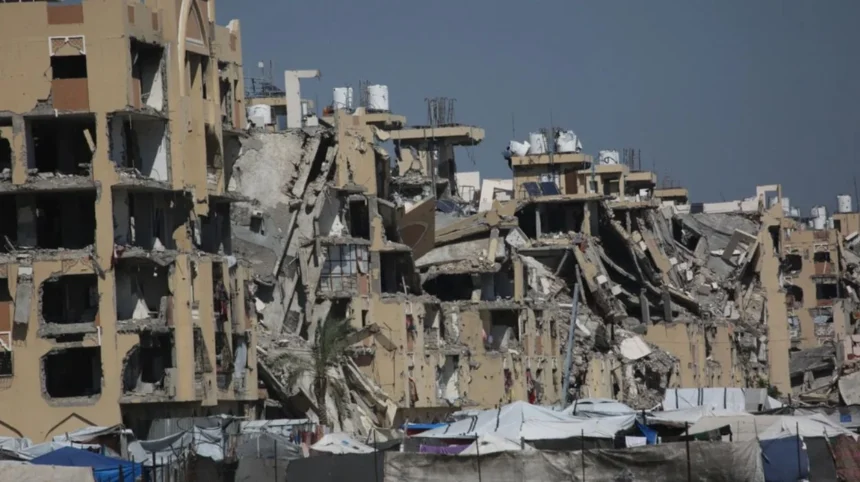
As reported by Daniella Cheslow of Politico, the Board of Peace was created as part of the ceasefire the United States secured in October between Israel and Hamas, with backing from the United Nations Security Council, to provide a framework for rebuilding Gaza and other conflict-affected areas. According to Politico, a leaked copy of the board’s charter describes its mission as building “peace in areas affected or threatened by conflict,” and its early work coincided with exchanges of hostages and prisoners between Israel and Hamas and the opening of the Rafah border crossing between Egypt and Gaza. Politico reports that U.S.-Israeli strikes on Iran are now disrupting this agenda, raising doubts about whether the body can fulfill its original goals for Gaza’s reconstruction.
According to Politico, Indonesia’s president has threatened to withdraw from the Board of Peace if it does not deliver concrete benefits for Palestinians, while the country’s foreign minister has said all talks about the board have been halted because of the war with Iran. Politico notes that this pause endangers the deployment of 8,000 Indonesian troops pledged to an international stabilization force linked to the board’s work in Gaza. A Trump administration official told Politico that talks with Indonesia are continuing and said the Board of Peace remains committed to bringing stabilization and prosperity to people in Gaza.
Politico reports that other participating countries, including Azerbaijan and Jordan, have indicated they remain committed to the Board of Peace despite the fallout from the Iran conflict. However, the outlet notes that the board’s central objective of rebuilding Gaza is still far from being realized. According to Politico, one key condition for large-scale reconstruction is the disarmament of Hamas, the group that carried out the 2023 attack on Israel, but there has been little public progress on that requirement.
Politico further reports that Israel has closed the Rafah border crossing, citing security risks related to the war with Iran. According to the article, this closure reverses a major milestone of the ceasefire plan and has reduced the amount of humanitarian aid entering the Gaza Strip. When asked about the status of the crossing, a Trump administration official referred Politico to Israeli authorities, underscoring that operational decisions on the ground remain in Israel’s hands.
The Israeli military body responsible for civilian affairs in Gaza, COGAT, told Politico that the Rafah crossing is “temporarily closed due to the missile threat” and will reopen when the security situation allows. Politico also cites Zaha Hassan, who advised the Palestinian negotiating team during its bid for U.N. membership, as noting that the Board of Peace’s mandate from the Security Council is scheduled to expire at the end of 2027. According to Politico, this timeline adds pressure on member states to show tangible progress in Gaza before the mandate runs out.
How are key actors reacting?
According to Politico, Indonesia has taken one of the strongest public stances among member states, with its president warning that the country could pull out of the Board of Peace if Palestinians see no clear benefits. The outlet reports that Indonesia’s foreign minister has already announced a halt to talks on the board because of the Iran war, signaling a direct link between the broader regional conflict and Jakarta’s willingness to stay engaged.
Politico reports that a Trump administration official insists discussions with Indonesia are ongoing and emphasizes that the board is still focused on stabilization and economic prospects for Gaza. According to the same report, other countries such as Azerbaijan and Jordan have not signaled similar public hesitation and say they remain committed to the board’s work. The differing reactions highlight how the Iran war is straining some partnerships while leaving others intact, based on Politico’s account.
Politico notes that, on the ground, Israel’s decision to close the Rafah crossing in response to missile threats tied to the Iran conflict has drawn concern from humanitarian actors who rely on that route for aid. According to Politico’s reporting, the closure has led to a measurable drop in assistance reaching Gaza, undermining one of the practical achievements of the October ceasefire. COGAT’s statement to Politico frames the closure as a temporary security measure, with reopening contingent on changes in the threat environment.
Supporting details and expert commentary
According to Politico, the Board of Peace emerged as a flagship element of the ceasefire arrangement that followed the 2023 Hamas attack and subsequent Israeli military response in Gaza. The board’s leaked charter, as described by Politico, envisions a broad remit that extends beyond Gaza to other regions affected or threatened by conflict. Politico reports that its design combines reconstruction planning, security stabilization, and diplomatic coordination under one umbrella.
Politico’s reporting underscores that the board’s success is tied to conditions such as the disarmament of Hamas, which has not yet been met in a substantive or publicly detailed way. The outlet notes that without meaningful progress on security and governance in Gaza, large-scale reconstruction projects envisaged under the board’s framework are difficult to implement. According to Politico, the stalled momentum is now compounded by the diversion of diplomatic and military attention to the Iran war.
Zaha Hassan, identified by Politico as an adviser to the Palestinian negotiating team during its U.N. membership bid, highlights the finite nature of the Board of Peace’s authority. Politico reports that she points to the end of 2027 as the expiration date for the board’s Security Council mandate. According to Politico, this deadline raises questions over whether there is enough time and political will to achieve the ambitious goals set out when the board was announced.
What are the implications and what comes next?
According to Politico, the U.S.-Israeli military campaign against Iran is already slowing the Board of Peace’s progress on Gaza, diverting high-level attention and complicating coordination with key partners. The reported pause in Indonesia’s engagement, including the potential risk to its pledge of 8,000 troops for a stabilization force, could weaken the board’s ability to operate on the ground if the situation is not resolved. Politico notes that, while other member states remain committed, the Iran war is testing the cohesion and resilience of the coalition behind the board.
Politico’s report suggests that the closure of the Rafah crossing will continue to hinder aid flows and reconstruction preparations as long as missile threats persist and Israel maintains current security restrictions. The statement from COGAT, as cited by Politico, indicates that a reopening is contingent on an improved security environment, leaving the timeline uncertain. According to Politico, stakeholders are watching both the evolution of the Iran conflict and diplomatic engagement within the Board of Peace to determine whether the original vision for Gaza’s rebuilding can be revived before the 2027 mandate expires.
In sum, Politico’s reporting indicates that the war with Iran has become a significant obstacle to the Board of Peace’s mission to rebuild Gaza and foster stability in conflict zones. With Indonesian participation under pressure, border crossings tightened, and little visible progress on disarming Hamas, the board’s future effectiveness will depend on whether member states can refocus attention and resources on its original mandate within the limited time authorized by the U.N. Security Council.