

Key Points
- EU foreign ministers, EU foreign policy chief Kaja Kallas, Board of Peace director Nikolay Mladenov, and U.S. President Donald Trump’s administration are key actors in the talks over Gaza’s future.
- EU top diplomats are meeting in Brussels with the head of the U.S.-backed Board of Peace to discuss Gaza reconstruction, ceasefire efforts, and the bloc’s possible role in the initiative.
- The meeting is taking place on Monday, following an inaugural Board of Peace gathering in Washington held the previous Thursday.
- Talks are being held in Brussels, the seat of EU institutions, after initial Board of Peace discussions in Washington, D.C.
- The discussions highlight deep divisions within the EU over whether, and how, to engage with Trump’s Board of Peace, which some member states fear could undercut the United Nations’ role in Gaza and reshape international conflict diplomacy.
- EU officials are engaging through full membership for some countries, observer status for others, and institutional outreach from the European Commission, while also debating legal competences and alignment with existing UN mandates.
- Outcomes may influence the scale and shape of Gaza’s reconstruction, the EU’s standing as a top donor to the Palestinians, relations with Washington, and broader debates over global peace and security governance.
Core meeting in Brussels
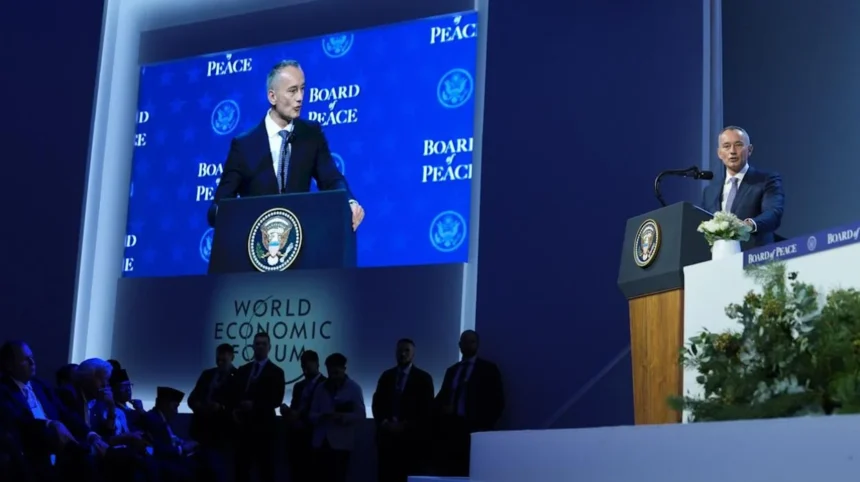
The European Union’s top diplomats are meeting in Brussels with the director of the Board of Peace to discuss the future of Gaza, following a contentious embrace of U.S. President Donald Trump’s initiative to oversee reconstruction of the war‑ravaged territory. Nikolay Mladenov, a former Bulgarian politician and United Nations diplomat appointed by Trump to manage the Board of Peace, is holding talks with EU foreign policy chief Kaja Kallas and foreign ministers from the bloc’s 27 member states.
- Key Points
- Core meeting in Brussels
- Trump’s Board of Peace and Gaza ambitions
- EU’s role in Gaza and existing commitments
- Divisions among EU member states
- European Commission under scrutiny
- Balancing UN support and US ties
- Humanitarian stakes in Gaza
- Legal and institutional questions
- Reactions from European capitals
- Wider geopolitical context
- What Happens Next
Officials say the meeting is intended to clarify the Board of Peace’s plans for Gaza, including ceasefire consolidation, humanitarian access and long‑term rebuilding, while allowing EU countries to assess how far they are prepared to cooperate. The agenda also includes wider foreign‑policy issues such as the war in Ukraine and possible new sanctions on Russia, underlining the breadth of the EU’s security concerns.
Trump’s Board of Peace and Gaza ambitions
The Board of Peace is a new U.S.-driven body that Trump has tasked with stabilising and rebuilding Gaza after devastating conflict, positioning it as a central vehicle for post‑war governance and development. According to reporting by Sam McNeil of the Associated Press, Trump’s ambitions for the board range from turning Gaza into a “futuristic metropolis” to challenging the U.N. Security Council’s traditional role in handling international crises.
Mladenov’s appointment draws on his earlier experience as a UN envoy in the Middle East, which Washington argues makes him well placed to navigate the complex political and humanitarian landscape in Gaza. However, progress on even narrower goals such as consolidating a ceasefire and expanding humanitarian corridors has been limited so far, underscoring the gap between the board’s rhetoric and realities on the ground. This information could not be independently verified.
EU’s role in Gaza and existing commitments
The European Union is already deeply involved in Israeli‑Palestinian affairs, including through financial support and on‑the‑ground oversight roles. The bloc is the leading donor to the Palestinian Authority and holds a crucial oversight function at the Rafah border crossing, a key gateway for goods and people into Gaza.
For many EU capitals, any engagement with the Board of Peace must be weighed against longstanding backing for United Nations frameworks and existing regional arrangements. EU officials have repeatedly signalled that they support the UN mandate in Gaza and are wary of any parallel structures that might dilute or sideline the UN’s authority.
Divisions among EU member states
The question of whether to work with the Trump‑led Board of Peace has split opinion across Europe, creating a patchwork of positions within the bloc. Some EU members, notably Hungary and Bulgaria, have opted to become full members of the board, taking a more closely aligned stance with Washington.
According to the Associated Press, EU candidate countries Turkey, Kosovo and Albania have also joined as full members, signalling support that extends beyond the 27‑nation bloc. Twelve other EU states sent observers to the inaugural Board of Peace meeting in Washington, including Austria, Croatia, Cyprus, Czech Republic, Finland, Germany, Greece, Italy, Netherlands, Poland, Romania and Slovakia, with the EU flag displayed alongside those of participating nations.
Other member states, however, have voiced strong reservations or opted not to participate, contributing to a sense of fragmentation in the EU’s external posture. Diplomats say the Brussels meeting is partly aimed at narrowing these internal differences and finding a more coherent common line on engagement with the board.
European Commission under scrutiny
Beyond national governments, the EU’s executive arm has also come under pressure over its handling of the Board of Peace issue. European Commission President Ursula von der Leyen declined an invitation to join the board but decided to send European Commissioner for the Mediterranean Dubravka Šuica to the Washington meeting as an observer.
French Foreign Minister Jean‑Noël Barrot has publicly criticised that decision, arguing that dispatching a commissioner without consulting the European Council — the body representing EU leaders — breached EU rules on institutional balance. In a post on X, Barrot said the Commission “should never have attended the Board of Peace meeting in Washington” and insisted that it must “scrupulously respect European law and institutional balance in all circumstances.”
A spokesperson for von der Leyen, Paula Pinho, defended the move, saying it falls within the Commission’s remit to accept invitations and participate as an observer. Pinho added that while the executive is not joining the board as a member, it wants to shape reconstruction and peacekeeping in Gaza beyond its existing role as the top donor to the Palestinian Authority.
Balancing UN support and US ties
The debate in Brussels reflects a wider dilemma over how the EU should position itself between multilateral structures led by the United Nations and new U.S.-backed initiatives. Many European governments see the UN framework as the main legitimate channel for managing Gaza’s future and fear that a competing body could make peace efforts more complicated.
At the same time, the EU depends on close strategic cooperation with Washington on security and foreign policy, including in Ukraine, the wider Middle East and transatlantic trade. Diplomats suggest that completely distancing the bloc from the Board of Peace could carry political costs, even as member states try to avoid endorsing any move that appears to weaken the UN system.
The presence of multiple EU members and candidates in the board, contrasted with the reluctance of others, also raises questions about the bloc’s ability to present a united front to external partners. This institutional tension is a central undercurrent of the current meeting in Brussels, according to officials familiar with the discussions.
Humanitarian stakes in Gaza
Behind the institutional and diplomatic manoeuvring lie severe humanitarian needs in Gaza, which has suffered extensive destruction and civilian displacement during the conflict. EU officials say any framework for reconstruction must prioritise immediate relief, restoration of basic services and support for civilian infrastructure.
Mladenov briefed ministers on the current humanitarian situation and the Board of Peace’s strategy, which, according to earlier comments from EU officials, includes options for EU participation in stabilisation and humanitarian efforts. This information could not be independently verified. Aid agencies have repeatedly warned that delays in organising coherent reconstruction and governance arrangements risk deepening the crisis and undermining prospects for long‑term stability.
EU diplomats are therefore weighing not only geopolitical and legal questions, but also the practical impact their decisions may have on the ground. Some argue that selective engagement with the Board of Peace could help channel resources more quickly, while others fear it could muddle responsibilities and accountability.
Legal and institutional questions
Barrot’s criticism of the Commission highlights the legal sensitivities surrounding EU representation in external initiatives. Under EU treaties, foreign policy is largely driven by member states acting collectively through the Council, with the Commission playing a supporting and implementation role.
Sending Šuica to Washington without prior agreement among national leaders has been framed by critics as an overreach, potentially setting a precedent for how far the executive can act in politically sensitive arenas. The Commission counters that it must maintain flexibility to attend international forums where matters of European interest are discussed, even if it chooses not to join as a full member.
Legal experts say the dispute could prompt further clarification of internal procedures for external representation, particularly when new international bodies emerge that overlap with existing multilateral structures. For now, the debate centres on political accountability rather than formal court challenges, but governments are watching closely how the issue is resolved.
Reactions from European capitals
European capitals have reacted in differing tones to the Board of Peace and the current Brussels meeting, reflecting their varied political landscapes and relationships with Washington. Countries that have joined the board or sent observers emphasise the opportunity to shape decisions from within and ensure European views are heard.
Others stress the risks of association with a body that some critics see as designed to contest the authority of the UN and potentially alter established norms in conflict resolution. According to the Associated Press report, high‑profile leaders such as French President Emmanuel Macron and Pope Leo XIV declined invitations to the board’s launch event, underscoring the level of caution in some quarters.
Diplomats note that even among sceptical governments, there is recognition that the board has become a factor in discussions over Gaza’s future that cannot be ignored. This has pushed some states to favour a strategy of limited engagement, closely coordinated with UN actors and other multilateral partners.
Wider geopolitical context
The Brussels talks come against the backdrop of overlapping international crises that are stretching the EU’s diplomatic bandwidth. In parallel with debates over Gaza, ministers are examining options for tightening sanctions on Russia in response to its ongoing war in Ukraine.
These simultaneous challenges reinforce the importance for the EU of maintaining coherence in its external policies and avoiding contradictory signals to partners and adversaries. How the bloc manages relations with the Board of Peace may be viewed more broadly as a test of its capacity to navigate complex, U.S.-driven initiatives while upholding its own principles and commitments.
Observers say the outcome could also influence the EU’s standing in the wider Middle East, where governments and public opinion monitor closely how Europe balances relations with Washington, the UN and regional actors. Any perception of inconsistency or fragmentation could complicate future diplomatic efforts on issues ranging from energy cooperation to security partnerships.
What Happens Next
EU officials say the Brussels meeting with Mladenov is an initial step in a longer process of defining the bloc’s stance towards the Board of Peace and Gaza’s reconstruction. Foreign ministers are expected to continue internal consultations in the coming weeks, including possible discussions at the European Council level on legal competences and political red lines.
The European Commission is likely to face further scrutiny from member states over its participation in board‑related events and the conditions under which it engages with new international structures. Future Board of Peace gatherings, as well as UN‑led conferences on Gaza, will provide additional forums where the EU will need to decide its level of representation and messaging.
On the ground, aid agencies and local partners are waiting for clearer signals about funding channels, governance arrangements and security guarantees for reconstruction projects. The way the EU reconciles its commitments to the UN system with any form of cooperation with the Board of Peace will help determine how resources are deployed and who oversees them in the months ahead.