

Key points
- Israeli Foreign Minister Gideon Saar will attend U.S. President Donald Trump’s first formal Board of Peace meeting in Washington on 19 February, Israeli and U.S. officials say.
- The Board of Peace was created under Trump’s plan to end the Gaza war, which was endorsed in a United Nations Security Council resolution, according to organisers and U.S. officials.
- Delegations from at least 20 countries, including several Middle Eastern and emerging powers, are expected at the inaugural session.
- Trump is expected to outline a multibillion‑dollar reconstruction package for Gaza and a proposal for a UN‑authorised international stabilisation force in the territory.
- Israel and Hamas agreed to a ceasefire under Trump’s plan last year, but both sides accuse each other of violating the truce amid continuing violence.
- Hamas has rejected calls to disarm, while Israel has warned it could use military action if the group does not give up its weapons.
- Regional powers such as Turkey, Egypt, Saudi Arabia, Qatar and Indonesia have joined the board, while some traditional Western allies have been more cautious, U.S. officials say.
- The meeting is expected to focus on the future security architecture in Gaza, the scope of Israeli withdrawals and conditions for reconstruction tied to demilitarisation.
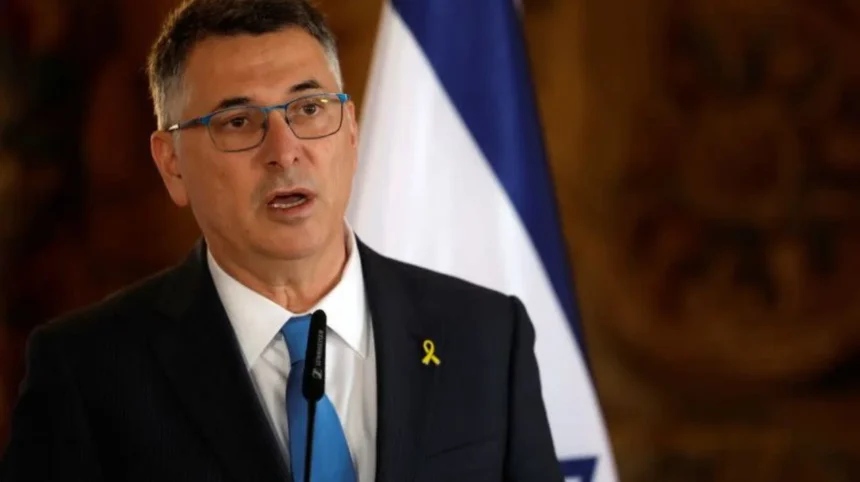
The Israeli foreign minister, Gideon Saar, will represent Israel at U.S. President Donald Trump’s first formal Board of Peace meeting in Washington on 19 February, a gathering at which Trump is expected to unveil plans for Gaza’s reconstruction and an international stabilisation force under a United Nations mandate, according to Israeli and U.S. officials. The session marks the inaugural full meeting of the board, established as part of Trump’s Gaza peace framework that was endorsed by the UN Security Council, and will bring together representatives from more than 20 countries, including several regional powers.
Board of Peace meeting in Washington
Israeli officials said Saar will travel to Washington to attend the board’s first formal session after first appearing at a ministerial‑level UN Security Council meeting in New York. Prime Minister Benjamin Netanyahu had initially been discussed as a possible participant but will not attend, with Saar designated to present Israel’s position instead, according to diplomatic sources and his office.
The Board of Peace was created under Trump’s initiative to end the Gaza war and was subsequently endorsed in a Security Council resolution, according to U.S. and board officials. Since its launch at the World Economic Forum in Davos in January, at least 19 countries have signed the founding charter, with organisers expecting more than 20 delegations at the Washington meeting, including several at head‑of‑state or foreign‑minister level.
U.S. officials cited in agency reporting said Trump intends to use the Washington session to present a multibillion‑dollar plan for rebuilding Gaza’s devastated civilian infrastructure. The same officials said the president will also set out details of an envisaged UN‑authorised stabilisation force intended to help secure the territory during and after Israeli withdrawals.
Israel’s role and diplomatic calculations
Saar’s attendance comes after Israel formally joined the Board of Peace during a visit by Netanyahu to Washington, where he met U.S. Secretary of State Marc Rubio and signed Israel’s accession, according to an account shared by the prime minister on social media and cited in regional media reports. A diplomatic source quoted by The Times of Israel said Netanyahu subsequently asked Saar to represent Israel at the inaugural board meeting in Washington.
Israel is expected to use the forum to reiterate its stance that any large‑scale reconstruction in Gaza must be linked to demilitarisation and security guarantees. Ahead of the board events, Saar is due to address the UN Security Council, where he has previously criticised what he termed an “anti‑Israel obsession” and argued that reconstruction should not proceed in areas where Hamas has not demilitarised, according to summary reporting of his recent remarks.
The Israeli government has consistently argued that any international presence in Gaza should support, rather than replace, its security requirements. Officials in Jerusalem have also expressed unease about some of the board’s planned members, with Netanyahu reported to have strongly objected to the inclusion of Turkish Foreign Minister Hakan Fidan and Qatari diplomat Ali Al‑Thawadi on the executive board.
Trump’s Gaza plan and UN‑backed framework
The Board of Peace forms part of a broader U.S. framework that aims to transition Gaza from active conflict towards a stabilisation phase under international oversight. According to U.S. officials, Trump’s plan includes successive stages covering ceasefire arrangements, phased Israeli withdrawals, Hamas disarmament and long‑term reconstruction backed by international funding.
Last year, Israel and Hamas accepted a U.S.‑brokered proposal that led to a ceasefire starting in October, according to officials cited by Reuters. Since then, more than 590 Palestinians, mostly civilians, and four Israeli soldiers have been killed in subsequent flare‑ups of violence, with each side accusing the other of violating the truce, those officials said. This information is based on official accounts and could not be independently verified.
U.S. officials have said they intend to use the board to coordinate more than 7 billion dollars’ worth of pledged and prospective assistance for Gaza’s recovery. The funds would be aimed at restoring housing, basic services and economic activity after two years of conflict that have left large areas of the territory in ruins.
International stabilisation force proposal
A central element of the discussions in Washington is expected to be the proposed international stabilisation force for Gaza. According to U.S. officials, Trump will announce that several countries plan to contribute thousands of troops to the force, which could deploy in the coming months subject to UN authorisation and agreement on rules of engagement.
The force is envisaged as operating under a UN mandate, with contributions from states that have joined the Board of Peace, including Turkey, Egypt, Saudi Arabia, Qatar and Indonesia, as well as other participating countries, according to officials familiar with the planning. Traditional Western allies of the United States have, however, shown more caution about participating directly, U.S. officials said.
Key questions still to be resolved include the precise timing and scope of Israeli withdrawals from Gaza, the division of responsibilities between international troops and local security actors, and mechanisms for monitoring compliance with disarmament commitments. Hamas has so far rejected calls to disarm, and Israeli officials have warned that if the group does not relinquish its weapons, Israel may resort to further military action, according to Reuters reporting.
Regional and political reactions
The composition and mandate of the Board of Peace have drawn a mixed response across the region. Governments such as Turkey, Egypt, Saudi Arabia and Qatar have joined the framework, seeing in it a potential channel to influence post‑war arrangements in Gaza and to shape reconstruction priorities.
Hamas has called on the board to put pressure on Israel over what it describes as ongoing violations of the ceasefire in Gaza, according to reports by Channel NewsAsia. The group argues that reconstruction and political progress should not be conditioned on disarmament, a position that is at odds with both Israeli and many Western governments’ stated requirements.
Within Israel, the decision for Saar to attend in Netanyahu’s place has been interpreted by some commentators as reflecting domestic political calculations and coalition dynamics, though such interpretations are not confirmed by official statements. Officially, Israeli authorities have presented Saar’s role as a practical decision to ensure high‑level representation while the prime minister remains in Israel.
Focus on Gaza reconstruction and security
The Washington meeting is expected to devote significant attention to the scale of destruction in Gaza and the conditions under which reconstruction can proceed. U.S. officials have said that the proposed multibillion‑dollar package would prioritise essential infrastructure such as electricity, water, medical facilities and housing, while aiming to create short‑term employment and support local governance structures.
At the same time, both Israeli and U.S. officials have linked reconstruction to progress on demilitarisation and security guarantees. U.S. envoy Mike Waltz was cited in one report as saying that reconstruction “cannot and will not take place in areas where Hamas has not demilitarised,” reflecting the conditional nature of the planned aid. This statement represents the position of the officials quoted and has not been independently assessed.
Board members are also expected to debate mechanisms for monitoring the use of funds, ensuring transparency and preventing diversion of resources to armed groups. Discussions are likely to cover the role of international financial institutions, UN agencies and non‑governmental organisations in administering aid projects on the ground.
What happens next
Following the 19 February session in Washington, the Board of Peace is expected to convene working‑level groups to refine proposals on the stabilisation force, reconstruction funding and sequencing of political steps, according to officials familiar with the planning. Any deployment of an international force will require further approval by the UN Security Council, as well as detailed agreements with potential troop‑contributing countries and with Israel.
Israel’s participation through Saar signals that it will engage with the process, while maintaining its insistence that Hamas disarm and that Israeli security concerns remain central to any long‑term settlement. The effectiveness of the board, and of Trump’s Gaza plan more broadly, will depend on whether key actors – including Hamas, Israel, regional powers and major donors – can reach consensus on the balance between reconstruction, security and political arrangements, a question that remains unresolved.