


Key Points
- Who: United Nations World Food Programme (WFP), Israeli authorities, Palestinians in Gaza, wider UN humanitarian system
- What: Reopening of a key aid crossing into Gaza for the resumption of humanitarian deliveries
- When: Announced on Tuesday 3 March 2026, with aid expected to pass through between Tuesday and Wednesday
- Where: Kerem Shalom crossing, at the junction of the Gaza Strip, Israel and Egypt
- Why it matters: The closure had further constrained already limited aid flows into war‑damaged Gaza, where the UN has warned of a deepening humanitarian crisis
- How it is being implemented: Israeli government agency COGAT says the crossing will resume operations for the gradual entry of humanitarian supplies, coordinated with UN agencies including WFP
- Potential impact: The reopening is expected to increase the volume and speed of food and other life‑saving relief entering Gaza, though aid agencies say overall flows still fall short of needs
A key aid crossing Gaza that was briefly closed is to reopen imminently, allowing humanitarian supplies to resume entering the enclave between Tuesday and Wednesday, the United Nations World Food Programme has announced. The Kerem Shalom crossing, controlled by Israel at the southern edge of the Gaza Strip, is expected to handle a gradual flow of food and other relief after Israeli authorities confirmed they would restart operations. The move comes amid mounting UN warnings about the humanitarian situation in Gaza and calls for all crossings to be reopened as soon as possible.
Immediate resumption of aid flows
The World Food Programme said humanitarian supplies “will be able to enter” through Kerem Shalom between Tuesday and Wednesday, describing the timing as critical for its operations. Samer Abdel Jaber, WFP’s Regional Director for the Middle East, North Africa and Eastern Europe, told reporters in Geneva via video link from Cairo that the agency needed to get aid in “as fast as we can”.
Israeli government agency COGAT confirmed that Kerem Shalom would reopen from Tuesday to permit the gradual entry of humanitarian assistance into Gaza. The crossing had been “momentarily closed”, the WFP said, further tightening restrictions on goods entering the territory before the latest announcement.
Official statements and confirmation
According to Reuters, reporting from Geneva, the WFP framed the reopening as a crucial opportunity to restore some measure of predictable supply into Gaza after the temporary shutdown. Samer Abdel Jaber of the WFP was quoted as saying the decision was timely and underscored the need to accelerate deliveries to people in need.
Israeli officials, through COGAT, stated that Kerem Shalom would resume operations for humanitarian cargo, with aid expected to enter on a gradual basis rather than in a single surge. Al Jazeera reported that Israeli authorities announced plans to reopen the crossing, known in Israel as Kerem Shalom, to facilitate the “gradual entry of humanitarian aid” into Gaza.
UN officials have linked the status of Gaza’s crossings to their ability to sustain humanitarian programmes in the territory. In a recent daily briefing, the spokesperson for UN Secretary‑General António Guterres said it was “imperative that all crossings be reopened as soon as possible” in order to avert a worsening crisis.
Humanitarian situation inside Gaza
The reopening comes against the backdrop of prolonged shortages of food, fuel and other essentials in Gaza, where infrastructure and storage capacity have been severely damaged by conflict. UN briefings have noted that residents rely heavily on a steady flow of humanitarian and commercial goods from outside the enclave, and that any full or near‑total blockade rapidly undermines relief operations.
The WFP has previously warned that food deliveries into Gaza remained below targets even when crossings were functioning, citing limited access points and security constraints. In an earlier assessment, the agency said only a small number of Israeli‑controlled crossings into Gaza were operational and that the volume of aid entering the territory was insufficient to meet needs.
According to a UN press briefing, the organisation and its partners had worked to maintain a “sustained and predictable flow” of supplies but stressed that such efforts could not be sustained under conditions approaching a full blockade. The briefing underlined that the closure of crossings not only reduces food and fuel deliveries but also hampers medical evacuations and other critical movements.
Role of Kerem Shalom and other crossings
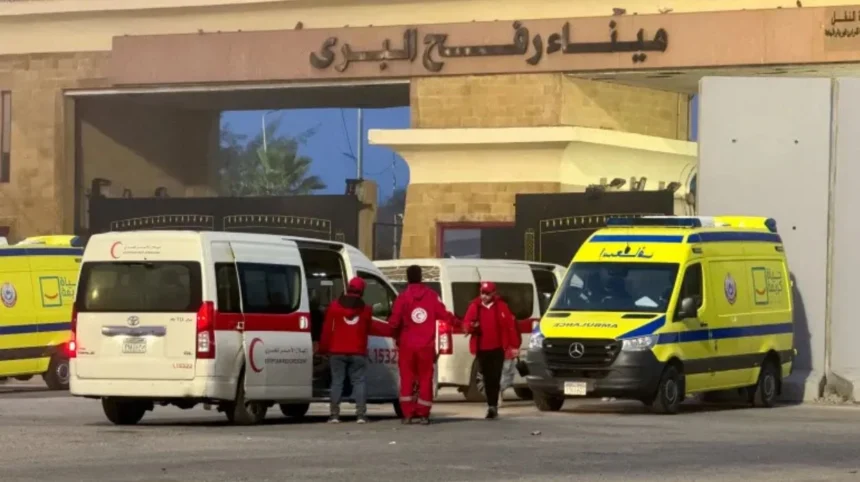
Kerem Shalom is one of the principal southern land crossings through which humanitarian supplies have entered Gaza, alongside Rafah on the border with Egypt. Situated at the point where the frontiers of Israel, Gaza and Egypt meet, it has in recent years become a focal route for UN agencies delivering large volumes of food, fuel and other relief items.
Past closures of Kerem Shalom and Rafah have had immediate consequences for aid flows. A WFP timeline of the crisis notes that simultaneous closures of both crossings in May 2024 sharply increased the risk of hunger for civilians, particularly in southern Gaza, due to the loss of the main entry points for relief. Although the latest closure of Kerem Shalom was described as momentary, UN officials have cautioned that even short disruptions can quickly translate into reduced distributions on the ground.
UN humanitarian officials have also stressed that aid access to northern Gaza remains more restricted than to the south, even when southern crossings are open. Previous briefings have indicated that while some crossings may function, security conditions and logistical constraints can prevent supplies from reaching all parts of the territory at scale.
International and UN responses
The Secretary‑General’s office has used recent briefings to call on all parties to ensure that humanitarian access to Gaza is not impeded. In remarks summarised by the UN press office, spokesperson Stéphane Dujarric said that under conditions where crossings are shut or heavily restricted, aid agencies are forced to ration fuel and prioritise only the most life‑saving activities as local stocks are depleted.
Antonio Guterres has urged that border points be reopened “as swiftly as possible”, arguing that the humanitarian system in Gaza depends on predictable access through multiple crossings. Al Jazeera reported that the UN chief warned of a worsening humanitarian crisis in Gaza linked to prolonged closures, emphasising that people in the enclave were facing acute needs amid ongoing military tensions. This information could not be independently verified.
The WFP, for its part, has adjusted its operations in response to access constraints, at times pausing or reducing activities in the most affected areas. According to a UN press briefing, around 160,000 people were impacted when WFP suspended programmes in certain parts of Gaza due to insecurity and lack of safe access.
Operational challenges and capacity
Even with the reopening of Kerem Shalom, aid agencies say that the volume of supplies entering Gaza remains well below what is required to stabilise the situation. A previous WFP assessment found that food flows into Gaza were “far below targets”, noting that a combination of limited crossings, security checks and logistical bottlenecks prevented larger convoys from entering.
Israeli officials have maintained that humanitarian aid has been entering Gaza in line with agreed frameworks, including ceasefire‑related arrangements, while security considerations are applied at border points. A security official cited by Reuters said that assistance continued to pass through Kerem Shalom and other designated crossings under such plans, although detailed figures were not disclosed.
On the ground, UN agencies have indicated that storage and distribution systems inside Gaza are under strain due to damaged infrastructure and limited fuel for trucks and generators. These conditions can delay the onward movement of supplies even after they cross the border, reducing the pace at which food and other essentials reach households.
Implications for civilians in Gaza
Humanitarian organisations have repeatedly warned that Gaza’s civilian population remains highly vulnerable to disruptions in aid, given the enclave’s dependence on external supplies and the destruction of local production capacity. WFP and other agencies say that recent closures and restrictions have increased the risk of hunger, particularly among children, the elderly and people with chronic illnesses.
The reopening of Kerem Shalom is expected to improve the immediate outlook for deliveries of food, medical items and other relief, although it does not in itself guarantee sufficient volumes or access to all areas. Aid officials have stressed that sustained, predictable access through multiple crossings, combined with security guarantees, is necessary to prevent further deterioration of living conditions.
International donors and UN agencies are likely to monitor the flow of trucks and the range of items permitted through the crossing over the coming days. Past experience has shown that changes in crossing status can be rapidly reversed if security conditions worsen, leading humanitarian planners to prepare contingency arrangements wherever possible.
What happens next
In the coming days, humanitarian agencies will seek to scale up convoys through Kerem Shalom and assess whether the reopened crossing can support larger, more regular shipments of food and other essentials into Gaza. The UN has signalled that it will continue to press for all crossings into the enclave to be reopened and kept functioning to sustain aid operations.
Operational data on truck numbers, cargo types and delivery destinations is expected to inform further discussions between UN agencies, Israeli authorities and other stakeholders on expanding access. If security and logistical conditions permit, aid officials may push for increased daily volumes and wider geographic coverage within Gaza to address unmet needs. However, they have also warned that any renewed closure or tightening of restrictions at key crossings could quickly undermine these efforts