


Key points
- United Nations Secretary-General António Guterres has warned that Gaza is facing an “Israeli-made” humanitarian crisis as Israel wages military operations against Iran with United States support.
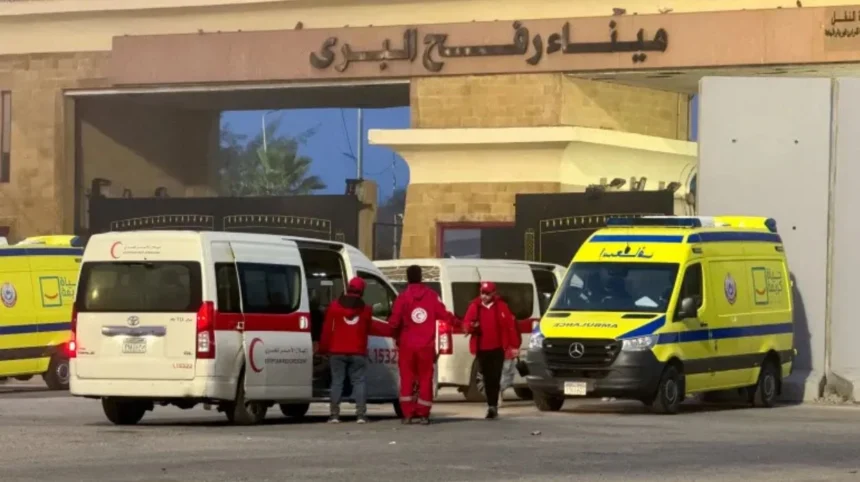
- Israeli authorities have shut all crossings into Gaza, including Rafah and Karem Abu Salem/Kerem Shalom, since Saturday, severely restricting the entry of fuel, food, medicine and other aid.
- The closures coincide with intensified Israeli strikes on Iran and wider regional escalation, raising fears that Gaza’s already dire conditions will deteriorate further.
- UN officials say fuel stocks in Gaza are rapidly dwindling, forcing aid agencies to ration supplies and prioritise only life‑saving operations in hospitals and essential services.
- The UN World Food Programme (WFP) has expressed cautious hope after Israeli officials signalled that the Karem Abu Salem/Kerem Shalom crossing could reopen for “gradual” delivery of humanitarian aid.
- Gaza’s reliance on trucked fuel from Israel and Egypt means the shutdown of crossings threatens hospital power, water pumping, and sewage treatment, compounding long‑standing shortages caused by blockade and repeated military operations since 2023.
- A UN investigation has previously found evidence of genocidal intent in Israel’s campaign in Gaza, while a separate genocide case brought by South Africa against Israel remains before the International Court of Justice in The Hague.
- Tensions are also rising in the occupied West Bank, where Israeli forces have kept checkpoints largely closed and restricted access to key religious sites, affecting movement, livelihoods and humanitarian work.
- The crisis in Gaza is unfolding against the backdrop of Israeli and US strikes on Iran and heightened conflict across the region, which humanitarian agencies say is undermining aid delivery and regional stability.
- The UN is pressing for the immediate reopening of crossings, protection of civilians, and compliance with international humanitarian law as the situation in Gaza and the wider Middle East remains volatile.
United Nations Secretary-General António Guterres has warned that the closure of Gaza’s border crossings by Israel risks creating an “Israeli-made” humanitarian crisis, as Israeli forces conduct joint military operations with the United States against Iran. His office has called for the immediate reopening of all crossings to allow fuel and life‑saving supplies into the enclave, where aid agencies say conditions are rapidly worsening.
- Key points
- Crossings shut as regional war escalates
- Fuel shortages threaten hospitals and water systems
- UN and WFP push for reopening of Karem Abu Salem crossing
- Long-running blockade and previous findings on Gaza
- Worsening conditions in the West Bank and East Jerusalem
- Regional escalation and impact on humanitarian access
- Legal and diplomatic pressures on Israel
- What happens next
Crossings shut as regional war escalates
Israeli authorities closed all crossings into Gaza, including the Rafah crossing and the Karem Abu Salem terminal known in Israel as Kerem Shalom, on Saturday as part of what officials described as security measures linked to the latest phase of operations against Iran. The move came as Israel, with US backing, launched strikes on Iranian territory and Iranian‑linked targets, a development that has broadened the scope of conflict beyond Gaza and Lebanon.
According to the UN spokesperson Stéphane Dujarric, humanitarian movements in and around Gaza have been suspended in areas affected by the closures, leaving aid agencies unable to maintain normal operations. He said partners had been forced to ration fuel and focus only on life‑saving activities as local stocks run down.
Thousands of people in Gaza are reported to require urgent medical evacuation for treatment unavailable inside the territory, but they have been unable to leave while crossings remain shut. This information could not be independently verified.
Fuel shortages threaten hospitals and water systems
UN officials say fuel supplies in Gaza are critical to keeping hospitals, desalination plants, and sewage facilities functioning. Gaza depends almost entirely on fuel brought in by truck from Israel and Egypt, and restrictions since October 2023 have already led to severe electricity shortages and repeated shutdowns of essential infrastructure.
In a recent briefing, the UN said that reduced water production in parts of Gaza City has left some residents with as little as two litres of drinking water per day, and that prices of basic commodities are rising. The agency warned that continued disruption to fuel deliveries would further compromise water pumping and waste management, increasing the risk of disease.
Hospitals that rely on generators face difficult choices about which wards to keep running as fuel runs low. Medical staff have previously reported postponing surgeries and reducing non‑emergency services during earlier phases of the conflict due to similar shortages, and humanitarian officials fear a repeat or worsening of that scenario if crossings remain closed.
UN and WFP push for reopening of Karem Abu Salem crossing
On Monday evening, Israeli officials announced that the Karem Abu Salem/Kerem Shalom crossing at the junction of Gaza’s borders with Israel and Egypt would reopen to allow the “gradual entry of humanitarian aid”, though no detailed timetable has been published. This border point has been a key route for fuel, food and other supplies and was shut down along with Rafah at the start of the latest operations.
Samer Abdel Jaber, the World Food Programme’s regional director for the Middle East, North Africa and Eastern Europe, told reporters that the agency was hopeful the opening of crossings would take place soon and said that any resumption would be “timely” given the level of need. He stressed that WFP must move aid into Gaza “as quickly as possible” if it is to prevent further deterioration in food security.
UN agencies have called for not only the reopening of Karem Abu Salem but also the restoration of safe humanitarian corridors within Gaza to allow aid workers to distribute assistance. They argue that logistical constraints, security risks and airspace restrictions in the wider region are already complicating relief efforts, and that border closures add another layer of difficulty.
Long-running blockade and previous findings on Gaza
The current restrictions come on top of years of blockade and repeated rounds of conflict that have eroded Gaza’s infrastructure and economy. Since October 2023, intensified Israeli military operations, combined with tight controls on crossings, have repeatedly limited access to fuel, building materials, medicines, food and clean water.
A UN investigation published in September concluded that there was evidence of genocidal intent in Israel’s military campaign in Gaza, a finding that added to international legal and political scrutiny. In a separate process, South Africa has brought a case against Israel at the International Court of Justice in The Hague, alleging that Israel’s actions in Gaza amount to genocide; the case remains ongoing.
Israel has denied allegations of genocide and argued that its operations target armed groups and military infrastructure, insisting that it takes steps to limit harm to civilians. According to Israeli officials, restrictions on crossings and fuel deliveries are linked to security considerations, including attempts to prevent armed factions from diverting supplies. This information could not be independently verified.
Worsening conditions in the West Bank and East Jerusalem
While the focus of the latest UN warning is Gaza, officials have also highlighted deteriorating conditions in the occupied West Bank. The UN has reported that Israeli forces have kept most checkpoints closed, significantly limiting travel between Palestinian cities and governorates and affecting access to jobs, schools, health care and humanitarian operations.
According to local authorities in East Jerusalem, Israeli security forces have maintained the closure of Al-Aqsa Mosque for several days, preventing worshippers from entering and declaring a security emergency in the area. The Jerusalem Governorate has said that these measures have heightened tensions and raised concerns over freedom of worship. This information could not be independently verified.
Last month, the Israeli government approved a plan to designate extensive areas of the West Bank as “state property” if Palestinians cannot prove ownership, prompting a wave of criticism. More than 80 UN member states condemned the move and urged Israel to reverse it, arguing that it amounts to “de facto annexation” and breaches obligations under international law.
Regional escalation and impact on humanitarian access
The situation in Gaza is unfolding against a broader backdrop of intensifying conflict in the Middle East, including Israeli and US strikes on Iran and cross‑border exchanges involving armed groups aligned with Tehran. UN agencies and humanitarian organisations say airspace closures, security risks and shifting front lines across the region are undermining their ability to move staff and supplies where they are needed.
A recent statement on developments in the Middle East highlighted that aid delivery has been hampered by logistical constraints, including restrictions on airspace and maritime routes used to reach conflict‑affected areas. In Iran itself, the UN has reported casualties among civilians, including schoolgirls, and significant displacement linked to the latest strikes, underscoring the wider humanitarian toll of the escalating confrontation.
UN officials have reiterated calls for all parties to uphold international humanitarian law, protect civilians, and facilitate unimpeded access for humanitarian assistance. They have warned that further escalation in any of the affected theatres – Gaza, the West Bank, Lebanon, Syria or Iran – risks overwhelming already strained relief efforts.
Legal and diplomatic pressures on Israel
The warnings from the UN chief add to existing legal and diplomatic pressure on Israel over its conduct in Gaza and the occupied territories. Alongside the ongoing case at the International Court of Justice, Israel faces criticism from governments, UN bodies and human rights organisations over settlement expansion, land designation policies, and restrictions on movement.
The recent decision to expand “state property” designations in the West Bank has been cited by critics as evidence of entrenching control over occupied land. According to statements by more than 80 UN member states, the plan appears inconsistent with Israel’s obligations under international law and could further complicate any future negotiations towards a political settlement.
Israeli officials maintain that security threats from armed groups in Gaza and elsewhere require robust measures, and they argue that steps such as crossing closures and land designations are grounded in domestic law and security assessments. International observers, however, continue to call for independent monitoring and accountability mechanisms to examine the impact of these policies on civilians.
What happens next
In the short term, attention will focus on whether Israel follows through on its stated intention to reopen the Karem Abu Salem/Kerem Shalom crossing and whether Rafah and other routes are also restored for humanitarian use. Aid agencies say the speed and scale of any reopening will determine how far they can stabilise fuel supplies, health services and food distribution in Gaza in the coming days and weeks.
Diplomatically, the UN is expected to continue pressing for guarantees of safe and sustained humanitarian access, as well as broader de‑escalation across the region. Legal proceedings at the International Court of Justice and further UN reporting on the situation in Gaza and the West Bank are likely to shape international debate over Israel’s conduct and the responsibilities of other states involved in the conflict.
With regional hostilities involving Iran, Israel, the United States and various non‑state actors still evolving, humanitarian organisations warn that the window to prevent a deeper crisis in Gaza is narrowing, particularly if fuel shortages persist. The coming weeks may prove critical in determining whether the current closures become a prolonged disruption or give way to more predictable humanitarian access arrangements.