


Key points
- Displaced and resident Palestinians in Gaza, local traders, and humanitarian organisations are among those affected by a sharp rise in food prices following Israel’s closure of all border crossings into the Strip, citing security concerns linked to attacks on Iran.
- Israeli authorities shut Gaza’s crossings after joint U.S.-Israeli air strikes on Iran, halting the entry of fuel and goods and triggering fresh fears over food insecurity in the war‑damaged territory.
- The closures began at the end of February 2026, with officials and aid agencies reporting rapid price spikes for staples in early March as stocks tightened and traders anticipated prolonged disruption.
- The situation is unfolding across the Gaza Strip, where more than two million residents, most of them displaced, depend heavily on aid and commercial imports entering through Israeli‑controlled border points and the Rafah crossing with Egypt.
- It matters because Gaza was already experiencing high levels of food insecurity and limited access to basic goods, and renewed price surges risk reversing fragile improvements achieved under a U.S.-brokered ceasefire and increased aid flows.
- The impact is being felt through reduced availability of key items, higher prices for flour, vegetables and fuel, and warnings from UN agencies that community kitchens and food parcels may soon run out if the closures persist.
- Analysts and humanitarian officials warn that a prolonged shutdown could deepen poverty, exacerbate malnutrition and potentially push parts of Gaza back toward famine‑like conditions if fuel and food supplies are not restored.
Borders closed, prices rise
Israel’s closure of all border crossings into Gaza, imposed after joint Israeli‑U.S. air strikes on Iran, has driven a sharp increase in food prices and renewed concerns over hunger in the territory, where most residents were already dependent on aid and limited commercial supplies. Officials and humanitarian organisations say the restrictions, introduced at the end of February 2026, have cut off fuel and goods and prompted traders to raise prices amid fears of sustained shortages.
- Key points
- Borders closed, prices rise
- Link to attacks on Iran
- Food price spikes and market disruption
- Fuel shortage and service collapse risks
- Israeli position on supplies
- Impact on already vulnerable population
- Humanitarian access and legal concerns
- Regional and international response
- Food insecurity outlook
- What happens next
Reuters reported that Israel blocked the entry of fuel and goods into Gaza after announcing air strikes on Iran, with Israeli authorities saying the crossings could not be operated safely during war. The decision has left Gaza’s population facing the prospect of tighter food supplies and higher costs, compounding existing hardship from months of conflict and displacement.
Link to attacks on Iran
According to Reuters, Israeli forces, backed by the United States, carried out air strikes on Iranian targets, after which Israel announced the closure of all border crossings with Gaza, citing the deteriorating regional security situation and risks linked to Iranian retaliation and allied militias. The Israeli military has argued that crossings and associated infrastructure cannot be safely operated in the context of what officials describe as a wider confrontation with Iran.
U.S. Defence Secretary Pete Hegseth said the campaign against Iran would not become an “endless war” and framed the operations as aimed at degrading Iran’s missile capabilities and security infrastructure rather than initiating a long‑term occupation. However, humanitarian agencies warn that, in the meantime, Gaza’s residents are bearing immediate costs in the form of restricted access to essential supplies.
Food price spikes and market disruption
Prior to the latest closures, aid flows and commercial imports into Gaza had increased modestly under a ceasefire arrangement, with the UN reporting some improvement in food access despite continued constraints. Following Israel’s decision to shut crossings, officials and UN agencies observed rapid increases in the prices of basic food items such as flour and fresh vegetables, as stocks dwindled and traders responded to the prospect of prolonged disruption.
In a previous episode described by the United Nations and later reported by Middle East Monitor, prices for flour and vegetables in Gaza rose by more than 100 per cent within a day of border closures in early 2025, illustrating how quickly market conditions can change when crossings are shut. The BBC likewise reported in 2025 that food costs in Gaza had surged dramatically when Israel halted aid deliveries, with the UN’s humanitarian office warning that many community kitchens risked running out of supplies.
While up‑to‑date, item‑by‑item price data for March 2026 are limited, humanitarian officials say similar patterns are now emerging, with traders increasing prices on the expectation that resupply will be delayed or reduced. This information could not be independently verified. Residents interviewed by international media in recent days have described being forced to reduce purchases, switch to cheaper, less nutritious items and rely more heavily on aid distributions where available.
Fuel shortage and service collapse risks
The closure of Gaza’s crossings has also cut off fuel deliveries, which are essential for electricity generation, hospital operations, water pumping, sewage treatment and transport. In its reporting carried by Global Banking & Finance Review, Reuters noted that Gaza was rapidly running out of its limited fuel reserves, raising fears of an imminent collapse of vital services if supplies are not restored.
Without sufficient fuel, refrigeration for food storage, bakery operations and the transport of goods to markets will be severely affected, potentially aggravating both shortages and price increases. Aid workers warn that fuel scarcity can quickly undermine food security even where some stocks remain, because items cannot be safely stored or distributed at scale, and community kitchens may be forced to suspend operations.
The UN’s humanitarian agencies have previously warned that, during earlier blockades, dozens of community kitchens were at risk of exhausting stock and fuel, threatening food support for hundreds of thousands of people. They say a similar scenario could play out if the current border closures are prolonged and no alternative arrangements are made for fuel and supplies to enter Gaza.
Israeli position on supplies
In public statements cited by Reuters, COGAT – the Israeli military body responsible for coordinating activities in the Palestinian territories – has asserted that sufficient quantities of food have entered Gaza since the start of the ceasefire to meet multiple times the population’s nutritional requirements. COGAT has claimed that “considerable quantities of food” were delivered and that existing stocks would be enough to last for “an extended period”, though it did not publish detailed data to support this assessment.
Human Rights Watch and UN officials, by contrast, have reported persistent shortages of medical supplies, construction materials, food and clean water in Gaza, and have criticised Israeli restrictions on aid as exacerbating humanitarian needs. These organisations argue that repeated closures, complex permit procedures and security checks have limited the real volume of goods reaching civilians, especially in areas hardest hit by fighting and displacement.
The divergence between Israeli official statements and humanitarian reporting has complicated efforts to assess the exact balance between needs, existing stocks and projected shortages. Analysts emphasise that, even if aggregate food inflows meet theoretical caloric requirements on paper, distribution challenges and price spikes can still leave many households unable to access adequate nutrition.
Impact on already vulnerable population
The border closures and price increases are affecting a population that was already facing high levels of poverty and food insecurity after more than a year of conflict. The ongoing war and earlier blockades destroyed or damaged large parts of Gaza’s agricultural sector, including farmland, greenhouses and fishing infrastructure, leaving residents more dependent on imported food and humanitarian assistance.
The UN and humanitarian agencies have repeatedly classified significant portions of Gaza’s population as experiencing crisis or emergency levels of food insecurity, with some areas previously assessed as being at risk of famine during extended periods when aid deliveries were tightly restricted. In that context, even relatively short disruptions to supply chains can quickly translate into acute hardship for families with limited savings and no access to formal safety nets.
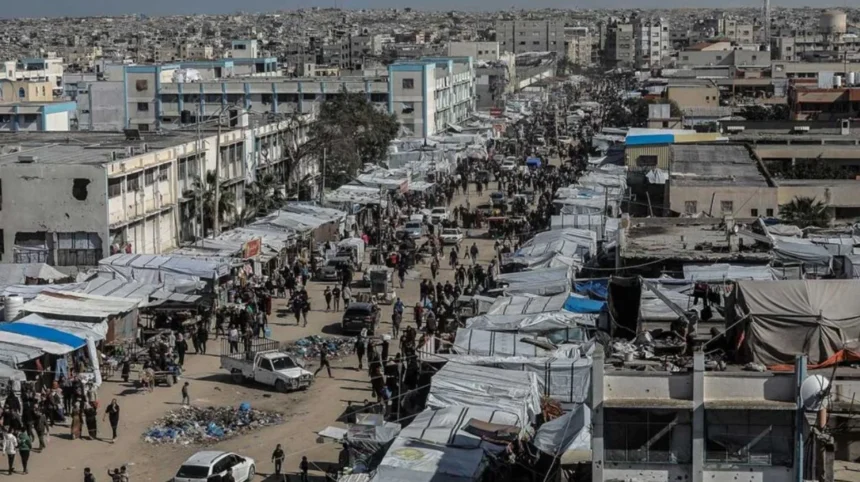
Displaced people living in tents and makeshift shelters are among those most exposed, as they often lack cooking facilities, refrigeration and income‑earning opportunities, increasing their reliance on distributions and purchased ready‑to‑eat items. Recent winter storms, which flooded many tented areas and damaged shelters, have further complicated efforts to store and prepare food safely.
Humanitarian access and legal concerns
Under international humanitarian law, parties to a conflict are required to allow and facilitate rapid and unimpeded passage of humanitarian relief for civilians in need, subject to reasonable security checks. Human rights organisations and some UN officials have argued that prolonged, broad‑based restrictions on food, fuel and essential goods can amount to unlawful collective punishment if they disproportionately affect civilians.
Israeli authorities maintain that closures and restrictions are motivated by security considerations, including the need to prevent weapons transfers, protect crossing infrastructure and manage threats from hostile armed groups. They say that humanitarian arrangements are periodically adjusted in response to changing risk assessments and that international agencies are kept informed of relevant decisions.
Legal and humanitarian experts note that, in practice, the distinction between security‑related controls and measures that have broader economic and social impacts can be difficult to draw, especially when large‑scale closures coincide with military escalations such as the current confrontation with Iran. They call for greater transparency on the criteria used to regulate flows of goods and for independent monitoring of the humanitarian consequences of such policies.
Regional and international response
The latest closures and price surges in Gaza are unfolding against the backdrop of wider regional tensions involving Israel, Iran and various armed groups. As missile and drone attacks are reported across multiple theatres, international attention has partly shifted to the dynamics of the Israel‑Iran confrontation, raising concerns among humanitarian actors that Gaza’s needs may receive less political focus.
Foreign ministers and UN officials have issued statements urging de‑escalation and calling on all parties to respect existing ceasefire arrangements in Gaza and facilitate humanitarian access. Some states have pledged additional funding for UN agencies operating in the Strip, while others have pressed Israel privately and publicly to reopen crossings for aid and commercial traffic.
Aid agencies say they are working to adapt distribution plans, prioritise the most vulnerable households and pre‑position goods where possible, but they warn that there is limited scope to compensate for a full closure of border points that serve as Gaza’s main supply routes. They have also highlighted the need for predictable, sustained access rather than short, ad hoc openings that can be difficult to integrate into longer‑term response strategies.
Food insecurity outlook
Humanitarian analysts note that the trajectory of food insecurity in Gaza over the coming weeks will depend on several variables, including the duration of border closures, the availability of fuel, the extent of any damage to storage and distribution infrastructure, and the level of international support. If crossings remain closed for an extended period, existing stocks of staple foods are likely to shrink, pushing prices higher and forcing more households to reduce meal frequency, diet diversity or both.
Previous assessments by UN agencies have warned that, under similar conditions, community kitchens may exhaust supplies and food parcels intended for hundreds of thousands of people could be depleted within a short timeframe. Analysts say that, in such circumstances, indicators of acute malnutrition among children and other vulnerable groups can deteriorate quickly, especially in overcrowded, unsanitary living environments.
At the same time, a relatively rapid reopening of crossings for fuel and goods could help stabilise prices, avert the worst‑case scenarios and allow aid agencies to scale up deliveries to compensate for the recent disruption. However, they caution that repeated cycles of closure and reopening make it harder to achieve sustainable improvements in food security, as traders, farmers and households struggle to plan ahead.
What happens next
In the immediate term, attention is likely to focus on whether Israel moves to partially or fully reopen Gaza’s border crossings as regional security dynamics evolve, and on any new arrangements negotiated with international mediators to safeguard humanitarian supplies. Humanitarian agencies will monitor market prices, stock levels and the functioning of community kitchens and food distribution points to assess how far the latest closures are eroding access to food.
If the shutdown persists, UN bodies and NGOs are expected to intensify appeals for access and funding, while warning of rising malnutrition and potential famine‑like conditions in the most vulnerable areas of Gaza. Donor governments may face decisions over whether to expand support, adjust programmes or explore alternative delivery channels, depending on political and security developments.
Longer term, analysts say that stabilising food security in Gaza will require not only the reopening of crossings and restoration of fuel and goods, but also progress on broader reconstruction and governance issues that underpin the territory’s economic resilience. Until then, residents remain exposed to abrupt shifts in supply and prices whenever border policies change in response to regional events beyond their control.