


Key points
- Médecins Sans Frontières (MSF) has warned that a huge influx of humanitarian aid is urgently needed to address what it calls “catastrophic conditions” in the Gaza Strip.
- The medical charity says people are dying from violence, hunger, disease and lack of basic services as Gaza’s health system and civilian infrastructure struggle to function.
- The statement was issued in late February 2026, more than two years into the current phase of the conflict and amid continuing restrictions on aid entering Gaza.
- Israeli authorities continue to tightly control and periodically close key border crossings, limiting the flow of food, fuel, medicines and other essential supplies into the territory.
- UN agencies and humanitarian organisations report widespread displacement, severe food insecurity, and escalating rates of malnutrition, especially among children and pregnant or breastfeeding women.
- MSF and other agencies are calling for a massive scale-up of assistance, unhindered humanitarian access and protection of medical facilities and staff in line with international humanitarian law.
- Aid groups warn that without a sustained increase in aid and the lifting of access constraints, preventable deaths from hunger, disease and lack of medical care are likely to rise further.
Huge influx of aid urgently needed amid catastrophic conditions in Gaza
- Key points
- MSF warns of deepening humanitarian emergency
- Aid access constrained by crossing closures and controls
- Health system under severe strain
- Displacement, food insecurity and famine warnings
- Calls for unhindered humanitarian access and legal obligations
- Official positions and contested narratives
- Human impact and medical priorities
- International response and funding needs
- What happens next
The international medical organisation Médecins Sans Frontières has called for a massive increase in humanitarian aid to the Gaza Strip, warning that civilians face catastrophic living conditions marked by widespread displacement, hunger, disease and a collapsing health system. The appeal comes amid continuing restrictions on aid flows through Gaza’s border crossings and growing concern among United Nations agencies and other relief groups over the scale of need in the territory’s densely populated urban areas.
MSF warns of deepening humanitarian emergency
In a recent statement, MSF said the situation in Gaza amounts to an unprecedented humanitarian catastrophe, with people dying not only from ongoing violence but also from preventable causes such as malnutrition, treatable infections and lack of access to essential health services. The organisation described living conditions as “undignified”, citing severe shortages of clean water, adequate shelter and sanitation, alongside overcrowded temporary camps.
Christopher Lockyear, MSF’s Secretary General, said the needs in Gaza are immense and that current levels of aid fall far short of what is required to stabilise the situation. He warned that “drastic restrictions” on humanitarian access are having “deadly consequences” for civilians who depend on assistance for survival.
MSF reported that hundreds of thousands of people require medical and mental health care, with tens of thousands needing long-term surgical, medical and psychological follow-up. Many of those patients, the group says, are living with complex blast injuries, amputations or chronic conditions that require specialised treatment and rehabilitation that are either not available or only partially available inside Gaza.
Aid access constrained by crossing closures and controls
Humanitarian organisations say their efforts to scale up operations have been blocked by strict controls on the entry of goods and personnel through Gaza’s limited crossings. On 28 February 2026, Israel’s Coordinator of Government Activities in the Territories (COGAT) announced the closure of the main crossings into the Gaza Strip, including those used by humanitarian aid workers, citing concurrent military operations against Iran.
The closures affected the Rafah crossing with Egypt, which had only recently reopened on a limited basis to permit some patient evacuations and the movement of a small number of people. According to COGAT, sufficient food had been sent into Gaza since a ceasefire to cover several times the needs of the population, although no detailed evidence was publicly provided to substantiate this claim. This information could not be independently verified.
Relief agencies, including UN bodies, have reported ongoing impediments to delivering aid inside Gaza even when consignments cross the border, citing insecurity, damaged infrastructure, fuel shortages and access constraints within the territory. Human Rights Watch has said in a February report that continuing Israeli restrictions on aid have contributed to shortages of medicines, reconstruction materials, food and water.
Health system under severe strain
Gaza’s already fragile health system has come under intense pressure following months of conflict, repeated displacement and infrastructure damage. Hospitals and clinics face shortages of medicines, equipment, fuel and staff, while some facilities have been damaged or rendered non-functional by hostilities or access issues.
UN health agencies report that access to safe drinking water and sanitation has been drastically reduced, leading to a surge in communicable diseases such as diarrhoea, respiratory infections and skin diseases, particularly among children. Multi-drug resistant infections have also been documented, compounding the challenges for medical teams working with limited laboratory capacity and supplies.
According to a joint assessment by UN agencies, the number of children at severe risk of death from malnutrition was projected to reach tens of thousands by mid-2026, with similarly high numbers anticipated among pregnant and breastfeeding women. In an earlier update, the World Health Organization said that while a large-scale famine in Gaza had been temporarily pushed back due to some increase in food deliveries, extreme food insecurity persisted and the situation remained highly precarious.
Displacement, food insecurity and famine warnings
Virtually the entire population of more than 2 million people in Gaza has been displaced at least once during the conflict, according to humanitarian agencies. Many families are living in makeshift shelters, damaged buildings or overcrowded camps, relying on food distributions and limited water trucking.
A UN-backed body confirmed famine conditions in parts of Gaza City and surrounding areas in 2025 and warned that hundreds of thousands of people were facing “catastrophic” levels of food insecurity. Projections indicated that by June 2026, malnutrition would threaten the lives of more than 130,000 children under five if conditions did not improve.
The Famine Early Warning Systems Network (FEWS NET) has said that dire hunger will persist in Gaza unless there is urgent action to increase humanitarian assistance at scale and restore basic services. Aid agencies stress that food distributions alone are not sufficient and must be accompanied by safe water, sanitation, shelter and functioning health services to prevent further avoidable deaths.
Calls for unhindered humanitarian access and legal obligations
MSF and other humanitarian organisations are urging all parties to the conflict, including Israeli authorities, to facilitate unhindered humanitarian access in line with international humanitarian law. This includes allowing the safe passage of medical and relief personnel, the entry of essential supplies and the protection of health facilities, patients and staff from attack.
MSF has said that restrictions on the entry of items such as medical equipment, prosthetics and other assistive devices are preventing patients with serious injuries or disabilities from receiving the care they need. The organisation argues that lifting these impediments is essential if aid agencies are to expand their operations to meet the scale of needs.
UN agencies have emphasised that under international humanitarian law, parties controlling territory or borders have obligations to ensure that civilians can access food, water and medical care and that relief operations can take place. They have repeatedly called for an immediate and sustained ceasefire to stop the fighting, enable the safe release of hostages and allow a mass influx of assistance to reach people across Gaza.
Official positions and contested narratives
Israeli officials state that they have facilitated the entry of humanitarian supplies and argue that armed groups operating in Gaza bear responsibility for some of the difficulties involved in aid distribution. COGAT has maintained that, in recent months, the volume of food entering Gaza has been sufficient to meet or exceed the population’s caloric requirements, though detailed data has not been made public. This information could not be independently verified.
Humanitarian organisations and some human rights groups dispute these assertions, arguing that the quantity of aid reaching Gaza remains far below what is needed and that distribution is further hampered by security risks, fuel shortages and damaged infrastructure. Human Rights Watch has alleged that Israeli restrictions on aid and on freedom of movement have contributed to the humanitarian crisis, including shortages of essential items.
According to ReliefWeb situation reports, thousands of pallets of aid have been offloaded at Gaza’s crossings in recent weeks under UN-administered mechanisms, but agencies say this still represents only a fraction of what is required given the level of destruction and displacement. The reports also note that medical evacuations through Rafah have resumed on a limited basis, allowing some patients to seek specialised care outside Gaza.
Human impact and medical priorities
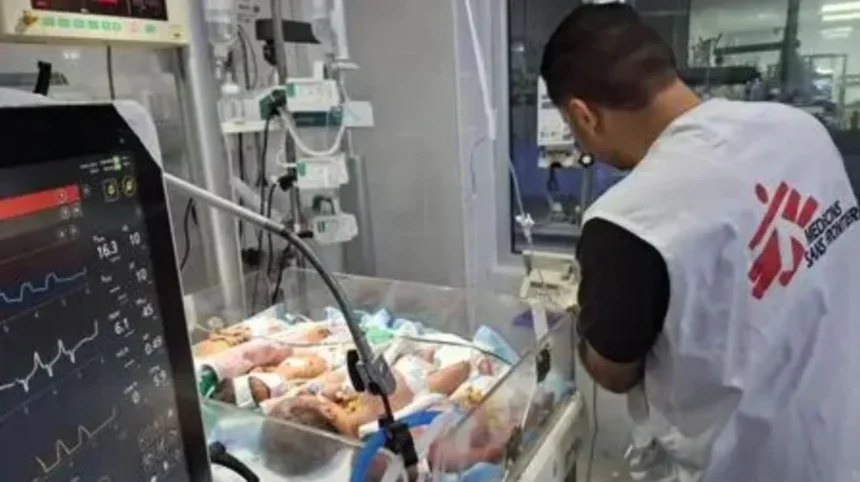
Medical teams operating in Gaza describe working in overcrowded facilities, where triage decisions are often made under extreme pressure due to the lack of beds, equipment and staff. MSF says its staff are striving to maintain essential services, including trauma care, maternity services and mental health support, despite these constraints.
Particular concern has been raised about children, who face heightened risks from malnutrition, unsafe water and disease. UN agencies have warned that common childhood illnesses, such as diarrhoea, are becoming life-threatening in the context of widespread undernourishment and limited access to treatment.
Beyond acute care, aid organisations highlight the needs of patients requiring long-term follow-up, including those with chronic diseases such as diabetes and heart conditions. Interruptions to regular treatment, combined with stress and displacement, are reported to be exacerbating these conditions and contributing to increased mortality.
International response and funding needs
The humanitarian response in Gaza is coordinated by the UN and a network of international and local non-governmental organisations, many of which have issued repeated appeals for increased funding and political support. Emergency plans have prioritised food assistance, health care, water and sanitation, shelter and protection services, but agencies say they remain under-resourced.
According to ReliefWeb’s situation reports, tens of thousands of people are receiving assistance each week, including through food distributions, water deliveries and mobile health clinics. However, aid providers say that access constraints and insecurity mean many communities continue to receive only sporadic or limited support.
International donors have pledged additional funding, but humanitarian organisations say that without predictable, safe access for personnel and supplies, financial commitments alone cannot address the scale of need. They argue that political decisions on ceasefires, border access and security arrangements will largely determine whether the situation stabilises or deteriorates further.
What happens next
Humanitarian agencies are preparing contingency plans to rapidly increase the volume of assistance delivered to Gaza if and when access conditions improve, including through expanded convoys, additional medical teams and the pre-positioning of supplies. UN bodies have indicated that an immediate and sustained ceasefire, coupled with guaranteed safe passage for aid, would be necessary to reverse current trends in malnutrition and disease.
Diplomatic discussions involving regional and international actors continue over arrangements to keep crossings open, protect humanitarian corridors and support Gaza’s damaged health and civilian infrastructure. Aid organisations say they will remain on the ground as far as security allows, but warn that without a significant and sustained influx of aid and a reduction in access restrictions, the humanitarian outlook for Gaza’s population will remain extremely grave.