


Key points
- Who: Israeli forces, Palestinian civilians in the Gaza Strip, particularly in Rafah and other areas across the enclave, and Palestinian media outlets including the Safa news agency.
- What: Continued Israeli airstrikes and artillery shelling are reported in Gaza despite the declared ceasefire, with bombardment hitting areas in the southern Gaza Strip and other locations.
- When: The incidents were reported on 1 March 2026, following the start of a ceasefire arrangement intended to halt hostilities in the Gaza Strip.
- Where: Strikes and shelling were reported in the Al‑Shakoush and Al‑Mawasi areas of Rafah in southern Gaza, along with other parts of the Gaza Strip.
- Why it matters: The reported attacks raise questions about compliance with ceasefire terms, expose civilians to renewed risk, and complicate diplomatic efforts to stabilise the situation in Gaza.
- How it is happening: According to Palestinian media, Israeli forces have used both airstrikes and artillery fire against areas that were expected to see a reduction in military activity under the ceasefire.
- Potential impact: The reported violations may undermine confidence in the ceasefire, increase humanitarian pressure on displaced communities in Rafah, and intensify calls for international monitoring and accountability mechanisms.
Israel accused of breaching Gaza ceasefire with continued strikes
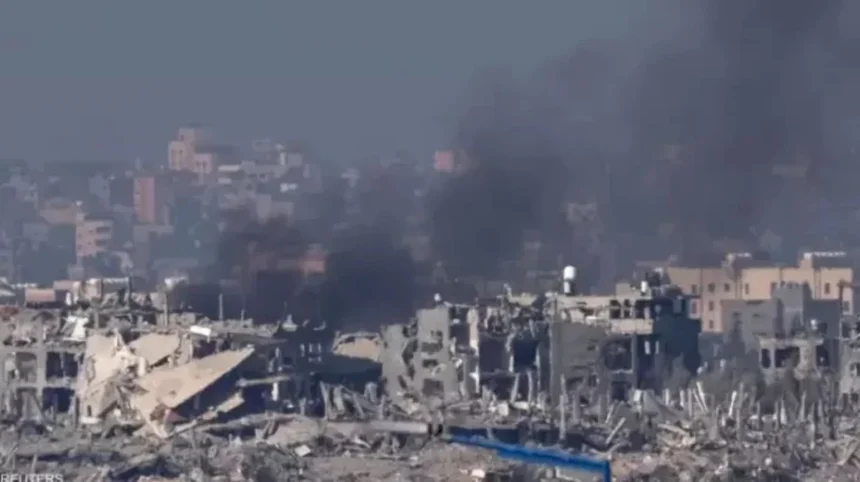
Israeli forces have been accused of continuing airstrikes and artillery shelling in the Gaza Strip despite an announced ceasefire, with Palestinian media reporting bombardment in and around Rafah on 1 March 2026. The attacks were said to have targeted civilian areas in southern Gaza, prompting renewed concern over the durability of the truce and the safety of displaced residents sheltering there.
- Key points
- Israel accused of breaching Gaza ceasefire with continued strikes
- Reported shelling in Rafah and southern Gaza
- Ceasefire framework under strain
- Civilian population in Rafah remains highly vulnerable
- Media sourcing and verification
- Regional and diplomatic context
- International humanitarian concerns
- Legal and accountability dimensions
- Limited official comment reported
- What happens next
Reported shelling in Rafah and southern Gaza
According to the Yemeni Saba News Agency, citing the Palestinian news agency Safa, artillery fire struck the Al‑Shakoush and Al‑Mawasi areas in the city of Rafah, close to the border with Egypt. The report stated that shelling and air activity were recorded despite the ceasefire, which was intended to halt offensive operations across the Gaza Strip.
The areas named are among locations where large numbers of internally displaced Palestinians have gathered during previous phases of the conflict, having fled fighting in the north and centre of Gaza. The Saba report did not include independently confirmed casualty figures from the latest incidents, and this information could not be independently verified.
Ceasefire framework under strain
The reported attacks come against the backdrop of an agreed ceasefire framework that aimed to pause hostilities between Israel and Palestinian armed groups in Gaza. While the full terms of the latest arrangement were not detailed in the Saba summary, such agreements typically include provisions to halt aerial bombardment, artillery fire, and ground offensives in populated areas.
Allegations of ceasefire breaches have frequently emerged in previous rounds of conflict in Gaza, with each side often accusing the other of violating terms through continued fire or military manoeuvres. Monitoring and verification of compliance has historically depended on reports from local authorities, media outlets, and international organisations, sometimes leading to differing narratives about the scale and nature of violations.
Civilian population in Rafah remains highly vulnerable
Rafah, located in the far south of the Gaza Strip, has become a focal point of humanitarian concern due to the concentration of displaced families in and around the city. Many people have sought shelter there in makeshift camps, schools, and damaged buildings after being uprooted from other parts of Gaza during earlier phases of the conflict.
Further shelling or airstrikes in or near Rafah raise the risk of civilian casualties and may disrupt already fragile aid operations. International agencies have previously warned that densely populated displacement zones are particularly exposed to harm when hostilities resume or intensify. This information could not be independently verified in relation to the latest reported incidents but is consistent with prior assessments of conditions in Rafah and southern Gaza.
Media sourcing and verification
The Saba report attributes details of the latest shelling to the Palestinian news agency Safa, which has provided regular updates from within the Gaza Strip throughout the conflict. Safa’s reporting cited in Saba’s English‑language service states that enemy artillery targeted the Al‑Shakoush and Al‑Mawasi areas of Rafah, while additional strikes were reported in other parts of Gaza.
Independent international media have at times faced restricted access to parts of the Gaza Strip because of security conditions and movement limitations, affecting the ability to corroborate specific battlefield claims in real time. As a result, many early accounts of incidents rely on local agencies, health authorities, or official statements, which may later be supplemented or revised as further evidence emerges. In this case, the shelling and airstrikes described by Saba and Safa had not been independently verified at the time of publication.
Regional and diplomatic context
Reports of continued Israeli strikes in Gaza come amid ongoing regional and international diplomatic efforts to stabilise the situation and move towards a more durable cessation of hostilities. Previous ceasefire arrangements have typically involved mediation by regional states and international partners, aiming to reduce civilian harm and enable increased humanitarian access.
Allegations of ceasefire violations can complicate these efforts by eroding trust between the parties and increasing pressure on mediators to secure stricter monitoring or enforcement mechanisms. They may also prompt renewed calls from regional governments and international bodies for adherence to international humanitarian law and for accountability where civilian areas are struck.
International humanitarian concerns
Humanitarian organisations have repeatedly highlighted the scale of displacement, infrastructure damage, and civilian casualties across the Gaza Strip during the conflict. While the latest Saba report did not specify casualty numbers linked to the 1 March incidents, any renewed shelling in populated areas is likely to heighten concern among aid agencies and rights groups.
Infrastructure in Rafah and other parts of Gaza, including homes, roads, and basic services, has already been significantly affected by previous rounds of fighting, according to regional and international reporting. Further insecurity can impede the delivery of aid, limit access to medical care, and increase the vulnerability of people living in temporary shelters. This information could not be independently verified in relation to the latest shelling but aligns with documented humanitarian challenges in the territory.
Legal and accountability dimensions
Under international humanitarian law, parties to a conflict are required to distinguish between combatants and civilians and to take all feasible precautions to avoid or minimise harm to civilian populations and infrastructure. Allegations of strikes in areas known to host large numbers of displaced civilians may therefore raise legal questions that could be the subject of future inquiries or documentation efforts by international bodies.
Ceasefire agreements also typically include explicit or implicit expectations that parties will refrain from offensive operations and avoid actions that could be seen as undermining the truce. Repeated allegations of violations on either side can fuel calls for stronger oversight, including independent monitoring or reporting mechanisms to track incidents and assess compliance. At this stage, the specific legal assessment of the reported shelling in Rafah remains a matter for competent authorities and has not been formally determined.
Limited official comment reported
The Saba summary of the latest events focuses primarily on the description of artillery shelling and airstrikes and does not include extensive comment from Israeli officials or military spokespeople. In previous incidents, Israeli authorities have often stated that operations in Gaza are aimed at military targets, arguing that armed groups operate within or near civilian areas, while Palestinian sources have highlighted the resulting civilian toll.
In the absence of direct, detailed statements from all parties relating specifically to the 1 March incidents, the publicly available picture remains incomplete. This information could not be independently verified.
What happens next
Further developments are likely to depend on whether the reported shelling in Rafah and other parts of Gaza continues, subsides, or is addressed through existing ceasefire coordination mechanisms. Mediating states and international organisations may seek clarification from the parties to determine whether the incidents constitute formal breaches of the ceasefire and what steps, if any, will be taken to prevent escalation.
Humanitarian agencies are expected to continue monitoring the situation closely, particularly in densely populated displacement areas such as Rafah, and may renew appeals for sustained cessations of hostilities to enable aid delivery and civilian protection. If further information emerges or independent verification becomes available, the understanding of the scale and impact of the latest reported strikes may change.