


Key points
- Israeli forces have continued air and ground strikes across Gaza, including around Gaza City, despite a ceasefire formally agreed in October 2025.
- At least one Palestinian man was reported killed near the Kuwait roundabout south of Gaza City in the latest incidents, amid additional Israeli fire from vehicles in northern and eastern areas of the strip.
- Palestinian health officials say more than 72,000 people have been killed in Gaza since the war began in October 2023, with at least 618 reported deaths since the truce took effect; these figures could not be independently verified.
- The continuing Gaza operations come as Israel and the United States have launched large-scale, coordinated strikes on Iran, targeting military and leadership sites and marking a major escalation in the regional conflict.
- Iran has responded with what officials describe as a significant wave of missile and drone attacks against Israel and US-linked targets across the Middle East, including in Gulf states; the full scale of damage remains unclear.
- Israeli forces have tightened restrictions and checkpoints across the occupied West Bank, closing several routes around Ramallah and nearby towns amid fears of wider unrest.
- Analysts warn that the simultaneous continuation of Israel’s campaign in Gaza and the outbreak of direct hostilities between Israel, the US and Iran increases the risk of a broader regional war involving Hezbollah and other Iran-aligned groups.
Israel strikes on Gaza continue, as Iran war breaks out
Israeli strikes and clashes have continued in Gaza alongside tighter restrictions in the occupied West Bank, even as Israel and the United States embark on a major military offensive against Iran that officials and observers say marks a dangerous new phase in the Middle East conflict. The overlapping crises have raised concerns over civilian safety in Gaza and the risk that direct confrontation between Israel, the US and Iran could draw in armed groups across the region.
Escalating strikes in Gaza and the West Bank
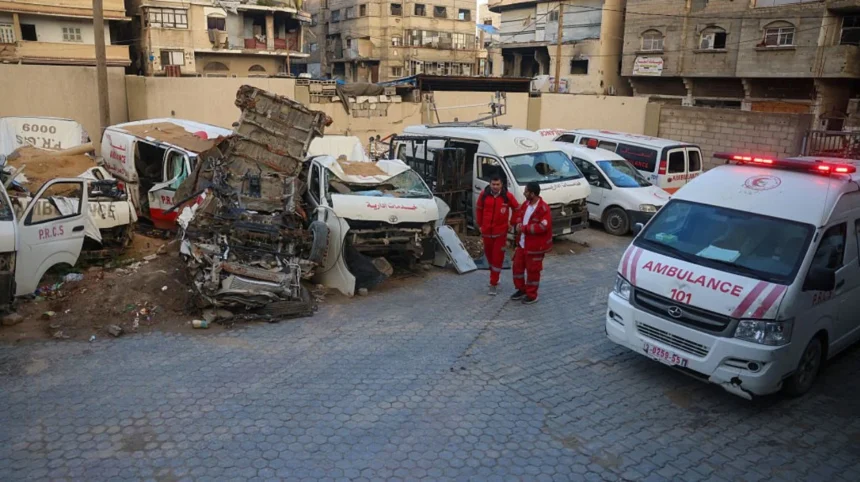
Killings and strikes were reported in Gaza in the early hours of Saturday, with a Palestinian man shot dead near the Kuwait roundabout south of Gaza City and Israeli forces targeting areas around the city. Local outlets also cited reports of Israeli vehicles firing on targets in northern and eastern parts of the strip, in what Palestinian sources described as further breaches of an existing ceasefire.
According to Gaza’s health ministry, more than 72,000 Palestinians have been killed since the war began in October 2023, and at least 618 have died since a truce came into force last year; these figures could not be independently verified. Monitoring group ACLED has reported that January saw the highest number of Israeli attacks in Gaza since the ceasefire announced on 10 October, with at least 160 Palestinians killed that month alone. The group said Israeli forces continued to use live fire against civilians near the border “Yellow Line” and carried out major strikes in response to militant activity, including an attack on 31 January that killed at least 32 people.
In the occupied West Bank, Israeli forces have tightened controls at military checkpoints, including around Ramallah, and sealed off routes through Ein Sinya, Atara, Aboud, Yabdou and the entrance to the planned city of Rawabi. These measures have added to longstanding movement restrictions on Palestinians in the territory and come amid heightened security alerts as the regional situation deteriorates.
Israeli domestic legal developments have also intersected with the Gaza situation. An Israeli court recently blocked a government attempt to bar dozens of international aid organisations from operating in the strip after they declined to provide lists of Palestinian staff members to Israeli authorities. Humanitarian groups had warned that the move would further disrupt already fragile relief operations in the enclave, where UN agencies and NGOs have reported severe shortages of food, medicine and fuel.
US–Israel offensive on Iran
The continued operations in Gaza are unfolding against the backdrop of a major new military confrontation between Israel, the United States and Iran. On Saturday, Israel launched what its defence minister described as a pre-emptive strike against Iran, while US forces began their own attacks on targets inside the country.
Two unnamed US officials told Reuters that American forces had initiated a series of air and naval operations aimed at sites linked to Iran’s military infrastructure, though they did not provide full details of the targets or the duration of the campaign. An Iranian official said the country was preparing a “significant” response and indicated that Supreme Leader Ayatollah Ali Khamenei had been relocated from Tehran to a more secure location, a claim that could not be independently verified.
The latest offensive follows a brief but intense air conflict between Israel and Iran in June 2025 and a series of warnings from Washington and Tel Aviv that they would act if Iran did not curb its nuclear and missile programmes. A timeline published by Al Jazeera notes that the current strikes came just days after nuclear talks between the US and Iran in Geneva ended without progress, and describes the operation as the most serious escalation since the June 2025 clashes.
President Donald Trump has described the US role as the start of “major combat operations” in Iran and said the objective was to dismantle the country’s missile capabilities and degrade its ability to support armed groups in the region. NBC News reported that American forces were focusing on Iran’s ballistic missile and nuclear infrastructure, while Israel has targeted elements of the leadership and senior security figures. These accounts could not be independently confirmed in full, and details of casualties and damage inside Iran remain emerging.
Iranian retaliation across the region
Iran’s leadership has framed the US–Israeli strikes as an attack on its sovereignty and has announced retaliatory action. Iranian state-linked outlets and officials say a first wave of missile and drone attacks has been launched against Israel and US-linked targets across the Middle East, including in the Gulf; this information could not be independently verified in full.
A timeline of events compiled by Al Jazeera states that Iran has fired air and missile salvos reaching Israel and parts of Qatar, the United Arab Emirates, Saudi Arabia, Bahrain and Kuwait. CNN has reported that Tehran’s response represents an unprecedented breadth of strikes by Iran against both Israeli territory and facilities hosting US forces. There have been no comprehensive official casualty figures released from the affected states, and authorities in several Gulf capitals have issued limited statements urging calm and announcing the activation of civil defence measures.
Regional analysts warn that the confrontation is likely to intensify pressure on Iran’s network of allied militias, often described as the “Axis of Resistance”, to respond in Iraq, Syria, Lebanon and Yemen. Updates from the Institute for the Study of War and Critical Threats have noted increased activity by Iran-backed Iraqi militias, as well as recent Israeli airstrikes on Hezbollah assets in Lebanon’s Baalbek district, although these pre-date the current large-scale exchange.
While Hezbollah leaders have previously stated that the group would “not be neutral” if Iran came under attack, they have also faced constraints linked to Iran’s domestic challenges and international pressure to avoid a wider conflagration. As of Saturday afternoon, there were no confirmed reports of large-scale new Hezbollah operations directly linked to the latest strikes on Iran, but experts say the situation remains highly fluid.
Regional implications for Gaza and Lebanon
The outbreak of direct hostilities between Israel, the US and Iran has deepened concerns over the fate of civilians in Gaza and the risk of further escalation along Israel’s northern border with Lebanon. ACLED’s January overview found that Israeli airstrikes and artillery fire in southern Lebanon had already reached their highest levels since a November 2024 ceasefire, amid efforts to pressure Hezbollah over disarmament.
In Gaza, humanitarian agencies have struggled to maintain operations amid ongoing Israeli strikes and movement restrictions, and aid workers say any broader regional war could further complicate access routes through neighbouring states. The recent Israeli court ruling limiting government attempts to bar aid organisations from the strip has been welcomed by rights advocates, but they caution that administrative and security hurdles on the ground remain significant.
Diplomatic channels are under strain as the conflict widens. A series of talks aimed at limiting Iran’s nuclear programme and de-escalating tensions had been taking place intermittently, including the Geneva discussions hosted with Omani facilitation, but these latest attacks have cast doubt on the viability of those negotiations. European governments, Gulf states and international organisations are expected to press for restraint and the protection of civilians, though public statements so far have largely focused on calls to avoid further regional escalation.
Security experts note that Israel’s continued operations in Gaza, the tightening of West Bank controls and the offensive against Iran are all occurring simultaneously, stretching regional crisis-management efforts. They argue that miscalculation or further large-scale attacks by any party could trigger additional fronts, particularly involving Hezbollah in Lebanon or militias in Iraq and Syria.
Legal and diplomatic dimensions
The latest developments raise legal and diplomatic questions under international law, particularly around the use of force and obligations to protect civilians. Israel has framed its strike on Iran as a pre-emptive act of self-defence designed to neutralise perceived threats from Iran’s nuclear and missile programmes. Iran, in turn, has characterised its missile and drone response as a legitimate reaction to what it calls aggression against its territory.
Human rights organisations and UN bodies are likely to scrutinise the conduct of all parties, including the proportionality of strikes and the impact on civilian populations in Gaza, Iran and neighbouring states. Previous UN reports on the Gaza conflict have highlighted concerns about civilian casualties, infrastructure damage and restrictions on humanitarian access, and diplomats say similar issues are likely to arise as information emerges from the current round of hostilities.
In parallel, internal legal processes within Israel, such as the court decision on aid groups in Gaza, show that domestic institutions continue to play a role in shaping the parameters of the conflict. International courts, including the International Court of Justice and the International Criminal Court, have ongoing or potential jurisdiction over aspects of the Gaza war and actions by state and non-state actors, although no immediate new filings related to the Iran strikes had been reported by Saturday. This information could not be independently verified.
Diplomatic actors, including the United Nations Security Council, may convene emergency sessions to discuss the escalation between Israel, the US and Iran, as has occurred during previous crises in the region. The positions taken by permanent members – notably the US, Russia and China – will shape whether the council can agree on binding resolutions or limited statements urging de-escalation.
What happens next
Attention is now focused on whether the strikes between Israel, the US and Iran will broaden into sustained, multi-front warfare and how that would affect the already fragile situation in Gaza and the wider region. Military planners and analysts are watching for further Iranian salvos, potential responses from Hezbollah and other allied groups, and any expansion of Israeli operations in Gaza, Lebanon or Syria.
Diplomatically, there may be renewed efforts by European states, regional mediators such as Oman and Qatar, and international organisations to secure de-escalation or temporary understandings, though earlier talks on Iran’s nuclear programme have so far failed to produce a durable agreement. Humanitarian agencies are expected to press for guarantees of access in Gaza and contingency plans should conflict-related disruption spread to key supply routes or neighbouring territories.
The immediate trajectory of the crisis will depend on decisions taken in Tehran, Tel Aviv, Washington and regional capitals over the coming days and weeks, including whether any side chooses to limit or expand its operations. As casualty figures and damage assessments in Gaza, Iran and other affected areas become clearer, pressure is likely to grow for accountability and for diplomatic channels to prevent further escalation.