


Key Points
- Children in Gaza are sharing their hopes for the future through a UN-backed project called “The Gaza We Want”, supported by UNICEF.
- The initiative, launched after the 2023 Hamas-Israel war, invites children aged five to 18 to express their vision for rebuilding their communities using art, poetry and models crafted from war debris.
- It has so far involved more than 11,000 children, including those with disabilities, across the Gaza Strip.
- Activities are taking place in temporary learning centres and informal spaces in areas such as Deir al-Balah, amid widespread destruction of homes and schools.
- Children repeatedly call for safety, secure housing, functioning schools, hospitals, psychological support and spaces to play as the foundations of a normal life.
- UNICEF officials say the project is designed to ensure children’s views are considered in decisions on reconstruction and long-term planning for Gaza.
- Aid agencies warn that ignoring children’s needs and mental health in recovery plans risks undermining Gaza’s future social and economic stability.
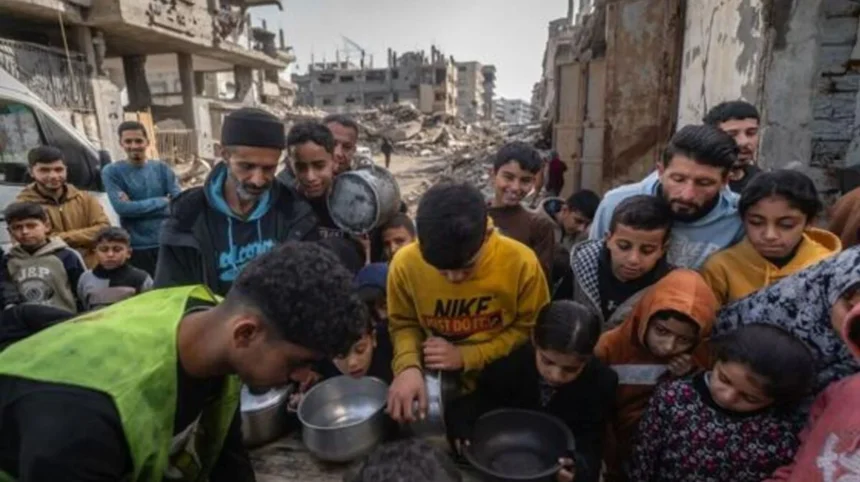
The core of the “The Gaza We Want” initiative is to give children in Gaza a structured way to describe the future they hope to see, at a time when war damage, displacement and prolonged disruption to schooling have upended daily life across the Strip. Supported by UNICEF and UN partners, it brings together thousands of young people who, through drawings, poems and small models built from rubble, are setting out what they say they need most: safety, shelter, education, healthcare and space to play.
Children’s voices at the centre
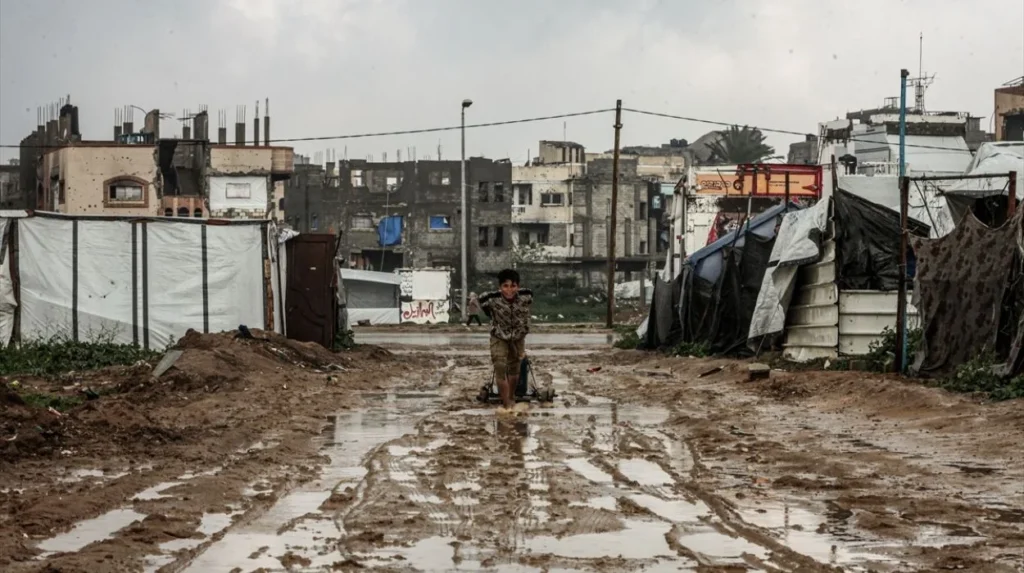
The UN-run initiative, supported by the UN Children’s Fund (UNICEF), is aimed at children aged five to 18 in Gaza, where much civilian infrastructure has been damaged or destroyed since the war between Hamas and Israel erupted in October 2023. According to UNICEF, more than 11,000 children, including children with disabilities, have taken part so far.
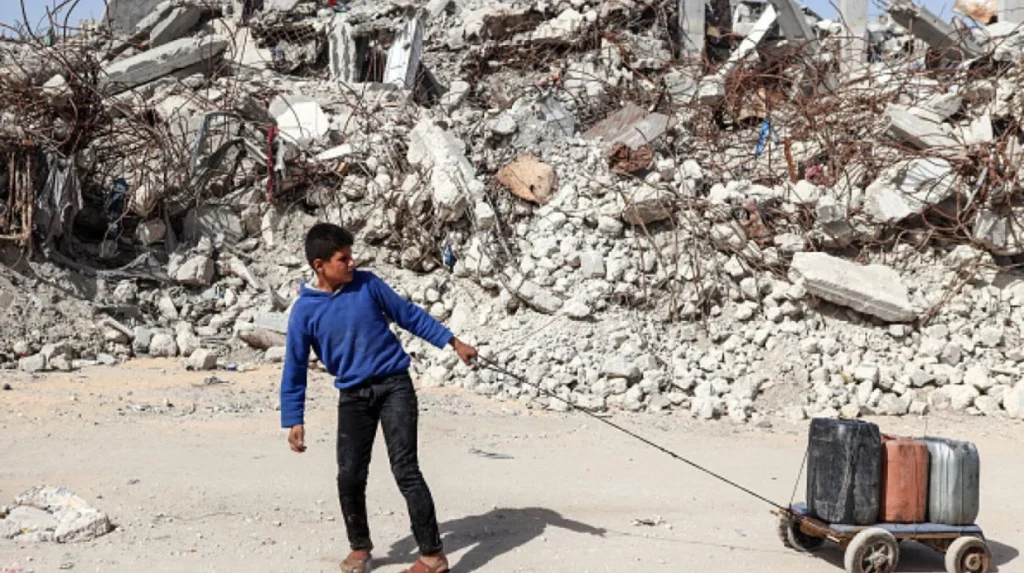
Under the banner “The Gaza We Want”, participants are invited to “imagine dignity” by depicting their preferred future through creative work, including paintings, written reflections, poems and three‑dimensional models assembled from broken concrete and other remnants of damaged buildings. UNICEF officials say the project is intended to “reinforce the importance of meaningful, ongoing child participation in decisions about Gaza’s future”, ensuring that children’s priorities are visible to decision‑makers.
Safety, schools and homes top the list
Across the material collected, similar themes recur, with children consistently placing physical safety at the top of their list of needs. Many describe a wish to sleep through the night without fear and to be able to walk to school without the sound of explosions or the risk of sudden displacement.
Shelter and secure housing also feature prominently, alongside calls for “real” schools with roofs, walls and toilets, reflecting the extent of damage to educational facilities. UNICEF and other agencies report that more than 90 per cent of school buildings in Gaza have been damaged or destroyed over the course of the conflict, and that a majority of school‑aged children have faced prolonged interruption to in‑person learning. Children’s drawings and models repeatedly show clean streets, functioning classrooms, hospitals and green spaces, which UNICEF representatives describe as a direct appeal for the basic conditions of childhood.
A personal glimpse: ‘a safe life, a safe home’
In one account highlighted by UNICEF, communications chief Jonathan Crickx describes meeting a 15‑year‑old girl, Hala, at a temporary learning centre in Deir al‑Balah in central Gaza. Months without regular schooling had harmed her education, but she spoke of her wish for “a safe life”, a secure home, her own bedroom and a good school in which to continue her studies. Her comments were presented as representative of many similar statements gathered through the programme.
UNICEF officials say they have encountered children whose physical injuries have healed but who continue to experience fear, anxiety and sleep difficulties linked to their experiences during the conflict. They argue that any reconstruction process will need to combine physical rebuilding with mental health and psychosocial support if children are to regain a sense of normality.
Education under strain
The initiative coincides with broader efforts by UNICEF and partners to restore access to learning in Gaza after repeated attacks on educational facilities. In a recent briefing in Geneva, UNICEF spokespersons described an expanded “Back to Learning” programme, which seeks to reach hundreds of thousands of children through informal learning centres and temporary spaces.
These multi‑service centres, often set up in tents or damaged structures, offer basic literacy and numeracy support alongside recreational activities and psychological care, while formal schools remain closed or severely restricted. The demand is described as “immense”, with long waiting lists and parents actively seeking places for their children, underlining the importance families place on education even amid ongoing hardship.
Daily life amid ongoing needs
The UN humanitarian system continues to provide food, water and basic services alongside these child‑focused programmes. Recent updates from humanitarian agencies refer to the distribution of fresh bread, hot meals and digital cash assistance to displaced families, as well as stepped‑up trucking of drinking water following the shutdown of a major water line connecting Gaza with Israel.
Efforts are also under way to repair damaged wastewater pumping stations to reduce sewage overflows and lower the risk of waterborne disease, which can have a disproportionate impact on children. Health services remain under pressure, with reports of shortages of medicines and laboratory supplies, particularly for chronic conditions such as cancer and heart disease, despite the opening of some new clinics. This information could not be independently verified.
Why children’s input matters for reconstruction
UNICEF and other child‑focused organisations argue that including children’s perspectives in planning is essential for any sustainable recovery in Gaza. They say that the priorities expressed through “The Gaza We Want” – safety, education, healthcare, clean environments and play – align with internationally recognised rights of the child and should be reflected in reconstruction strategies.
Child psychologists and humanitarian workers have also warned that prolonged exposure to conflict, displacement and disrupted schooling can have long‑term effects on mental health, literacy levels and social cohesion. According to these specialists, programmes that allow children to process their experiences and articulate their hopes can help mitigate some of the psychological impact, while also informing policies that aim to prevent the loss of an entire generation’s potential.
What happens next
UN agencies say they intend to continue and expand “The Gaza We Want” activities as conditions allow, collecting more children’s contributions from across the Strip. The material is expected to inform future discussions on reconstruction with local authorities, international donors and development partners, although specific policy commitments have not yet been detailed.
Alongside this, UNICEF plans to broaden its emergency education and psychosocial support programmes, subject to funding and access, with the stated aim of ensuring that all children in Gaza can return to some form of safe learning environment as part of longer‑term recovery. Humanitarian and development agencies have indicated that the extent to which children’s voices shape those plans will be a key test of whether the future they describe – one of safety, dignity and opportunity – can be realised.