


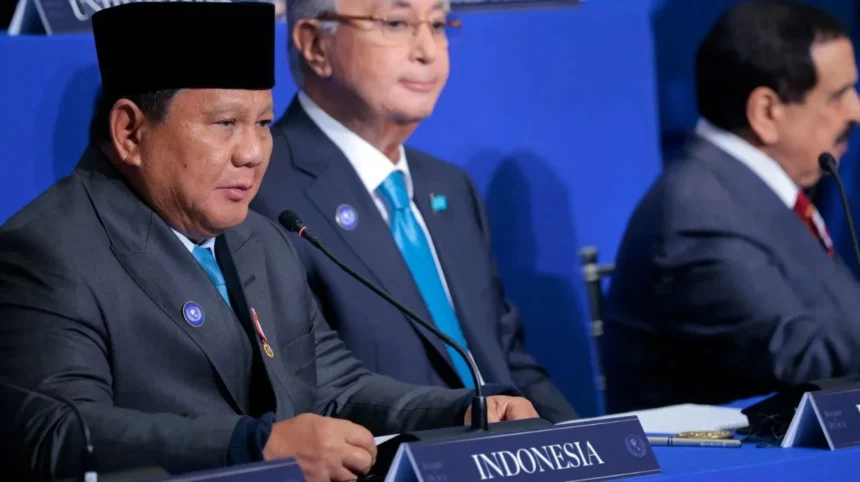
Washington, D.C. (Reported by Gaza Peace Board News) January 8, 2025 – An emerging Gaza stabilization force is taking shape as multiple countries formally pledge troops and support roles for a new International Stabilization Force in the territory. Officials say Indonesia, Morocco, Kazakhstan, Kosovo and Albania have committed military personnel, while Egypt and Jordan are expected to focus on police training functions. The multinational Gaza stabilization force is being organized under a framework backed by the United Nations Security Council and a United States–led diplomatic initiative.
The initiative seeks to provide basic security, border control support and assistance to Palestinian police structures after months of intense conflict and humanitarian crisis in Gaza. Commanders and diplomats involved in the Gaza stabilization force stress that participating countries will operate under a defined mandate aimed at protecting civilians and supporting reconstruction.
General context on the Gaza stabilization force
According to reporting on early planning efforts, the International Stabilization Force for Gaza, often referred to as the Gaza stabilization force or ISF, is envisioned as a multinational deployment distinct from traditional United Nations peacekeeping missions. As reported by analysts at the Middle East Institute, the mission concept has focused on assembling contingents from states with regional ties and experience in peacekeeping, while remaining outside the standard UN blue-helmet structure.
The United Nations Security Council later adopted a resolution authorizing the International Stabilization Force, providing a legal framework for troop-contributing countries and defining core tasks such as securing borders, protecting civilians and assisting local policing. According to the Security Council document, the force is expected to operate on a temporary basis, with a mandate linked to broader reconstruction, demilitarization and governance arrangements in Gaza.
As reported by multiple regional outlets, the Gaza stabilization force has been closely linked to a diplomatic initiative sometimes described as the “Board of Peace,” convened under the leadership of United States President Donald Trump. According to these accounts, the Board of Peace meetings in Washington, D.C., have been used to coordinate pledges of troops, financing and technical support for the Gaza stabilization force and related reconstruction mechanisms.
Jasper Jeffers, identified as the commander or designated commander of the International Stabilization Force, has publicly confirmed that five countries have already committed to send troops to Gaza: Indonesia, Morocco, Kazakhstan, Kosovo and Albania. According to these reports, Egypt and Jordan are not listed among troop providers but have agreed to assist by training Palestinian police forces who would work alongside the Gaza stabilization force.
Which countries have joined the Gaza stabilization force?
Available reporting indicates that the core list of countries committing troops to the Gaza stabilization force currently includes five states: Indonesia, Morocco, Kazakhstan, Kosovo and Albania.
As reported by Jasper Jeffers in several accounts, these countries form the initial group of troop contributors to the International Stabilization Force for Gaza.
Indonesia has been repeatedly highlighted as a central participant in the Gaza stabilization force, with officials stating that the country will take on the role of deputy commander within the mission.
According to Indonesian President Prabowo Subianto, Indonesia is preparing approximately 8,000 soldiers, and in some reports “8,000 soldiers or more,” for deployment to the Gaza stabilization force.
Morocco is another key participant, with its foreign minister indicating that Rabat is prepared to send officers and police personnel to support the mission in Gaza. According to regional coverage, Morocco has also signaled readiness to contribute policing expertise, training and potentially medical support within the Gaza stabilization framework.
Kazakhstan has confirmed that it will send units, including military and medical contingents, to join the Gaza stabilization force. In some reporting, Kazakhstan’s leadership has presented this participation as part of the country’s broader engagement in international peace operations and multilateral security initiatives.
Kosovo has been identified as one of the newer additions to the Gaza stabilization force, joining the list of participating countries after initial planning stages. According to an article in The Jerusalem Post, Kosovo and Kazakhstan joined the Gaza International Stabilization Force alongside Indonesia, Morocco, Greece and Albania, though Greece is not consistently mentioned in all lists of troop contributors.
Albania has also committed to provide troops for the mission, with coverage noting that its decision followed high-level diplomatic engagement on the Gaza stabilization plan. According to these reports, Albania’s participation aligns with its previous involvement in international security operations, though detailed numbers of personnel for Gaza have not been widely disclosed.
In addition to the five troop-contributing countries, Egypt and Jordan have pledged to assist by training Palestinian police forces, who are expected to work under or alongside the Gaza stabilization force’s broader security architecture. According to statements summarized in regional media, this role focuses on developing local policing capacity rather than sending Egyptian or Jordanian combat units into Gaza.
Other Gulf and regional states have been linked to financial pledges and reconstruction commitments for Gaza in the same diplomatic framework, including Kazakhstan, Azerbaijan, the United Arab Emirates, Morocco, Bahrain, Qatar, Saudi Arabia, Uzbekistan and Kuwait. However, current reporting distinguishes between those countries providing funding and reconstruction assistance and the smaller group directly contributing troops to the Gaza stabilization force.
What reactions and debates have emerged around these commitments?
International reactions to the Gaza stabilization force and the list of participating countries have focused on questions of legitimacy, mandate clarity and relations with existing international mechanisms.
According to policy analysis from the Middle East Institute, some experts have raised concerns about how the Gaza stabilization force will interact with United Nations structures, Palestinian authorities and Israeli security forces on the ground.
As reported by The Jerusalem Post, officials in Kosovo have portrayed participation in the Gaza stabilization force as a significant step in the country’s foreign policy, reflecting ambitions to contribute to multinational security efforts. The article notes that Kosovo’s leadership publicly welcomed the invitation to join the mission and emphasized the symbolic value of being part of a high-profile international deployment.
In Indonesia, coverage has underlined the scale of the proposed deployment and the country’s role as deputy commander of the Gaza stabilization force, which would make it one of the mission’s most substantial contributors. According to these reports, Indonesia’s participation draws on previous peacekeeping experience, including its large contingent in the United Nations Interim Force in Lebanon (UNIFIL).
Regional outlets have also highlighted Morocco’s position, noting that Rabat’s offer of police forces, training and a potential medical field hospital reflects a focus on internal security, stabilization and humanitarian support within Gaza. According to these accounts, Moroccan authorities have linked their contribution to broader initiatives on deradicalization, policing and governance reforms.
At the United Nations, member states debating the Security Council resolution on the Gaza stabilization force have emphasized the need for clear rules of engagement, robust protection of civilians and strong coordination with humanitarian actors. According to the Council’s published summary, the resolution provides troop-contributing countries with a framework to move forward, but implementation details are expected to evolve as conditions on the ground change.
Civil society organizations and regional commentators have continued to scrutinize the initiative, raising questions about accountability, oversight and the risk of renewed violence if the Gaza stabilization force is perceived as partisan or insufficiently resourced. According to policy commentary, success will likely depend on credible engagement with Palestinian stakeholders, transparency in operations and sustained international support for reconstruction.
Supporting details on roles, mandate and structure
Security Council documentation describes the International Stabilization Force’s mandate as including securing Gaza’s borders, maintaining a ceasefire, protecting civilians and assisting in training vetted Palestinian police forces. According to the same resolution, the Gaza stabilization force is authorized to use necessary measures to carry out this mandate, consistent with international law and the protection of humanitarian operations.
As reported in multiple news accounts, the force will operate under a unified command structure led by Major General Jasper Jeffers, with Indonesia serving as deputy commander and other participating nations assigned sectoral or functional responsibilities. According to these reports, details about exact troop numbers, deployment timelines and basing arrangements are still being worked out among participating governments.
Regional coverage indicates that Egypt and Jordan will concentrate on training Palestinian police officers rather than sending large military contingents into Gaza itself. According to these accounts, this approach is intended to build sustainable local security capacity that can eventually assume responsibilities from the Gaza stabilization force.
Financially, the same diplomatic framework that supports the Gaza stabilization force also includes large-scale pledges for reconstruction and relief. According to reporting on the inaugural “Board of Peace” meeting, the United States committed billions of dollars, while a group of Gulf and Central Asian states pledged more than seven billion dollars in combined support.
Policy analysis has emphasized that the Gaza stabilization force is intended to complement, not replace, humanitarian operations run by United Nations agencies and non-governmental organizations. According to experts, close coordination between the military stabilization mission and humanitarian actors will be essential to avoid disruptions to aid delivery and civilian services.
What are the implications and possible future developments?
Security analysts note that the Gaza stabilization force could mark a significant precedent for multinational involvement in Gaza if it succeeds in reducing violence and supporting reconstruction under a clear, time-limited mandate. According to policy commentary, the fact that countries such as Indonesia, Morocco, Kazakhstan, Kosovo and Albania have agreed to deploy under this framework signals a willingness by non-Western and mid-sized states to take on new roles in conflict stabilization.
Future developments are likely to focus on the force’s deployment schedule, rules of engagement, cooperation mechanisms with Palestinian authorities and coordination with Israel on border and security arrangements.
According to the Security Council resolution and accompanying analysis, troop-contributing countries will need to balance force protection with civilian protection in a highly complex operating environment.
Further countries could potentially join the Gaza stabilization force if the mandate proves workable and if additional capacity is needed, though no definitive expanded list has been confirmed beyond the five troop contributors named so far. According to diplomatic reporting, interest from other states currently appears more focused on financial contributions and reconstruction support than on deploying ground forces to Gaza.
The broader diplomatic framework, including the Board of Peace and associated funding commitments, is expected to continue evolving as reconstruction plans, security arrangements and political negotiations develop. According to regional analyses, the performance and perception of the Gaza stabilization force will likely influence future international involvement in Gaza and wider debates on how to manage post-conflict transitions in the region.
In summary, the Gaza stabilization force now rests on confirmed troop commitments from Indonesia, Morocco, Kazakhstan, Kosovo and Albania, supported by police training roles from Egypt and Jordan and large-scale financial pledges from several states. How this multinational Gaza stabilization force is implemented on the ground, and how local and regional actors respond, will determine whether it becomes a stabilizing presence in Gaza’s recovery or faces calls for revision and adjustment in the months ahead.