


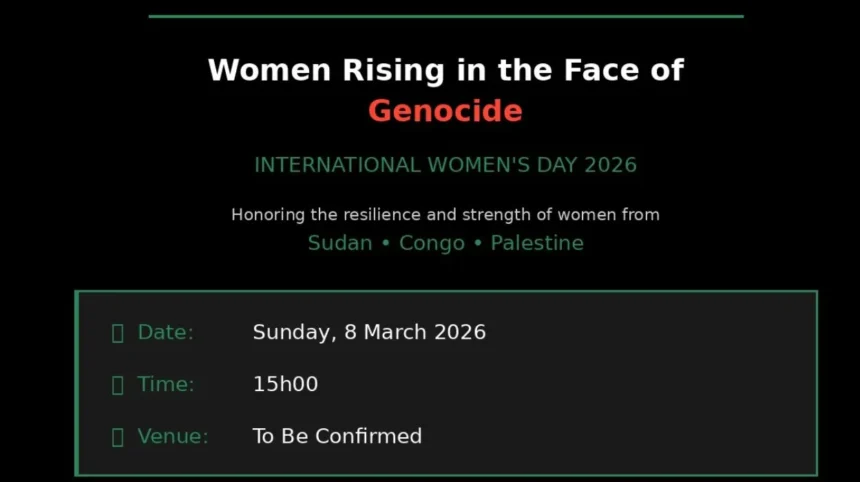
As reported by Voice of the Cape, the pro-Palestine civil society group Mothers for Gaza is organising an event titled “Women Rising in the Face of Genocide” to commemorate International Women’s Day on 8 March. The group has positioned the event as part of ongoing efforts to highlight the impact of the war in Gaza on Palestinian women and families.
According to Voice of the Cape, Mothers for Gaza is a community-based initiative that has become active in organising solidarity actions and awareness-raising activities focused on Gaza. The upcoming International Women’s Day gathering is described as a platform to center women’s experiences, both in Gaza and in the broader Palestinian diaspora.
Voice of the Cape reports that the “Women Rising in the Face of Genocide” event forms part of a wider program of activities around International Women’s Day. The initiative aims to link global conversations about gender justice to the specific realities facing Palestinian women living under bombardment, displacement and chronic shortages of basic necessities.
How Will the Event Highlight Women’s Voices and Reactions?
According to Voice of the Cape, Mothers for Gaza intends the event to foreground the voices of women affected by the conflict in Gaza, including mothers, activists and advocates who have been documenting and responding to the crisis. The program is expected to reflect on how Palestinian women are navigating violence, loss and displacement while continuing to support their families and communities.
Voice of the Cape notes that the title “Women Rising in the Face of Genocide” reflects the organizers’ focus on resilience and resistance among women confronting extreme conditions. The event is described as a space where participants can hear testimonies and analyses that contextualize women’s lived experiences within broader discussions on human rights and international law.
In related analysis on Palestinian women’s experiences, the Institute for Palestine Studies has documented how the ongoing war and siege in Gaza have disproportionately impacted women, including high numbers of widows, female-headed households and women carrying new social and economic burdens. This wider body of reporting provides context for why Mothers for Gaza has chosen to emphasize women’s stories and agency in its International Women’s Day event.
International commentary, including work highlighted by women’s rights organizations, has underscored that Palestinian women in Gaza face simultaneous challenges of physical insecurity, psychological trauma and the responsibility of caring for children and extended families. The Mothers for Gaza initiative is framed against this backdrop, aiming to amplify these realities in a public forum that coincides with a global day of recognition for women.
Supporting Details: Organizers, Themes and Background
Voice of the Cape describes Mothers for Gaza as a pro-Palestine civil society collective that has engaged in solidarity campaigns, vigils and educational events centered on Gaza. The “Women Rising in the Face of Genocide” gathering builds on this track record by explicitly focusing on women’s experiences and leadership.
According to Voice of the Cape’s report, the event will mark International Women’s Day by drawing attention to the situation of Palestinian women, including those who have been displaced, bereaved or forced into new roles as heads of households. The program is intended to foreground these realities while connecting them to international debates on genocide, accountability and protection of civilians.
Research published by the Institute for Palestine Studies highlights that women in Gaza have faced rising poverty, unemployment and social strains under years of blockade, conditions that have intensified with the current war. These findings help explain why initiatives like Mothers for Gaza place particular emphasis on women’s resilience and the multiple roles they adopt as caregivers, heads of families and community organizers.
Reporting and analysis by human rights experts, including UN special rapporteurs, have pointed to patterns of violence and deprivation that have had severe consequences for women and girls in Gaza. These assessments, though independent of the Mothers for Gaza initiative, provide additional background to the framing of the event as highlighting “Women Rising in the Face of Genocide” and situating their experiences within global human rights discourse.
Additional Context on Women in Gaza and International Women’s Day
International Women’s Day has often been used by civil society and advocacy groups to spotlight the situation of women in conflict zones, including Gaza. In recent years, journalists and researchers have documented how Palestinian women in the enclave endure repeated displacement, damage to homes and infrastructure, and limited access to health care and education.
Features published by outlets such as Al Jazeera have described the daily realities for women in Gaza, including caring for children amid bombardment, shortages of food, water and electricity, and the emotional burden of repeated losses. These accounts illustrate why events like the one organized by Mothers for Gaza choose to focus on women as central figures in both suffering and community survival.
Human rights organizations and women’s groups internationally have also drawn attention to testimonies from Palestinian women describing life during the war in Gaza. These testimonies detail efforts to secure food, shelter and safety for families despite severe constraints, reflecting the themes that Mothers for Gaza aims to bring into focus in its Women’s Day program.
What Are the Implications and Possible Next Steps?
According to Voice of the Cape, the Mothers for Gaza event on 8 March is expected to contribute to broader public awareness about the gendered impact of the war in Gaza. By framing the gathering around “Women Rising in the Face of Genocide,” the organizers aim to connect local audiences with global conversations on Palestinian women’s rights and protection.
The initiative may also encourage continued community engagement and solidarity work beyond International Women’s Day. Previous coverage of Mothers for Gaza indicates that the group has been involved in ongoing campaigns and events, and the Women’s Day gathering is likely to serve as another focal point for mobilizing support, advocacy and public discussion.
In parallel, international debate and documentation on conditions for women in Gaza are likely to continue, including monitoring by human rights bodies and civil society organizations. These efforts provide a context in which local initiatives like Mothers for Gaza’s event can resonate more widely, feeding into calls for accountability and greater protection of civilians, particularly women and children.
As the International Women’s Day commemoration approaches, Mothers for Gaza’s “Women Rising in the Face of Genocide” event stands as one example of how civil society groups are using the date to highlight the situation in Gaza. By centering women’s experiences and agency, the initiative aligns with broader global themes of recognition, rights and resilience that are central to International Women’s Day.