


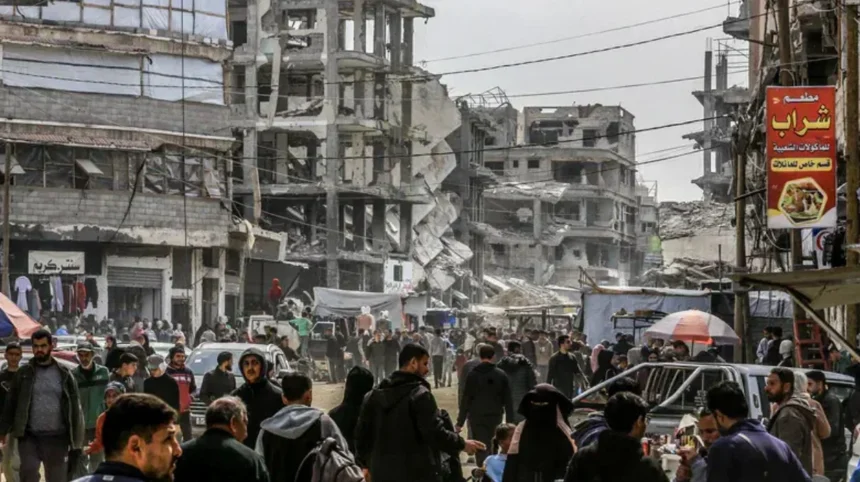
Morocco, Greece and Albania are in advanced discussions with the United States to contribute soldiers to an international stabilization force in the Gaza Strip, according to Kan 11 News as cited by Israel National News. The force is planned to operate in the southern part of Gaza, in an area between Rafah and Khan Yunis.
As reported by the Israel National News team, Morocco is expected to be the first Arab country to join this Gaza multinational force. Morocco restored diplomatic ties with Israel in 2020 under the Abraham Accords, an initiative brokered by then-US President Donald Trump that opened the door to increased cooperation between Rabat and Jerusalem.
According to Israel National News, representatives from the US military command in Kiryat Gat have recently contacted the Israel Defense Forces Southern Command. The discussions have focused on coordinating the deployment of troops and preparing the establishment of a new base for the multinational force in southern Gaza.
The proposed base in the Gaza Strip is expected to host representatives of multiple armies alongside contractors responsible for planning and executing construction. Work on this facility is expected to begin at the end of the month, signaling a concrete step toward operationalizing the Gaza multinational force.
Last week, it was reported that Indonesia had approved the deployment of thousands of its soldiers to the Gaza Strip as part of the same international force promoted by US President Donald Trump. Indonesia, which does not have diplomatic relations with Israel, would thus play a prominent role in the security architecture envisioned for post-conflict Gaza.
On Sunday, Indonesia’s military announced that up to 8,000 troops could be ready by the end of June for potential deployment to Gaza. This projected timeline positions Indonesia as a key early contributor to the Gaza multinational force, alongside the anticipated participation of Morocco and other states.
Context and Reactions: How Are States Positioning Themselves?
According to Israel National News, the initiative for a Gaza multinational force stems from a broader US-backed effort to stabilize the Gaza Strip following intense conflict and widespread destruction. The concept envisages foreign troops helping to maintain security and support reconstruction, while limiting the direct day-to-day security role of Israeli forces inside the enclave.
Morocco’s expected participation is significant in light of its normalized relations with Israel under the Abraham Accords. As reported by Israel National News, the 2020 normalization has led to enhanced diplomatic and security cooperation between the two countries, which may help facilitate coordination over the deployment and mission parameters of Moroccan soldiers in Gaza.
Indonesia’s decision to approve troop deployment has drawn attention because of the country’s longstanding pro-Palestinian stance and lack of diplomatic ties with Israel. Israel National News notes that Indonesia’s military has already publicly stated its readiness to field up to 8,000 soldiers by late June, indicating a strong commitment to the emerging mission framework in Gaza.
The involvement of European NATO member Greece and Western Balkan country Albania, as mentioned by Israel National News, underscores that the Gaza multinational force would likely comprise a mix of regional and extra-regional actors. Their participation would add to the political and military weight of the mission, while also spreading the burden of deployment among several governments.
While the article highlights the countries in advanced talks, it also underscores that the force is being organized under US leadership. According to Israel National News, US military personnel in Kiryat Gat have already begun detailed coordination with the IDF Southern Command. This suggests Washington is actively shaping the operational design, geographic scope and logistical underpinnings of the Gaza multinational force.
Supporting Details and Strategic Background
Israel National News reports that the new multinational base is planned for the area between Rafah and Khan Yunis, in the southern Gaza Strip. This location is strategically significant, as it lies near the border with Egypt and in a sector that has seen heavy military activity and displacement during the conflict.
The planned base is expected to host personnel from multiple national militaries, including command staff, logistics teams and engineering contractors. According to the report, contractors will be responsible for designing and overseeing construction, with work slated to begin by the end of the month. This timeline indicates that initial infrastructure preparations may precede the full deployment of the Gaza multinational force.
The reference to Indonesia having “approved the deployment” of thousands of soldiers reflects a formal political and military decision by Jakarta to participate in the US-initiated mission, as relayed by Israel National News. The subsequent statement from Indonesia’s military, that up to 8,000 troops could be ready by the end of June, provides a more precise indication of the scale and potential timing of Indonesia’s role.
Morocco’s anticipated participation follows several years of steadily deepening engagement with Israel after the Abraham Accords. Israel National News notes that the restoration of diplomatic ties in 2020 has led to increased cooperation in various fields. In the security domain, this cooperation may now extend to coordination in and around Gaza through the Gaza multinational force.
By highlighting that Morocco could be the first Arab country to join the international force, Israel National News underscores the diplomatic significance of Rabat’s decision. It signals alignment with a US-led approach to post-conflict arrangements in Gaza, while also reflecting Morocco’s balancing of its regional relationships and commitments.
Implications and Future Developments: What Comes Next for Gaza?
The coordination between US military representatives in Kiryat Gat and the IDF Southern Command, as described by Israel National News, suggests that planning for the Gaza multinational force is already at an advanced logistical stage. The next major step would likely involve final political decisions by the participating governments, followed by the formalization of mandates and rules of engagement.
If Morocco proceeds as expected, it would become the first Arab state to contribute troops to this stabilization mission in Gaza, according to Israel National News. This could encourage or influence other Arab or Muslim-majority countries to consider similar contributions, potentially broadening the international character of the Gaza multinational force.
Indonesia’s declared readiness to mobilize up to 8,000 troops by the end of June points to a medium-term deployment horizon for at least one major contingent. As reported by Israel National News, this timeline would allow for base construction, logistical preparations and coordination among participating states before large-scale forces arrive on the ground.
The planned base between Rafah and Khan Yunis is expected to serve as a central hub for the multinational presence and related support operations. Over time, the role and footprint of the Gaza multinational force could evolve in response to security conditions and political negotiations, though the article does not specify any detailed long-term framework or end date.
Israel National News emphasizes that the initiative is part of a force “initiated by US President Donald Trump,” reflecting continuity in American engagement on the Gaza file. Going forward, the success and scope of the Gaza multinational force will likely depend on cooperation between Washington, participating states such as Morocco and Indonesia, and regional actors directly affected by developments in Gaza.
In summary, Morocco’s expected decision to send soldiers to the Gaza multinational force, alongside Indonesia’s large prospective deployment and the involvement of Greece and Albania, marks a significant step toward an international security presence in the Gaza Strip. The establishment of a new multinational base between Rafah and Khan Yunis, backed by US- and IDF-led coordination, points to a structured plan aimed at stabilizing the territory and supporting future reconstruction while internationalizing aspects of Gaza’s security environment.
“Every single point you made is dead on. Nothing to add, just nodding along the whole time”
“Honestly, you put into words exactly what I’ve been thinking. Spot on”