


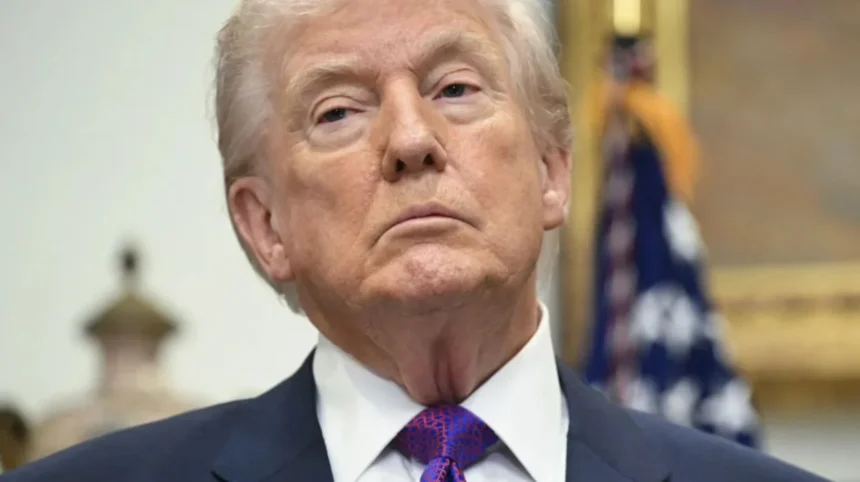
President Donald Trump is preparing to unveil a multi‑billion‑dollar reconstruction fund for the Gaza Strip and announce troop commitments for a planned international stabilization force at the first formal meeting of his newly created Board of Peace in Washington next week, according to reporting by Steve Holland of Reuters. The gathering, scheduled for February 19 in the US capital, will be chaired by Trump and is expected to draw delegations from at least 20 countries, including several heads of state, US officials have said.
As reported by Steve Holland of Reuters, the initiative marks the most detailed public outline to date of Trump’s post‑war strategy for Gaza, combining large‑scale reconstruction funding with a security component backed by a United Nations‑authorized mission. According to Reuters, two senior US officials speaking on condition of anonymity said the plan is designed to stabilize Gaza after months of conflict, with the Board of Peace serving as the main political forum coordinating international involvement.
Trump signed documents in Davos, Switzerland, on January 23 establishing the Board of Peace as part of a broader Gaza framework that was later endorsed by a United Nations Security Council resolution, according to Reuters and Arab News. As reported by The Globe and Mail, the board is intended to function as a standing body that initially focuses on Gaza before potentially taking on a wider mandate in other conflicts, although US officials insist next week’s meeting will center solely on the Palestinian territory.
According to Arab News, the board has drawn participation from key regional players, including Turkey, Egypt, Saudi Arabia and Qatar, as well as major emerging economies such as Indonesia. Western allies and other large powers, however, have responded more cautiously, with some diplomats expressing concern that the new structure could duplicate or compete with existing UN mechanisms.
How Will the Gaza Fund and Troop Plans Work?
At the Washington meeting, Trump is expected to formally announce a multi‑billion‑dollar fund for Gaza’s reconstruction, built on monetary contributions from member states of the Board of Peace, according to Reuters and The Globe and Mail. One senior US official described the financial pledges as “generous” and said Washington had not issued explicit requests for donations, noting that governments approached the United States with offers of support. The president is expected to present the headline figure for money already raised and outline how additional commitments will be solicited during and after the meeting.
According to Reuters, the fund is expected to cover rebuilding destroyed infrastructure, restoring essential services and supporting economic recovery in Gaza, though officials have not yet detailed project priorities or disbursement mechanisms. Arab News reports that the Board of Peace sessions will include presentations on humanitarian aid deliveries, internal security, and the functioning of Gaza’s civil administration under a new technocratic structure endorsed in Trump’s plan.
As reported by Reuters and repeated in regional outlets, Trump also plans to announce that several countries will commit “several thousand” troops to a United Nations‑mandated stabilization force to deploy in Gaza. According to US officials quoted by Reuters, this force is envisioned as an international mission authorized by the UN Security Council, tasked with maintaining security, supporting demilitarization efforts and backing the new civil administration during a transitional period.
US officials have not publicly specified which countries will contribute troops or the exact size and rules of engagement of the force, but reports from Middle East Eye and other outlets indicate that multiple states that have joined the Board of Peace are considering deployments. According to these reports, the troops would not be a purely American force but a multinational formation, reflecting Trump’s emphasis on cost‑sharing and shared responsibilities among participating countries.
Political and Security Framework in Gaza
According to The Globe and Mail, Trump’s broader Gaza strategy includes the disarmament of Hamas fighters, who have so far resisted giving up their weapons, coupled with an amnesty offer for those who agree to peaceful coexistence and disarm. The plan, as described in reporting based on US and diplomatic sources, would allow Hamas members who renounce violence to remain in Gaza under the new order, while those who wish to leave would be offered safe passage to host countries willing to receive them.
The governance component centers on a technocratic Palestinian administration that is monitored by the international Board of Peace during a transitional phase. As reported by Arab News and Reuters, a National Committee for the Administration of Gaza has already been established to take over day‑to‑day civil management from Hamas, with its membership announced and its first meeting held in January. Board of Peace meetings are expected to receive regular, detailed reports from this committee on policing, public services and institutional reforms in Gaza.
According to Arab News, updates on humanitarian assistance and the restructuring of the Gaza police will also feature prominently in the agenda of the first Board of Peace meeting. US officials cited by Reuters say the aim is to show tangible progress in stabilizing Gaza’s internal situation, even as broader political questions about the future status of the territory and relations with Israel continue to be negotiated.
As reported by The Globe and Mail, Israeli Prime Minister Benjamin Netanyahu has confirmed that Israel has joined the Board of Peace, aligning itself with the new structure while reserving key security prerogatives. This participation gives Israel a formal seat in the decision‑making process over Gaza’s reconstruction and security arrangements, even as some Israeli officials and analysts express concerns about ceding too much authority to an international body.
Context and Reactions: How Are Allies and Critics Responding?
Regional and international reactions to Trump’s Board of Peace and Gaza initiative have been mixed, with some governments welcoming the prospect of large‑scale reconstruction and others wary of the board’s mandate. According to The Globe and Mail and Al Jazeera, diplomats from Western allies and rights advocates have raised concerns that the body could evolve into a parallel conflict‑management architecture that competes with the UN, particularly if it expands beyond Gaza.
As reported by Al Jazeera, critics argue that placing Trump at the center of a board overseeing the governance of a foreign territory resembles a form of external tutelage or neo‑colonial oversight, especially given the proposed lifetime chairmanship and the financial thresholds for permanent membership outlined in draft documents. Rights experts quoted in these reports have also questioned the implications of conditioning permanent member status on contributions of at least 1 billion dollars, suggesting it could privilege wealthier states in shaping outcomes in Gaza and other potential conflict zones.
According to Reuters and The Globe and Mail, some diplomats in Europe and at the UN have privately voiced concern that the Board of Peace could blur lines of accountability and create confusion over which institution ultimately sets policy for Gaza. However, US officials emphasize that the board’s Gaza work has UN Security Council backing and that the stabilization force would be explicitly authorized by the UN, tying it into existing international legal frameworks.
In the region, Arab News and Middle East Eye report that several Middle Eastern governments have taken a pragmatic approach, joining the board to help shape decisions and secure a role in reconstruction, even as they monitor how the initiative unfolds. Turkey, Egypt, Saudi Arabia and Qatar are among those cited as participants that could influence both the composition of the stabilization force and the allocation of reconstruction funds.
Palestinian reactions are still emerging, and detailed polling or official statements are limited in initial reporting. According to coverage in Al Jazeera and regional outlets, some Palestinian commentators and civil society figures have expressed cautious interest in reconstruction funding but worry about external control over Gaza’s governance and the implications for Palestinian political representation. These concerns intersect with longstanding debates over sovereignty, democratic accountability, and the role of international actors in Palestinian affairs.
Supporting Details: Structure of the Board and International Dynamics
As described in reporting summarized by The Globe and Mail from documents reviewed by Reuters, the Board of Peace is designed with Trump as its chair, with member states serving three‑year renewable terms. According to these accounts, countries that contribute at least 1 billion dollars to support the board’s activities could obtain permanent membership, giving them a lasting role in its deliberations.
This structure, according to diplomats cited in The Globe and Mail and Al Jazeera, raises questions about how representation and influence will be distributed within the board, particularly between regional states directly affected by the Gaza conflict and wealthier countries capable of making large financial contributions. Some analysts quoted in these reports warn that linking institutional power to funding could fuel perceptions that policy is driven by financial leverage rather than shared principles or local needs.
According to Reuters, Trump has framed the Board of Peace as a “bold new approach” to resolving conflicts, beginning with Gaza and potentially extending to other crises once the Gaza track is underway. Al Jazeera reports that internal drafts and public messaging suggest the board may, over time, examine other conflict zones, but US officials insist that any such expansion would require consensus among member states and further international backing.
The initiative also interacts with existing diplomatic frameworks. As reported by The Globe and Mail, Israel and Hamas have accepted, at least in principle, the outline of Trump’s Gaza proposal that combines a technocratic Palestinian administration, international monitoring and a gradual demilitarization process. Rights critics interviewed in the same coverage point to the involvement of figures associated with previous interventions in the region and caution against repeating patterns that have drawn criticism in past state‑building efforts.
What Are the Implications and Next Steps?
The first Board of Peace meeting in Washington is expected to set the tone for implementation of Trump’s Gaza strategy, from funding commitments to early security arrangements. According to Reuters and Arab News, Trump will use the event to highlight pledged contributions, announce the scope of the stabilization force and underscore international backing for the new governance structure in Gaza. The presence and level of representation from invited leaders will be closely watched as an indicator of global support.
In practical terms, the launch of the reconstruction fund and the stabilization force could shape conditions on the ground in Gaza in the coming months, affecting the pace of rebuilding and the security environment during the political transition. US officials cited by Reuters say that Board of Peace meetings will regularly review progress, with updates on disarmament efforts, humanitarian aid, and the performance of Gaza’s National Committee. How quickly funds are disbursed and projects begin will be a key test of the initiative’s credibility among Gazans and international donors.
According to The Globe and Mail and Al Jazeera, the board’s potential to expand its mandate to other conflicts will depend in part on how it handles Gaza, including whether it can avoid duplication with UN bodies and address concerns about legitimacy and colonial overtones. Diplomats quoted in these reports suggest that some governments will reserve judgment until they see concrete outcomes, governance safeguards and clarity on how the board’s authority relates to existing international institutions.
Future debates are likely to focus on the balance between international oversight and Palestinian self‑determination, the role of regional powers in decision‑making, and the long‑term status of the stabilization force in Gaza. According to Reuters and Middle East Eye, policymakers will also monitor whether the disarmament and amnesty provisions for Hamas members can be implemented without triggering further instability or political backlash. The success or failure of these elements will influence whether the Board of Peace becomes a model for conflict management or a source of new tensions.
In the immediate term, Trump’s planned announcements in Washington signal a significant escalation of US‑led engagement in Gaza’s reconstruction and security architecture, backed by a coalition of regional and international partners. As the Board of Peace convenes for the first time, governments, aid organizations and communities in Gaza will watch closely to see how the promised funds, troop deployments and governance changes translate from high‑level commitments into realities on the ground.