


A leading humanitarian law institute has warned that the true human cost of Israel’s military campaign in the Gaza Strip may be far higher than officially reported figures suggest.
The Geneva Academy of International Humanitarian Law and Human Rights has indicated in a new report that the death toll from the war could exceed 200,000 people, based on recent population data and field assessments.
According to the Academy’s findings, Gaza’s population has fallen by more than 10 percent since October 2023, a decline that experts at the institution say likely reflects large-scale loss of life in the territory.
The warning appears in the Academy’s latest “War Watch” report, which evaluates conditions in Gaza alongside those in 23 other armed conflicts worldwide over the past year and a half.
Stuart Casey-Maslen, who leads the Geneva Academy’s project on international humanitarian law, said the new data suggest a “massive” death toll that may have been significantly understated in public casualty reports to date.
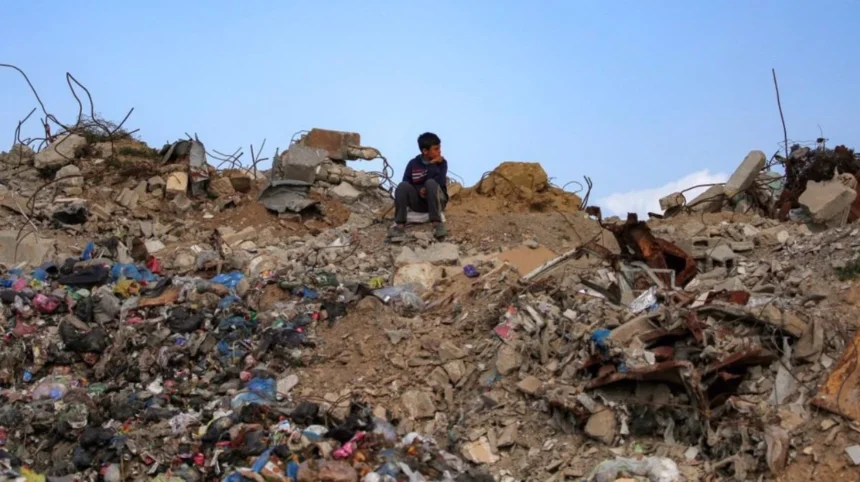
He noted that widely cited figures, while already extremely high, do not capture the many victims believed to remain unrecovered beneath the rubble of destroyed buildings.
Casey-Maslen described the overall situation in Gaza as “extremely serious,” pointing to the continuing hardship for civilians despite a ceasefire deal brokered by the United States between the Gaza-based Hamas movement and Israel.
He emphasized that, even in the ceasefire phase, Palestinians in the enclave endure severe deprivation, limited access to essential services, and ongoing insecurity.
How High Could the Death Toll Be?
In the “War Watch” report, the Geneva Academy draws on demographic information and official Palestinian data to highlight the scale of Gaza’s population decline since the current phase of the conflict began.
The Academy cites recent figures from the Palestinian Central Bureau of Statistics indicating that the territory’s total population has decreased by more than 10 percent since October 2023.
According to Casey-Maslen, such a pronounced decrease over this relatively short period is consistent with a death toll potentially surpassing 200,000 people, when measured against pre-war population benchmarks.
He stressed that this estimate is not limited to confirmed bodies counted by hospital and morgue systems, but also seeks to account for those who have not yet been formally recorded as dead.
The Gaza Ministry of Health has reported that 72,037 Palestinians have been killed and 171,666 others injured since October 2023, figures that already signal a devastating level of casualties in the enclave.
Officials in the territory have repeatedly said that thousands of additional victims are likely still trapped beneath collapsed structures, unreachable due to the destruction and ongoing access constraints.
Casey-Maslen underscored that many of these deaths are not reflected in the official tallies, because medical and civil defense teams have been unable to recover bodies from heavily damaged areas.
He cautioned that any effort to determine the true scale of fatalities will require time, access, and systematic verification, but he argued that the indicators already point to “massive human loss.”
The Geneva Academy’s report frames these figures within the context of international humanitarian law, highlighting concerns about proportionality, civilian protection, and the conduct of hostilities in densely populated urban settings.
By comparing the Gaza conflict with other major wars currently under review, the report suggests that the enclave is experiencing one of the most intense patterns of destruction and human suffering in recent history.
Context / Reactions: How Are Experts and Authorities Responding?
The Geneva Academy’s assessment has intensified calls from legal experts, aid organizations, and human rights advocates for comprehensive accountability and increased humanitarian access to Gaza.
In the report, Casey-Maslen notes that “everyone in Gaza, especially the wounded who need safe evacuation and proper treatment, faces deeply concerning conditions,” stressing that deaths are continuing despite the ceasefire framework.
He highlighted the urgent need for sustained humanitarian corridors, allowing aid agencies to deliver food, water, medical supplies, and shelter materials to a population that remains largely displaced and traumatized.
The Academy’s conclusions build on months of warnings from United Nations agencies and international NGOs regarding the risk of famine, disease outbreaks, and further civilian casualties if relief operations remain restricted.
The Gaza Ministry of Health, which has served as the primary local source of casualty data, has consistently emphasized that its figures are incomplete due to the inability of rescue teams to reach many affected neighborhoods.
Officials in the territory say ambulance and civil defense crews face serious obstacles in accessing numerous sites, including destroyed residential blocks and areas near front lines or contested zones.
Meanwhile, the Palestinian Central Bureau of Statistics has drawn attention to the demographic impact of the war, noting that the recorded 10 percent population decline reflects a combination of deaths, displacement, and other conflict-related factors.
The Geneva Academy acknowledges that precise attribution of the population drop will require further analysis, but it maintains that the available data strongly suggest heavy human losses beyond the publicly recorded death count.
International law specialists following the conflict have cited the Academy’s report as further evidence supporting calls for independent investigations into potential violations of humanitarian law in Gaza.
Some analysts have also argued that the findings should inform ongoing debates within multilateral bodies about arms transfers, sanctions, and the responsibilities of states involved directly or indirectly in the conflict.
Supporting Details: Humanitarian Conditions and Ceasefire Dynamics
The Geneva Academy report emphasizes that conditions inside Gaza remain critical, even after the announcement of a ceasefire arrangement intended to halt large-scale hostilities.
Casey-Maslen notes that people in Gaza urgently require food and clean water, safe shelter, protection from harsh weather, and dependable access to medical care, particularly for the many war-wounded residents.
Medical facilities in the enclave have been severely strained, with hospitals and clinics struggling to cope with mass casualties, equipment shortages, and damaged infrastructure.
Health workers have reported difficulty performing even basic procedures in some facilities because of power cuts, shortages of medicines, and a lack of specialized equipment needed for complex surgeries.
The report states that, although a US-brokered ceasefire has reduced some forms of direct fighting, significant humanitarian challenges persist, and the population remains in need of large-scale international support.
According to the Geneva Academy, the second phase of the ceasefire, announced by the administration of US President Donald Trump in January, was intended to focus on governance arrangements and reconstruction plans for Gaza.
Key questions in this phase include the future administration of the territory, the restoration of basic services, and the roles of regional and international actors in supporting stabilization and rebuilding efforts.
However, the report notes that several critical issues remain unresolved, particularly regarding the presence of Israeli forces in large parts of Gaza and the practical enforcement of ceasefire terms on the ground.
Israeli troops continue to occupy more than half of the territory, according to the Geneva Academy’s summary of the situation, raising concerns over freedom of movement, security, and the ability of displaced civilians to return home.
The Academy also cites reports of near-daily ceasefire violations, including incidents of gunfire and localized clashes, which contribute to ongoing insecurity and complicate aid delivery.
These dynamics, the report suggests, create a volatile environment in which reconstruction and recovery efforts are constantly overshadowed by the risk of renewed escalation.
Implications / Future Developments: What Comes Next for Gaza?
The Geneva Academy’s estimate that Gaza’s death toll may surpass 200,000 carries significant implications for international legal proceedings and policy debates.
If verified, such a figure would underscore the magnitude of civilian harm and likely intensify scrutiny of military tactics, targeting decisions, and the overall conduct of operations in the enclave.
Legal scholars say the findings could shape ongoing and future cases before international courts, including assessments of whether the threshold for crimes such as genocide or crimes against humanity has been met.
The report’s emphasis on population decline and unrecovered bodies may also influence how investigators document and categorize casualties, especially in environments where access is limited and infrastructure is destroyed.
On the humanitarian front, the projected scale of loss is expected to reinforce calls for an expanded response, including longer-term funding for reconstruction, mental health services, and support for families who have lost breadwinners.
Aid agencies are likely to use the Geneva Academy’s findings to advocate for more robust guarantees of safe passage, arguing that without secure access, both immediate relief and longer-term recovery will remain inadequate.
Diplomatically, the analysis may add pressure on governments involved in ceasefire negotiations to address unresolved issues such as troop withdrawals, monitoring mechanisms, and protections for civilians returning to damaged neighborhoods.
Negotiators face the challenge of designing arrangements that can prevent a relapse into full-scale fighting, while also enabling displaced residents to rebuild homes, livelihoods, and community institutions.
At the same time, the Academy’s insistence that more time is needed to determine the exact number of deaths highlights the likelihood of continued debates over casualty statistics and methodology.
Experts anticipate that future demographic surveys, forensic investigations, and on-the-ground assessments will be crucial in clarifying the true human cost of the conflict.
Summary of Confirmed Developments
The Geneva Academy of International Humanitarian Law and Human Rights has warned that the death toll from Israel’s war in Gaza may exceed 200,000 people, citing a reported population decline of more than 10 percent since October 2023 and large numbers of unrecovered victims.
The Gaza Ministry of Health has confirmed more than 72,000 deaths and over 171,000 injuries, while acknowledging that thousands of victims remain buried under rubble and beyond the reach of rescue crews.
Despite a US-brokered ceasefire and the launch of a second phase aimed at determining Gaza’s future governance and reconstruction, key issues such as Israeli troop withdrawal, humanitarian access, and security guarantees remain unresolved.
Humanitarian conditions in the territory continue to be described as extremely severe, with residents facing shortages of food, water, shelter, and medical care, and experts cautioning that the full extent of human loss may only become clear over time.