


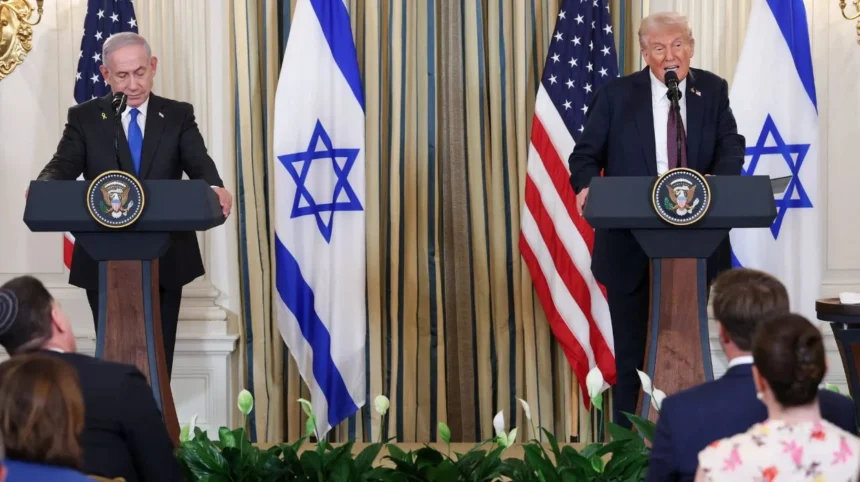
Israeli Prime Minister Benjamin Netanyahu is expected in Washington, DC, for talks focused on Iran and the Gaza Strip with U.S. President Donald Trump at the White House. As reported by experts and staff of the Council on Foreign Relations, the meeting comes as Washington weighs its next steps on both Iran’s nuclear program and the future of Gaza amid ongoing regional tensions.
According to the Council on Foreign Relations, Netanyahu brought his visit forward from later in the month, reflecting Israeli concern over U.S. deliberations on potential military options and nuclear diplomacy with Tehran. The article notes that Netanyahu has made at least six trips to the United States since Trump returned to office last year, underscoring the prominence of U.S.-Israeli coordination on security issues.
What is at stake in talks on Iran?
As reported by the Council on Foreign Relations, the United States and Iran recently held indirect nuclear talks in Oman that both sides described as positive but inconclusive. Washington has warned U.S.-flagged commercial ships to stay “as far as possible” from Iran’s territorial waters, and Trump has said he is considering sending a second U.S. aircraft carrier strike group to the Middle East if diplomacy stalls.
According to the Council on Foreign Relations, Iran has sought to narrow discussions strictly to its nuclear program, while the United States wants a broader framework that also addresses ballistic missiles and Iran’s support for regional proxy groups. The report says Netanyahu similarly favors an expanded agreement, and before departing Israel he told reporters his “first and foremost” goal in Washington was to press for a deal that goes beyond the nuclear file.
In analysis published by the Council on Foreign Relations, expert Ray Takeyh writes that the Israeli government is concerned U.S.-Iran engagement could lead to concessions such as allowing some level of domestic uranium enrichment in Iran in exchange for sanctions relief. This concern helps explain why Tehran’s wider regional activities and missile program are likely to figure prominently in Netanyahu’s discussions at the White House.
How are plans for Gaza shaping the agenda?
According to the Council on Foreign Relations, the Gaza file will form the other central pillar of Netanyahu’s agenda in Washington. Trump’s Gaza Board of Peace, which brings together representatives from some two dozen countries, is expected to meet in Washington next week to discuss the latest U.S. draft plan for the territory.
As reported by the Council on Foreign Relations, the U.S. draft plan would require Hamas to surrender all weapons capable of striking Israel as part of the second phase of Trump’s Gaza peace initiative. The report, citing the New York Times, notes that the proposal would initially allow Hamas to retain some small arms, a point that has already drawn a firm rejection from at least one senior Hamas official, who has publicly opposed surrendering weapons.
According to the Council on Foreign Relations, spokespeople for both Netanyahu and Hamas did not immediately comment on the reported terms of the U.S. plan. Israeli officials have consistently insisted that demilitarizing Gaza is a non-negotiable step in any peace process, suggesting that Netanyahu is likely to press U.S. counterparts on enforcement mechanisms and timelines during his visit.
Supporting details and expert perspectives
As highlighted in the Council on Foreign Relations analysis, the U.S. warning to commercial shipping near Iran and the possible deployment of an additional carrier strike group to the region illustrate the military backdrop to the diplomatic track. These moves frame the Washington talks as part of a broader U.S. strategy to maintain pressure on Tehran while keeping channels for negotiation open.
The Council on Foreign Relations also points out that Iran’s attempt to confine discussions to the nuclear issue clashes with Washington’s and Jerusalem’s preference for a wider bargain. This divergence makes Netanyahu’s consultations in Washington particularly important for aligning positions on what conditions, restrictions, and monitoring should be included in any potential agreement.
On Gaza, the reporting notes that the Gaza Board of Peace is designed to involve a broad group of international stakeholders in reconstruction and governance discussions. The New York Times reporting, as relayed by the Council on Foreign Relations, indicates that allowing Hamas to keep some small arms even temporarily is a sensitive issue, with Israel emphasizing that full demilitarization remains central to its security demands.
What are the implications and possible next steps?
According to the Council on Foreign Relations, the Washington visit is expected to influence both the trajectory of the U.S.-Iran nuclear talks and the shape of the emerging Gaza plan. If Netanyahu succeeds in persuading the Trump administration to insist on a broader agreement with Tehran, future negotiating rounds may place greater emphasis on Iran’s missile program and support for regional proxies, potentially complicating but also expanding the scope of diplomacy.
On Gaza, the outcome of Netanyahu’s discussions and the subsequent meeting of the Gaza Board of Peace in Washington could determine how quickly any new arrangements move from drafting to implementation. The Council on Foreign Relations notes that Israel’s insistence on demilitarization and Hamas’s resistance to disarmament remain central obstacles that will likely continue to shape negotiations.
In the near term, Netanyahu’s trip underscores the ongoing centrality of U.S.-Israeli coordination on security, Iran policy, and the future of Gaza. The Washington talks, along with parallel diplomatic efforts involving regional and international actors, will help set the parameters for any further movement on both the Iran nuclear file and the Gaza peace initiative.