


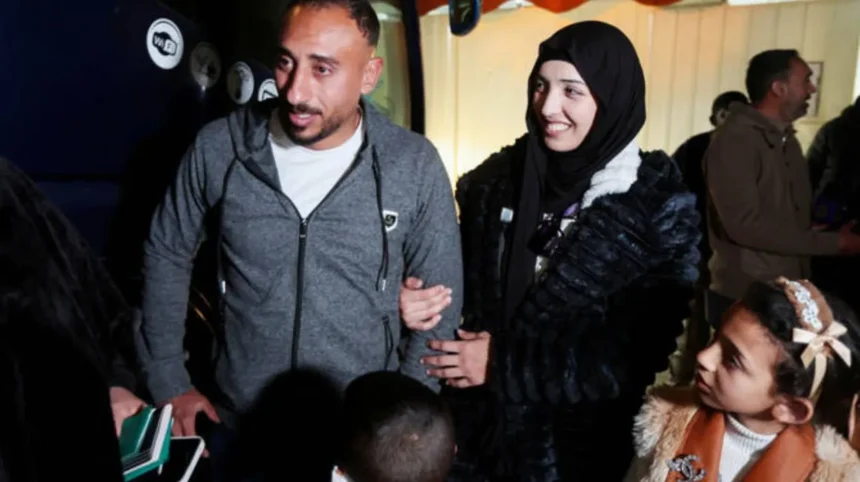
As reported by Jennie Shin of France 24, tens of thousands of Palestinians have fled Gaza to seek refuge in Egypt since the onset of the conflict, driven by widespread devastation and insecurity in the territory.
According to France 24, many of these displaced Palestinians have remained focused on the possibility of returning home or at least reconnecting in person with relatives who remained in Gaza.
This week, following the reopening of the Rafah border crossing on Monday, a limited number of people were allowed to cross from Egypt into Gaza.
France 24 reports that these crossings enabled families who had been separated by months of violence and displacement to see each other again.
How are residents and families reacting?
According to France 24, those who crossed the Rafah checkpoint and managed to reunite with their relatives described the meetings as deeply emotional moments after prolonged separation.
The report notes that many families had been living with uncertainty about the safety and whereabouts of loved ones, making these reunions particularly significant.
As reported by Jennie Shin of France 24, the limited reopening allowed only a restricted number of people through, underscoring how many families remain divided despite the recent crossings.
France 24 indicates that, even for those who reunited, the broader context of destruction and displacement in Gaza continues to shape daily life.
Supporting details and ongoing situation
According to France 24, the Rafah crossing has been a central exit and entry point for civilians seeking safety or attempting to rejoin family members on either side of the border.
The report explains that the reopening this week followed a period of closure during which movement in and out of Gaza was heavily restricted.
France 24 notes that, while some families have now been able to embrace again, many Palestinians who left for Egypt remain unable to cross back due to the limited number of permits and security constraints.
As reported by Jennie Shin, the situation highlights both the importance of the Rafah checkpoint for humanitarian movement and the continuing barriers facing civilians.
What are the implications and what comes next?
According to France 24, the partial reopening of Rafah and the reunions it enabled offer a rare moment of relief for some families amid a broader humanitarian crisis.
The report suggests that future developments at the Rafah crossing—whether further openings or renewed restrictions—will directly affect the ability of separated families to reconnect.
France 24 indicates that, for many Palestinians still stranded or displaced, the recent reunions reinforce hopes that additional crossings could eventually allow more people to return or meet loved ones.
As reported by Jennie Shin, the controlled nature of the reopening underscores that civilian movement remains tightly managed, and the long-term prospects for broader reunification remain uncertain.
In summary, the reopening of the Rafah border crossing this week permitted a limited number of Palestinians to cross between Egypt and Gaza, leading to emotional reunions for families separated by months of conflict and displacement, even as many others remain unable to return or reunite amid ongoing restrictions and insecurity.