


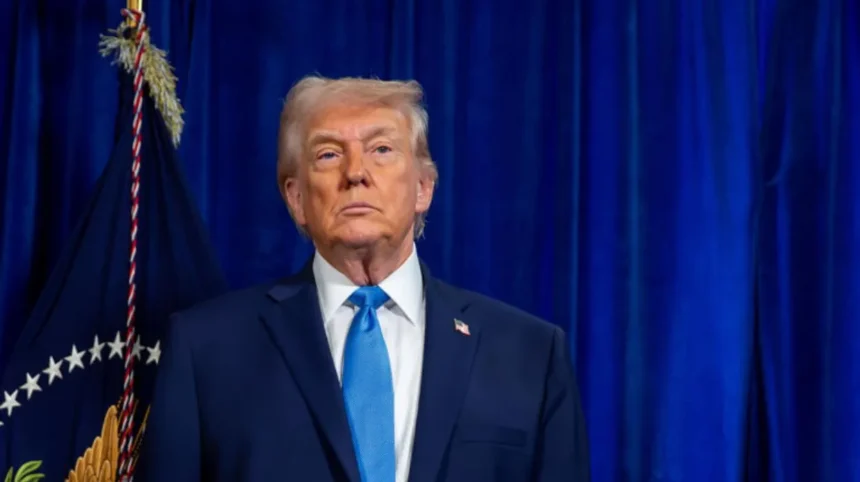
U.S. President Donald Trump’s creation of the Board of Peace is emerging as a major geopolitical initiative with direct implications for global markets and individual investors’ retirement portfolios. As reported by Foreign Policy, the body was initially framed as a mechanism to coordinate reconstruction and relief in Gaza after the October 2023 Hamas attack and subsequent Israeli military campaign. According to Foreign Policy, the United Nations Security Council approved Resolution 2803 in November 2025, authorizing Trump personally to lead this board on Gaza-related cease-fire efforts, humanitarian deliveries, and reconstruction. Subsequent moves by the administration, however, have broadened the mandate well beyond Gaza, positioning the Board of Peace as a potential rival framework to existing multilateral institutions such as the United Nations.
According to analysis published by the European Council on Foreign Relations, the Board of Peace is increasingly being interpreted as a tool for the United States to reshape the global order along more transactional, interest-based lines. The initiative has drawn criticism from some European and “middle power” governments, who see it as an attempt to sideline existing multilateral processes where they wield influence. At the same time, reporting by Al Jazeera notes that the Board’s charter unveiled in Davos omits explicit references to Gaza or a fixed end date, instead describing a broader remit covering “areas of conflict and instability” worldwide. This has led analysts to argue that the mechanism could be used flexibly by Washington to convene coalitions and coordinate policy in regions far beyond the Middle East.
Financial media have begun drawing a direct line between these geopolitical maneuvers and the outlook for investors. According to Yahoo Finance, Trump’s Board of Peace could influence global energy flows, supply-chain stability, and the investment climate in emerging markets depending on how and where it is deployed. The outlet highlights that any escalation of geopolitical tensions triggered by Board of Peace initiatives, or by reactions to them, could spark volatility in commodities, currencies, and equities. For U.S. savers, that means 401(k) accounts and diversified portfolios may be indirectly exposed to the success or failure of the project, especially through holdings in energy, defense, and internationally focused funds.
What Are The Reactions And Concerns?
Reactions from governments and experts have been sharply divided, reflecting broader debates over U.S. leadership and the future of multilateralism. As reported by Foreign Policy, some governments in the Middle East and parts of the so‑called Global South have joined or signaled openness to the Board of Peace, seeing an opportunity to secure funding, political backing, and security guarantees for local priorities. According to the same outlet, a number of Islamic countries had earlier endorsed a U.S.-led conflict-management framework in Gaza, which helped create political space for the Security Council to back Trump’s role through Resolution 2803.
By contrast, several European commentators view the Board of Peace with skepticism. The European Council on Foreign Relations has argued that the initiative appears less about peace-building and more about building a flexible U.S.-centric platform to manage global conflicts on Washington’s terms. Analysts cited by ECFR say this could marginalize traditional forums where European states have seats and formal influence, such as the Security Council and other U.N. bodies. Al Jazeera has also noted that critics fear the new board could undercut collective decision-making and reduce transparency, particularly if major diplomatic decisions are negotiated within ad hoc coalitions assembled around the U.S. president.
For investors, financial analysts are focusing on how these political reactions might translate into risk or opportunity. According to Yahoo Finance, heightened tensions between the United States and rival powers such as China and Russia over the Board of Peace could further fragment the global system into competing blocs. This fragmentation could complicate cross-border investment, raise regulatory uncertainty, and increase the likelihood of sanctions or export controls that hit specific sectors or regions. At the same time, some market strategists quoted by financial outlets suggest that if the Board of Peace manages to de-escalate certain conflicts or secure new agreements over trade and energy corridors, it could reduce risk premiums and support asset prices in affected markets.
Supporting Details And Expert Commentary
Foreign Policy’s reporting emphasizes that the Board of Peace is notable not just for its stated objectives but for the authority concentrated in a single political figure. According to that analysis, Resolution 2803 effectively outsourced a portion of U.N. conflict-management authority to Trump personally, granting broad discretion to select partners, raise funds, and negotiate with regional actors. Experts quoted in the piece argue that this level of personalization in a multilateral mechanism is unusual and could set precedents for how future international crisis platforms are structured. They also note that, even if temporary on paper, such institutions can become durable if participating states find them useful.
The European Council on Foreign Relations has further argued that the Board of Peace challenges assumptions about a cohesive front of “Global South” states aligning with China and Russia against U.S. leadership. According to ECFR’s analysis, the willingness of certain countries to engage with Trump’s initiative reveals a more fragmented landscape, where states respond pragmatically to perceived opportunities rather than ideological blocs. For markets, this suggests that country-level political and economic fundamentals may matter more than broad labels such as “BRICS” or “Global South” when assessing risk and return. Financial analysts who follow emerging markets have pointed out that such fragmentation can create both winners and losers, depending on which states successfully leverage new platforms like the Board of Peace to attract investment or secure concessions.
In the financial sphere, Yahoo Finance reports that investors are being urged to pay close attention to how energy producers, shipping routes, and critical infrastructure might be affected by Board of Peace interventions. The outlet notes that disruptions in key regions could push up oil and gas prices, increase shipping costs, and weigh on global growth, all of which would be reflected in equity and bond markets. Some investment strategists advise that U.S. retirement savers consider their exposure to sectors most sensitive to geopolitical shocks, such as energy, industrials, and certain emerging-market bonds and equities, while maintaining diversified, long-term strategies rather than making abrupt shifts based solely on headline risk.
What Are The Implications And Possible Future Developments?
Looking ahead, analysts emphasize that the impact of Trump’s Board of Peace on global markets and individual portfolios will depend on how actively it is used and in which regions. Foreign Policy notes that the board’s prospects are tightly linked to Trump’s political fortunes and the durability of his foreign policy agenda within the broader U.S. government. If the initiative becomes a central tool of American diplomacy, it could reshape alliances, alter the balance of power within multilateral institutions, and influence where and how capital flows across borders. If it remains dormant or limited to a narrow set of cases, its market impact may be modest and confined to specific regional conflicts.
According to the European Council on Foreign Relations, one medium-term question is whether other major powers will attempt to build rival mechanisms to counterbalance or dilute the Board of Peace. Such a scenario could intensify institutional competition, with different coalitions sponsoring parallel peace or reconstruction formats in contested regions. For investors, this would likely translate into a more complex geopolitical environment in which country and sector risks diverge more sharply, complicating global asset allocation. Yahoo Finance points out that U.S. savers with 401(k)s and other retirement accounts are indirectly exposed to these dynamics through index funds and global holdings, underscoring the need to monitor geopolitical developments as part of overall risk management.
Financial commentators also stress that, despite the political uncertainty, basic investing principles remain relevant. As reported by Yahoo Finance, many advisers continue to recommend diversified portfolios, regular rebalancing, and a focus on long-term goals rather than reacting to every geopolitical development. At the same time, they note that asset managers are increasingly integrating geopolitical risk analysis into investment decisions, particularly when assessing emerging markets, commodities, and sectors like defense and cybersecurity that may be directly affected by shifts in global security architectures. For individual investors, understanding initiatives like Trump’s Board of Peace can therefore help contextualize volatility and inform discussions with financial professionals, rather than serving as a trigger for short-term, speculative moves.
Taken together, the reporting from Foreign Policy, the European Council on Foreign Relations, Al Jazeera, and financial outlets indicates that Trump’s Board of Peace is both a diplomatic experiment and a potential market variable. While its long-term trajectory remains uncertain, experts agree that its evolution will intersect with energy prices, supply chains, and broader geopolitical alignments that ultimately filter into stock, bond, and commodity markets. For 401(k) holders and other investors, the initiative is another reminder that global politics and personal finances are closely linked, and that staying informed about major geopolitical shifts is increasingly part of prudent financial planning.