


The Gaza ceasefire is moving into its second phase after the Israeli military announced it had recovered the body of the last remaining Israeli captive held in the territory, a key benchmark in the US-brokered plan linking hostage issues to the sequencing of the truce and political measures. According to Al Jazeera, this transition follows a first phase centered on halting large-scale hostilities, initial hostage-prisoner exchanges, and limited humanitarian relief, and now shifts toward deeper political and security changes in Gaza. The broader framework has been presented publicly by US officials as part of President Donald Trump’s multi-point plan to end the war in Gaza and reshape governance in the enclave.
As reported by Al Jazeera, the second phase is framed as an intermediate step between emergency ceasefire arrangements and any long-term political settlement, with mediators stressing that its implementation will determine whether the truce holds or collapses. According to reporting cited by Al Jazeera on negotiations, both Israel and Hamas previously agreed in principle to a multi-stage roadmap, but left details of the later phases, including phase two, to ongoing talks involving the United States, Qatar, and Egypt.
What does phase two include?
According to Al Jazeera’s coverage of the evolving plan, phase two is built around three main pillars: demilitarization, technocratic governance, and reconstruction in Gaza. US Special Envoy Steve Witkoff, speaking on behalf of the Trump administration, has described phase two as the point at which the ceasefire “transitions from ceasefire to demilitarization, technocratic governance, and reconstruction,” emphasizing that the goal is to change the security and political landscape of the territory.
Al Jazeera reports that central to this shift is the expectation that Hamas and other armed groups in Gaza will disarm or be disarmed as part of a process the US and Israel call “complete demilitarization,” although Hamas has not announced a public commitment to full disarmament. According to Axios and the BBC, phase two also requires a gradual withdrawal of Israeli forces from the Gaza Strip, coordinated with new security and administrative arrangements that are meant to prevent a power vacuum and renewed large-scale fighting.
As detailed in coverage by Al Jazeera and other outlets, another core element of phase two is the establishment of a new Palestinian technocratic administration to run day-to-day governance in Gaza during a transitional period. According to the BBC, this interim structure is known as the National Committee for the Administration of Gaza, and it is intended to be distinct from both Hamas’s pre-war institutions and direct Israeli military rule, although the precise composition and mandate of the body remain under negotiation.
Context and reactions: How are the parties responding?
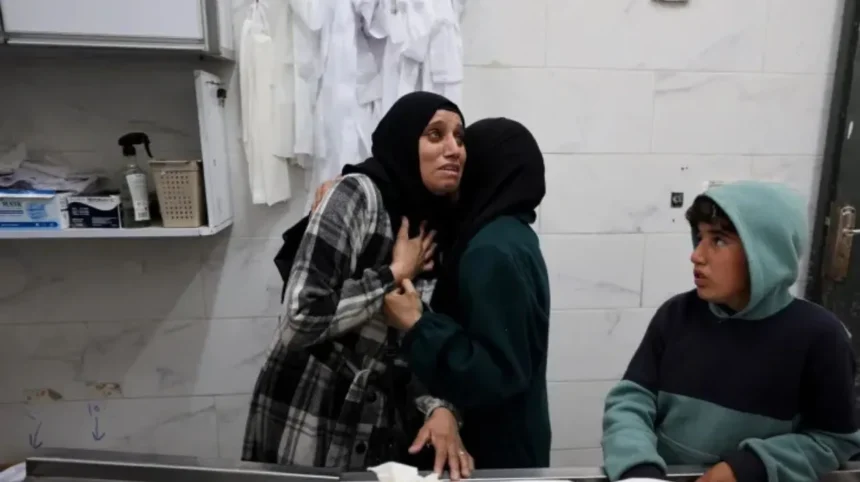
According to Al Jazeera’s reporting from Gaza and regional capitals, Palestinian factions and civilians have reacted with a mixture of skepticism and urgency to the second-phase announcements, stressing that despite diplomatic language, conditions on the ground remain dire and that aid and reconstruction have been slow to materialize. Al Jazeera’s Hind Khoudary, reporting from Gaza City, has noted that residents say they are still hearing explosions and facing severe shortages, raising doubts among many Gazans about whether phase two will deliver substantive relief or a meaningful easing of the blockade.
According to Al Jazeera, officials from Hamas have accused Israel of attempting to obstruct full implementation of the ceasefire deal, alleging that restrictions on crossings and delays in aid convoys violate the spirit of the agreement. In statements reported by Al Jazeera, Hamas figures have urged mediators to ensure that Israeli forces withdraw from the Strip, that border crossings are reopened, and that humanitarian supplies and reconstruction materials can enter without what they describe as politically motivated constraints.
On the Israeli side, coverage by Axios and the BBC indicates that the government has linked its acceptance of phase two measures to progress on demilitarization and to the return of Israeli captives or their remains. US officials quoted by these outlets have underscored that the United States expects all sides to comply with their obligations, warning of “serious repercussions” if key conditions, including disarmament steps and cooperation on hostage issues, are not met.
Supporting details and expert commentary
According to Al Jazeera and other media, the second phase is also conceived as the point at which large-scale reconstruction planning moves from concept to initial implementation, even though much of Gaza remains heavily damaged and littered with unexploded ordnance and debris. Al Jazeera has reported that experts and local officials estimate tens of millions of tons of rubble across the enclave, complicating any rapid rebuilding effort and raising serious environmental and public health risks.
The Gaza peace plan entry, summarizing multiple news reports, states that the written agreement outlined broad parameters for the second and third stages but left many operational details to further negotiation, a design that has already become a source of friction. According to that account, Hamas sought guarantees that later stages, including sustained ceasefire terms and reconstruction commitments, would be implemented and that the initial truce would remain in place until then, while Israel favored language that allowed the initial ceasefire and related obligations to lapse automatically if talks stalled after a set period.
Analysts cited in coverage by Al Jazeera and international outlets have pointed out that the creation of a technocratic administration in Gaza echoes previous attempts to establish interim governing bodies in other conflict zones, raising questions about who will select its members and how it will relate to existing Palestinian political structures. According to these reports, there is also uncertainty over how security responsibilities will be divided among local forces, regional actors, and any international presence once Israeli troops begin to withdraw under phase two.
What are the implications and next steps?
According to US and European officials quoted by Axios and the BBC, the success or failure of phase two will likely determine whether Gaza moves toward a more durable political arrangement or risks sliding back into open conflict. They have stressed that if disarmament, governance transition, and reconstruction benchmarks are not met within the agreed timelines, pressure will mount on both Israel and Hamas, and the ceasefire’s viability could come into question.
Al Jazeera reports that mediators are now focused on securing practical mechanisms to enforce the commitments in phase two, including monitoring disarmament steps, coordinating troop withdrawals, and supervising the work of the National Committee for the Administration of Gaza. According to these accounts, humanitarian agencies are simultaneously pressing for guarantees that reconstruction and aid channels will be insulated from political disputes so that civilians in Gaza see tangible improvements as the second phase unfolds.
In summary, phase two of the Gaza ceasefire combines a shift toward demilitarization, the introduction of a new technocratic governing body, and the initial stages of reconstruction, all tied to continued adherence to the ceasefire and progress on hostage-related issues. According to reporting from Al Jazeera and other outlets, whether these interlocking commitments can be implemented on the ground—amid deep mistrust, severe destruction, and competing political agendas—will define the trajectory of Gaza’s conflict and any prospects for longer-term stability.