


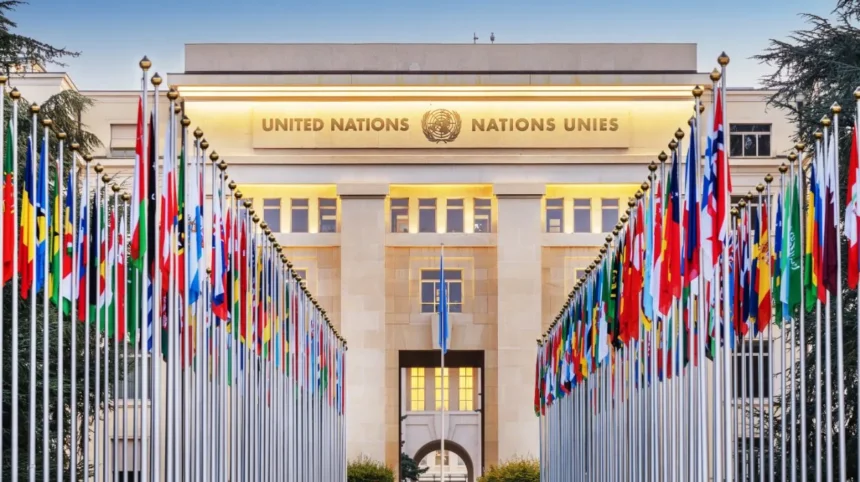
United Nations decisions on Gaza sit at the intersection of global diplomacy and the rules of war. They highlight how international humanitarian law seeks to protect civilians even in the most polarized conflicts.
- Understanding UN decisions on Gaza
- Security Council resolutions and their legal weight
- General Assembly resolutions and “Uniting for Peace”
- Core principles of international humanitarian law
- Humanitarian access and aid operations
- Accountability and the call for investigations
- The role of language and political divides
- Gaza, self‑defence and the law of war
- Why these norms remain relevant
- Conclusion
Understanding UN decisions on Gaza
When UN bodies debate the situation in Gaza, they draw heavily on core principles of international humanitarian law, such as distinction between civilians and combatants, proportionality in the use of force and the obligation to ensure access to relief. UN organs frequently recall that all parties in an armed conflict must protect civilians and civilian objects and must allow safe passage of humanitarian assistance.
Security Council texts on Gaza have emphasized safe and unhindered delivery of food, water, fuel and medical supplies to the civilian population, underlining that blocking such aid can violate basic humanitarian norms. General Assembly resolutions, while not binding in the same way, reinforce these expectations and give political weight to global concerns about civilian protection and humanitarian access.
Security Council resolutions and their legal weight
The Security Council has adopted several decisions addressing the crisis in Gaza, often after contentious negotiations among permanent and elected members. These resolutions typically reaffirm the obligations of all parties under international humanitarian law, including protecting civilians, safeguarding hospitals and schools and ensuring the safety of humanitarian and medical personnel.
In some texts, the Council has demanded immediate, safe and unhindered humanitarian access throughout the Gaza Strip and called for mechanisms to coordinate and verify the humanitarian character of relief consignments. On occasions, it has demanded an immediate ceasefire for specified periods and insisted on the immediate and unconditional release of hostages held by armed groups, linking both objectives to the protection of civilians.
Because Security Council resolutions can be adopted under the UN Charter’s enforcement provisions, they carry particular legal and political weight. When they explicitly reference humanitarian rules, they help clarify how international standards apply to the conduct of hostilities in Gaza and to the responsibilities of states and non‑state armed groups.
General Assembly resolutions and “Uniting for Peace”
The General Assembly has also adopted high-profile resolutions on Gaza, especially when the Security Council has been deadlocked. These resolutions call for humanitarian truces or ceasefires, protection of civilians and respect for humanitarian obligations by all parties to the conflict.
One widely noted resolution urged an immediate ceasefire, rapid and unimpeded humanitarian access to Gaza and strict respect for the laws protecting civilians. Another called for an “immediate, durable and sustained humanitarian truce” and urged compliance with the UN Charter, the Geneva Conventions and relevant international law. While these decisions are not binding in the same way as Council resolutions, they represent the collective voice of the broader international community and can shape expectations of lawful behavior.
The Assembly’s “Uniting for Peace” practice allows it to step in when the Council fails to maintain international peace and security. In relation to Gaza, this has meant recommending measures such as humanitarian ceasefires and monitoring of aid flows, underlining that international humanitarian law remains the baseline even when political solutions are elusive.
Core principles of international humanitarian law
International humanitarian law rests on several key principles that are repeatedly invoked in UN debates on Gaza. First is the rule of distinction, which requires parties to distinguish at all times between civilians and combatants and between civilian objects and military objectives. Second is proportionality, which prohibits attacks expected to cause excessive civilian harm in relation to the anticipated concrete and direct military advantage.
UN texts on Gaza repeatedly stress that civilian, humanitarian and UN facilities and medical personnel must be protected, and that attacks on hospitals and medical centers are inconsistent with humanitarian obligations. They also reject collective punishment, forced displacement and denial of basic necessities such as food, water, electricity and healthcare, arguing that such measures can violate the law governing armed conflict.
The Geneva Conventions and their additional protocols, often cited in UN debates, establish that humanitarian relief must be allowed and facilitated, subject only to reasonable security conditions. Switzerland, as the depositary of the Geneva Conventions, has emphasized in the context of Gaza that these rules are universal and must be respected without exception, even when states invoke self‑defence or security needs.
Humanitarian access and aid operations
UN resolutions on Gaza consistently highlight humanitarian access as a central legal and moral concern. Security Council decisions have demanded that parties allow, facilitate and enable immediate, safe and unhindered delivery of assistance at scale to civilians across Gaza, recognizing that food, medical supplies and fuel are essential to survival. They sometimes request the appointment of senior coordinators to facilitate, monitor and verify the humanitarian nature of relief consignments, particularly when aid passes through states not directly involved in the conflict.
General Assembly resolutions have echoed these demands, calling for rapid, unimpeded and safe humanitarian access and urging all sides to refrain from actions that obstruct aid or endanger humanitarian workers. States have warned that besieging civilian populations, cutting off basic necessities or targeting humanitarian convoys may breach international obligations and must be investigated, with those responsible held accountable.
Expert discussions on Gaza have also proposed UN‑led humanitarian convoys, drawing parallels with earlier Assembly endorsements of aid operations in other conflicts. In previous crises, the Assembly has recommended monitoring of aid deliveries and international involvement to ensure that relief reaches civilians, illustrating how humanitarian law principles can be implemented through practical mechanisms.
Accountability and the call for investigations
UN bodies frequently link their resolutions on Gaza to broader questions of accountability. Delegations stress that violations of humanitarian and human rights law must be investigated and that perpetrators, regardless of affiliation, should face consequences. This emphasis reflects a growing international consensus that impunity for serious violations, including deliberate attacks on civilians or civilian infrastructure, undermines the entire legal framework designed to limit the effects of war.
Debates surrounding Gaza often focus on whether actions by state forces or armed groups respect the requirements of necessity and proportionality and whether parties have taken feasible precautions to minimize harm to civilians. Many states argue within UN forums that accountability mechanisms—whether domestic, international or hybrid—are essential to deter future violations and to provide some measure of justice to victims.
At the same time, resolutions and statements underline that accountability must be even‑handed. Some member states insist that condemning terrorism and attacks on civilians by armed groups must go hand in hand with scrutinizing the conduct of state actors, so that one set of violations does not overshadow another.
The role of language and political divides
The wording of resolutions on Gaza often exposes deep political divisions. Negotiations over whether to name specific actors, such as armed groups or particular states, can determine whether a resolution passes or fails. In some cases, states have abstained or vetoed drafts because they felt the language did not sufficiently condemn certain attacks or did not acknowledge the broader context of occupation and longstanding grievances.
Despite these disagreements, many states converge around certain humanitarian messages: no targeting of civilians, no terrorism, no indiscriminate attacks, no forced displacement and no siege that deprives civilians of essential services. Ambassadors have used the Assembly and Council to reject dehumanizing rhetoric, warning that such language fuels further violence and undermines efforts to de‑escalate. These debates show how law and politics intertwine, with humanitarian norms serving as a common reference point even when political positions remain far apart.
Gaza, self‑defence and the law of war
Another recurring issue in UN discussions on Gaza is the balance between a state’s right to self‑defence and its obligations under humanitarian law. Some member states explicitly recognize the right of Israel to defend itself against attacks, including rocket fire and hostage‑taking, while simultaneously insisting that any use of force must comply with international rules governing armed conflict.
Statements in UN forums emphasize that citing security or self‑defence does not remove the duty to distinguish between military targets and civilians or to avoid measures that cause disproportionate harm. Other delegations underscore that the prolonged occupation, recurrent hostilities and blockade conditions have created a context in which the rights of Palestinians must also be protected, particularly their rights to life, dignity and self‑determination.
These debates often revisit fundamental questions about how humanitarian law applies in densely populated urban areas and how to evaluate military operations where civilian infrastructure is interwoven with military objectives. While UN organs may not resolve these legal disputes definitively, their resolutions and debates help frame how the global community interprets and applies humanitarian standards in complex environments.
Why these norms remain relevant
UN resolutions on Gaza and broader humanitarian law principles retain their relevance over time because they draw on stable legal frameworks and enduring humanitarian concerns. The Geneva Conventions, the UN Charter and customary rules on the conduct of hostilities continue to guide expectations long after specific debates or crises fade from headlines.
International organizations regularly remind states that protecting civilians, ensuring humanitarian access and preventing collective punishment are not optional, but legal obligations. Global institutions also stress that civilian suffering in places like Gaza is part of wider challenges, as protracted conflicts, forced displacement and infrastructure destruction threaten development, health and education in many regions.
By repeatedly invoking humanitarian law in relation to Gaza, UN bodies contribute to a body of practice and interpretation that influences how future conflicts are assessed. Over time, this helps clarify where the boundaries of lawful conduct lie and reinforces the idea that even in the most entrenched conflicts, there are rules designed to preserve a minimum of humanity.
Conclusion
Debates and decisions on Gaza within the UN system showcase how international humanitarian law operates in real time, under intense political pressure. Whether through Security Council demands for humanitarian access and ceasefires or General Assembly calls for protection of civilians and respect for humanitarian norms, these texts affirm that the rules of war apply to all parties, at all times.
They also highlight unresolved tensions: between security and civilian protection, between political narratives and legal obligations and between short‑term military goals and long‑term prospects for peace. Yet the recurring reference to humanitarian law in discussions on Gaza demonstrates that the global community continues to see value in a shared legal framework that restrains violence and centers human dignity. As long as conflicts persist, these norms—and the UN resolutions that invoke them—will remain essential tools for assessing conduct, demanding accountability and advocating for the protection of civilians everywhere.