

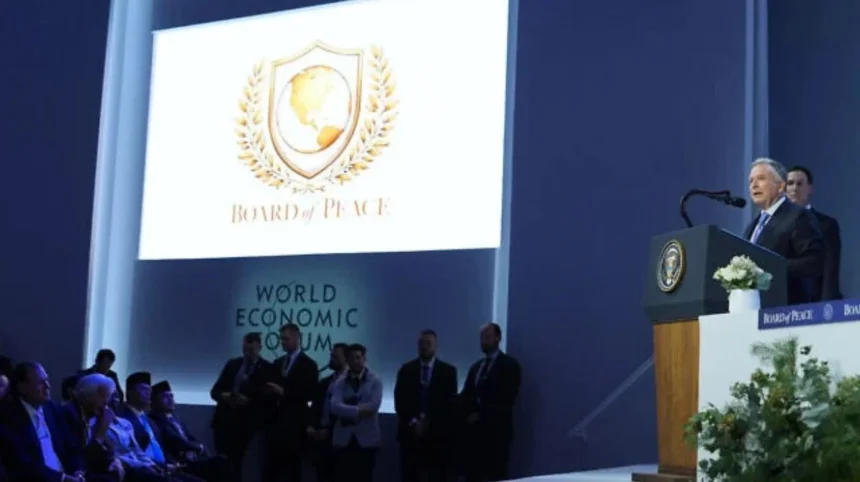
According to the Times of Israel liveblog, citing a senior United States official, more than 25 countries have agreed to join the newly formed Board of Peace, an international body that will initially concentrate on the situation in the Gaza Strip. The official said the board is intended to coordinate political and reconstruction efforts after the current phase of fighting and to support implementation of a wider diplomatic plan for Gaza. The report noted that Washington has framed the Board of Peace as a mechanism to bring together a broad coalition of states willing to support a post-war arrangement for the territory. The official also indicated that the initiative is being led by the United States in parallel with United Nations–backed efforts and existing cease-fire diplomacy.
As reported by Reuters, U.S. President Donald Trump has promoted the Board of Peace as a flagship initiative of his administration’s Middle East policy, inviting dozens of governments to participate. Diplomats quoted in that reporting said the body is envisioned as a forum for countries that want to contribute to stabilizing Gaza and supporting its reconstruction under an agreed transition framework. According to Reuters, some diplomats have raised questions over whether the Board of Peace might overlap with or complicate work already being carried out by UN agencies and other multilateral mechanisms in the region. The outlet said U.S. officials have argued the board will complement, rather than replace, existing international structures.
According to coverage by CBC News and other outlets, countries that have signaled they will join or support the Board of Peace include several key regional stakeholders in Gaza’s future. These reports state that U.S. officials and foreign ministries have described the initial mandate as focused on consolidating a cease-fire, facilitating aid, and preparing for reconstruction rather than on direct military or security operations. Some governments have publicly linked their participation to assurances that the board’s work will be consistent with international law and with a political process aimed at a lasting solution to the Israeli–Palestinian conflict. Reports also emphasize that membership is still evolving as invitations are extended and capitals finalize their positions.
What reactions and debates have emerged?
According to Reuters and other international outlets, reaction to the Board of Peace has been mixed, with some governments welcoming a new channel to influence post-war arrangements in Gaza and others expressing reservations. Diplomats quoted in these reports say supporters see the initiative as an opportunity to ensure their interests and concerns are represented in decisions about Gaza’s reconstruction and governance. Some Middle Eastern states have publicly endorsed the concept, framing it as a way to coordinate assistance and political backing for a cease-fire and long-term stability. Others, particularly in parts of Europe, have urged caution and stressed the need to safeguard the central role of the United Nations.
Reporting by PBS and other broadcasters has highlighted that the initiative has prompted divisions among Western allies. Some European governments have reportedly declined invitations or delayed decisions, citing uncertainty over the Board of Peace’s legal basis, its relationship to UN bodies, and its broader geopolitical implications. Analysts quoted by these outlets note that skepticism in some capitals reflects concern that the board could be perceived as a rival to existing multilateral peace and reconstruction frameworks. At the same time, several predominantly Muslim-majority countries have issued statements welcoming the invitation and linking their engagement to broader calls for an enduring cease-fire and a political horizon for Palestinians.
According to regional reporting cited by international media, the reaction from Israel and key Arab states has been particularly closely watched. Governments such as Egypt and other neighboring countries have reportedly viewed participation in the Board of Peace as a way to remain central to deliberations on Gaza’s border arrangements, security coordination, and reconstruction priorities. At the same time, some officials quoted anonymously have stressed that their involvement will depend on how the board is structured in practice and whether its mandate remains focused on supporting an agreed, internationally backed roadmap for Gaza.
Supporting details and expert commentary
According to explainer pieces published by international policy organizations and news outlets, the Board of Peace is described as a political coordination mechanism rather than a formal treaty-based institution. These reports say it is being set up through invitations issued by the United States and supported by a series of diplomatic understandings, with details on its internal rules, funding, and leadership still being discussed among participating states. Analysts cited in these articles note that the board’s legitimacy will depend on the breadth and diversity of its membership, particularly among states with direct stakes in Gaza and the wider Middle East. Short policy analyses also stress that its effectiveness will hinge on coordination with UN agencies and established donors.
According to background reporting that draws on UN and diplomatic sources, the initiative is intended to operate alongside an emerging framework for a transitional administration or governing mechanism for Gaza. In these accounts, the Board of Peace is seen as one of several bodies expected to support implementation of a broader cease-fire and reconstruction plan, which also involves the United Nations, regional organizations, and existing donor coordination groups. Experts quoted by media outlets have pointed out that similar ad hoc coalitions have been created around past conflicts, but they warn that overlapping mandates can lead to confusion and competition if not clearly defined.
Analysts interviewed by major news organizations have also underlined that the Board of Peace’s initial focus on Gaza does not preclude it from addressing other conflicts in the future. According to these commentaries, U.S. officials have left open the possibility that the board could later be used as a platform to discuss or coordinate responses to other international crises, depending on members’ consensus. However, experts cited in these reports emphasize that, for now, participating governments are primarily focused on the immediate challenge of consolidating a cease-fire in Gaza, ensuring access for humanitarian aid, and laying groundwork for reconstruction and governance arrangements.
What are the implications and possible future developments?
According to Reuters and other international outlets, the participation of more than 25 countries suggests there is significant diplomatic interest in shaping Gaza’s post-war trajectory through the Board of Peace. Officials and analysts quoted in these reports say that if the body succeeds in aligning major regional and international actors behind a shared roadmap, it could help stabilize the situation on the ground and unlock sustained funding for reconstruction. They also note that the board could provide a venue for dialogue among countries that do not regularly coordinate closely, potentially easing tensions and facilitating compromises.
At the same time, media reporting highlights several uncertainties about the board’s future role. Diplomats cited by Reuters and other outlets warn that if key players remain outside the initiative, or if its decisions diverge from UN-backed processes, the Board of Peace could deepen political rifts rather than resolve them. Some experts say the extent to which Palestinian representatives are consulted and involved in decisions supported by the board will be a critical factor for its credibility. Others point to questions about transparency, accountability, and how the board’s work will be scrutinized by legislatures and publics in member states.
According to analysis from policy-focused media, the next phase for the Board of Peace will likely involve agreeing on a detailed mandate, governance structure, and schedule of meetings, as well as clarifying how it will coordinate with UN bodies and regional organizations. These reports indicate that member states will also need to decide on mechanisms for funding and implementing projects in Gaza, including how to work with local and international partners on the ground. Observers quoted by news outlets say that the pace and outcome of these negotiations, combined with developments in the Gaza cease-fire and political talks, will determine whether the board emerges as a central actor in the territory’s reconstruction or remains one of several overlapping initiatives.
In summary, according to multiple credible news outlets, more than 25 countries have agreed to join the Board of Peace, an emerging international mechanism that will initially focus on Gaza’s cease-fire, aid, and reconstruction. While many governments see it as a useful platform to coordinate support for Gaza and influence post-war arrangements, others remain cautious about its mandate and its relationship with the United Nations, leaving its ultimate impact dependent on how its structure, membership, and cooperation with existing institutions evolve in the coming months.