


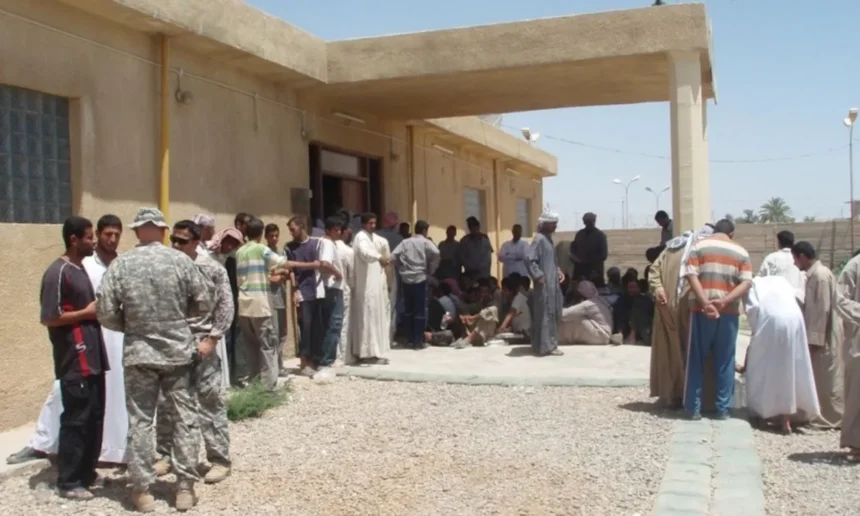
A recent analysis examines what past U.S. efforts to demobilize Iraqi militias can teach policymakers about attempts to disarm Hamas in the Gaza Strip. The author, writing for War on the Rocks, describes how U.S. officials in Iraq sought to persuade armed factions to surrender weapons, accept political participation, and trust a still-fragile state amid ongoing violence. As reported in the article, the central lesson from Iraq is that armed groups rarely disarm unless they either perceive themselves as comprehensively defeated or see a credible path to personal survival and political relevance. According to the analysis, neither of these conditions currently exists for Hamas, complicating calls for rapid demobilization in Gaza.
The article recounts how, in Iraq after 2003, U.S. and coalition authorities attempted to bring various militias into a transition and reintegration process that would move them from armed struggle into political life. As reported by the War on the Rocks author, this involved months of negotiations, confidence-building steps, and policy decisions that tried to balance justice, security, and political inclusion for groups that had fought Saddam Hussein or felt marginalized by the new order. The Iraqi experience is presented as a cautionary case showing that if armed actors believe continued fighting offers better protection or leverage than disarmament, they will resist demobilization and may sustain or escalate violence.
According to the article, the author argues that lessons from Iraq suggest two broad approaches to disarming Hamas. The first is “comprehensive defeat,” in which Hamas is reduced to a point where continued armed resistance is clearly impractical and survivability depends on compliance with new arrangements. The second is creating political and security conditions that Hamas leaders view as preferable to continued conflict, including guarantees for personal safety and some degree of political relevance. The analysis stresses that, in Iraq, such transitions required not only pressure on militias but also the emergence of a governing authority and security architecture that could credibly protect former fighters and their communities.
How Do Iraq’s Experiences Inform the Debate on Hamas?
The War on the Rocks piece draws explicit parallels between Iraq in 2004 and Gaza today, while also highlighting key differences that limit direct transfer of policy templates. As reported by the author, one similarity is the presence of powerful non-state armed groups that have developed social, political, and military structures alongside or in competition with weak state institutions. In Iraq, many militias drew legitimacy from their resistance to Saddam Hussein and from representing communities that felt threatened in the post-invasion order; in Gaza, Hamas has combined armed struggle against Israel with governance roles and social service networks.
According to the article, one critical difference is the nature of the external military presence and the political environment. In Iraq, U.S. forces and international partners were heavily involved in security and governance-building, and the stated goal was to construct a sovereign Iraqi state that could monopolize the use of force. By contrast, the Gaza context involves Israel’s military campaign, deep physical devastation, and unresolved questions about who will govern and police the territory if Hamas is displaced. The author argues that, without a clear and legitimate governing authority in Gaza, any attempt to disarm Hamas risks leaving a vacuum that the group or other armed actors could eventually fill.
The analysis notes that Iraqi militias that agreed to demobilize did so under specific conditions that addressed their fears and interests. As reported in the article, these included respect for their histories and suffering, guarantees that state instruments of violence would not again be turned against them, economic and welfare support for fighters and families, and allowances for limited personal protection forces for leaders. The author suggests that any realistic plan to disarm Hamas would likewise need to address the organization’s security concerns, its desire for political relevance, and the welfare of its members and supporters, though the political sensitivities are even sharper in the Israeli-Palestinian context.
Supporting Details and Expert Insights
The War on the Rocks article details how, in Iraq, the Coalition Provisional Authority and subsequent Iraqi authorities tried to regulate and phase out militias through legal and administrative measures. As reported in the piece, certain militias that agreed to disband and enter a transition process were designated “residual elements” and allowed to exist temporarily while reintegration proceeded. Laws and orders made clear that if they failed to uphold their commitments, they would be outlawed and subject to targeting by security forces. The author notes, however, that these frameworks were undermined when the U.S., coalition militaries, or nascent Iraqi government later abandoned or altered agreements, damaging trust.
According to the analysis, one of the key lessons from Iraq is that demobilization is not purely a military or technical problem but a political one, requiring credible commitments from all sides. The author emphasizes that militant groups calculate costs and benefits: if they believe political processes can protect their interests and that violence will bring diminishing returns, they may choose to transition. Conversely, if they fear retaliation, marginalization, or betrayal, they will maintain arms and structures to safeguard themselves. In Iraq, the article explains, months of confidence-building and carefully designed programs for disabled veterans, widows, and fighters’ welfare were necessary to make disarmament even conceivable.
The piece also underscores that armed groups rarely accept disarmament if they do not see themselves as defeated. The author writes that groups that still view themselves as viable military actors, with support bases and external sponsors, have strong incentives to continue resistance. In the Iraq case, some militias were willing to shift into politics under pressure, while others rejected demobilization and remained spoilers. Applying this lens to Gaza, the article suggests that as long as Hamas retains organizational capacity, ideological commitment, and a belief that it can outlast or adapt to military campaigns, it is unlikely to voluntarily surrender its weapons without either overwhelming defeat or a negotiated arrangement it views as advantageous.
What Are the Implications and Possible Next Steps?
The War on the Rocks analysis argues that calls for rapid demobilization of Hamas are likely unrealistic given today’s conditions on the ground. According to the article, comprehensive defeat would require not only severe military setbacks for Hamas but also the establishment of legitimate political institutions and security forces capable of governing Gaza and providing security to Palestinians. The author notes that, while Hamas may have been heavily degraded militarily, there is no settled, credible framework yet for governance and security in Gaza that could replace its control and undercut its appeal.
The piece concludes that any realistic plan to disarm Hamas must prioritize building a governing authority and security structure that offer “something other than fear” to the movement’s members and constituents. As reported in the analysis, this means constructing arrangements that give Palestinians a stake in stable governance, while also assuring former combatants that disarmament will not expose them to arbitrary repression or abandonment. The Iraqi case demonstrates, the author suggests, that failing to follow through on reintegration promises or leaving political questions unresolved can enable armed groups to regroup and reemerge.
According to the article, policymakers weighing options in Gaza face a difficult choice between seeking comprehensive military defeat of Hamas and crafting political conditions that could persuade its members to transition away from armed struggle. The Iraq experience indicates that neither path is quick or easy, and that partial measures or unfulfilled commitments can prolong conflict rather than end it. As debates continue over Gaza’s future governance and security arrangements, the lessons drawn from Iraq underscore that demobilizing a deeply entrenched militant organization will require sustained political strategy, not only force of arms.