


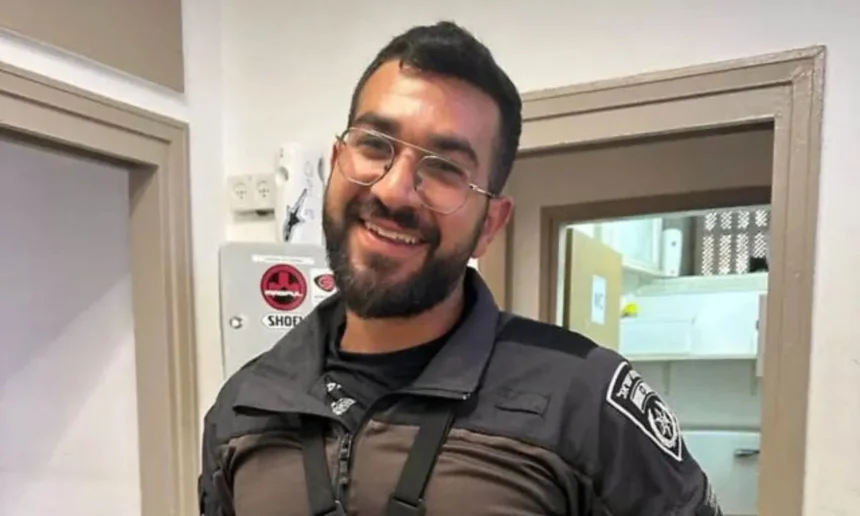
According to the Times of Israel live blog, the Israel Defense Forces (IDF) has confirmed that it is conducting a search operation in the northern Gaza Strip for the remains of Master Sgt. Ran Gvili, described as the last remaining Israeli hostage whose body is still held in Gaza. As reported by the Times of Israel, the operation is focused on the Israeli side of the ceasefire line in the north of the enclave, reflecting a targeted effort based on specific intelligence. The report states that the search began over the weekend after new intelligence indicated that Gvili’s body may have been buried in a Muslim cemetery in eastern Gaza City, in the area of the Shejaiya, Daraj, and Tuffah neighborhoods.
The Times of Israel notes that troops and forensic experts, including military dentists, have been deployed to the area to search the cemetery, locate any human remains matching the intelligence and carry out identification procedures. According to the outlet, the IDF has indicated that it has held intelligence for some time suggesting Gvili’s body might be in that cemetery, but that the information became clearer recently. The clarification reportedly came both from IDF operations on the ground and from information provided by Hamas to Israel through mediators.
The Times of Israel further reports that, while Israeli military officials consider it credible that Gvili’s remains are at the cemetery, they acknowledge that there are additional intelligence leads indicating other possible locations. The live blog entry adds that the IDF estimates the current operation could last several days. In a separate statement cited by the Times of Israel, the Israeli Prime Minister’s Office said the search effort in northern Gaza for Gvili’s body will “continue as long as necessary,” signaling political backing for a prolonged mission if required.
How are officials and parties reacting?
The Times of Israel reports that the operation is being officially characterized by Israeli authorities as part of the broader effort to recover all Israelis killed or abducted during the October 7, 2023, Hamas-led attack and subsequent fighting. According to the outlet, the IDF’s public confirmation that it is searching specifically for Gvili’s body underscores his status as the last remaining hostage whose remains have yet to be recovered and returned to Israel. While the live blog entry focuses primarily on operational details, it notes that the operation follows ongoing exchanges of information with Hamas through mediators, suggesting a framework of indirect contacts around missing and slain Israelis.
Other recent reporting has highlighted Gvili’s symbolic status within Israel. Earlier in January, coverage by policy and regional-security outlets described him as the last hostage held in Gaza and reported that Hamas and the International Committee of the Red Cross had also engaged in efforts to locate his remains in Gaza City. These accounts emphasize that his case has become a focal point in Israeli public discourse about hostages and those killed in the October 7 attack, though the Times of Israel live blog entry itself centers on the IDF’s field search and does not elaborate on domestic political debate.
In its statement, as relayed by the Times of Israel, the Prime Minister’s Office framed the search as a national commitment to return Gvili for burial in Israel. This language aligns with past official messaging that Israel will dedicate significant resources to locating and repatriating the bodies of soldiers and civilians held in Gaza. The live blog entry does not include direct quotes from Gvili’s family or from hostage advocacy groups, and it does not report on any specific international reactions to this particular operation.
Supporting details and background
Policy and regional-affairs analyses published earlier in January state that Gvili, a sergeant first class in Israel’s security forces, was killed while responding to the Hamas-led assault on Israeli communities near the Gaza border on October 7, 2023. These reports say that his body was initially held by Palestinian Islamic Jihad before being transferred to Hamas in Gaza City, where it was allegedly kept in the Zeitoun neighborhood for an extended period. Such accounts provide context for the current hunt for his remains and help explain why multiple search locations and intelligence leads exist.
According to those analyses, searches for Gvili’s body inside Gaza have involved several actors at different points, including Hamas and, reportedly, representatives of the International Committee of the Red Cross, operating under arrangements overseen or monitored by the IDF. These efforts have taken place against the backdrop of a ceasefire framework in Gaza, with the “yellow line” or similar demarcation referenced as the boundary between Hamas-held and IDF-held areas. As reported in these outlets, Gvili’s case has featured prominently in Israeli media and public events, with images of him appearing on posters and campaigns urging the return of all hostages and bodies.
The Times of Israel article notes that the current IDF effort is based on “clearer” intelligence that has emerged recently, but it does not specify operational methods, the precise number of forces involved, or any findings to date. It also emphasizes that while the cemetery in eastern Gaza City is considered a promising lead, Israeli officials are prepared to examine other sites if the ongoing search does not yield results. In addition, the article reports that forensic specialists, including dental experts, are integral to the operation, highlighting the anticipated need to identify remains under challenging conditions.
What are the implications and possible next steps?
According to the Times of Israel, the IDF expects the current search in the northern Gaza Strip to last up to several days, though the Prime Minister’s Office has made clear it is prepared for an open-ended effort. This suggests that, even if the initial operation at the reported cemetery does not produce definitive findings, searches may continue in other areas indicated by intelligence. The reliance on both battlefield intelligence and information conveyed by Hamas via mediators indicates that future developments may depend on additional intelligence-sharing or changes in the indirect contacts between the sides.
If the IDF successfully recovers and identifies Gvili’s remains, Israeli officials are expected to formally announce the outcome and arrange for his burial in Israel, in line with the stated goal of returning him for interment. Given the public and symbolic weight attached to his case, such a development would likely be marked by official ceremonies and public mourning. If the operation fails to find his body at the current site, the Times of Israel reporting points to a scenario in which the search broadens to alternative locations, extending the timeline and potentially sustaining political and public pressure on the government and military to account for the last missing hostage’s remains.
In the broader context of the Gaza ceasefire and negotiations over hostages and prisoners, the focus on Gvili underscores how the fate of individual captives and remains continues to shape diplomatic and security calculations. Future updates from Israeli officials or mediating parties may clarify whether additional coordinated searches, exchanges of information, or arrangements involving international organizations will take place as part of the continuing effort to resolve unresolved hostage and missing-person cases linked to the conflict.
The current operation, as described by the Times of Israel and other recent reporting, places Master Sgt. Ran Gvili’s case at the center of Israel’s ongoing bid to recover the dead and missing from the October 7 attacks and the subsequent war in Gaza. The outcome of the search in northern Gaza, and any follow-on operations, will determine whether Israel can close the chapter on the last hostage whose body has yet to be brought home.