


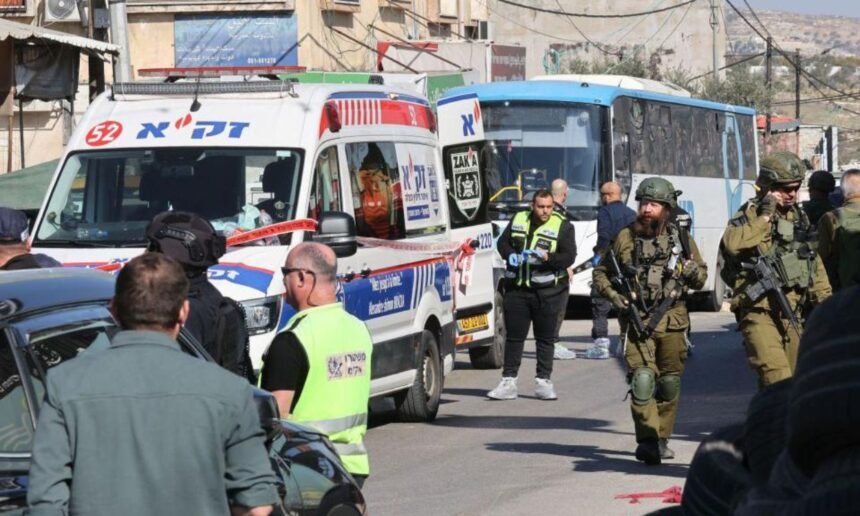
Israeli police shot and killed a Palestinian driver in the central occupied West Bank after officers said he accelerated toward one of them on a main road north of Ramallah. According to multiple news reports, the incident occurred early Sunday near the Ayoun al-Haramiya area along Route 60, a highway that has seen frequent confrontations and military activity since the escalation of violence in the West Bank. The victim was identified by Palestinian authorities as 34-year-old Ammar Majed Hassan Hijazi, a resident of Nablus.
- What do Israeli authorities and Palestinian sources say happened?
- Context and reactions: How has the shooting been received?
- What are Palestinian officials and residents saying?
- How does this fit into the broader security situation?
- Supporting details and related developments
- Implications and future developments: What happens next?
Israeli police said the shooting took place after officers tried to stop a vehicle they described as suspicious and speeding through the area. In their account, an officer approached the car during the stop, at which point the driver allegedly accelerated toward him, prompting the officer to open fire. Police said the vehicle then crashed, and the driver was killed at the scene.
What do Israeli authorities and Palestinian sources say happened?
Israeli police stated that the driver ignored repeated calls to stop and “breached” a security position before the confrontation. They said the officer perceived an immediate threat to his life when the car moved toward him, and that the use of live fire was a defensive response. Media reports citing the police statement noted that the area was quickly sealed off by Israeli forces after the shooting.
Palestinian officials and local media offered a sharply different description, saying Hijazi was driving along the road when police opened fire directly at his vehicle. Palestinian reports said his car collided with a barrier after being hit by bullets and that Israeli forces then seized his body. Health officials and Palestinian news agencies stressed that no Palestinian medical teams were allowed to reach the scene, and that the family was informed of his death through official channels.
Context and reactions: How has the shooting been received?
What are Palestinian officials and residents saying?
Palestinian authorities condemned the killing, describing it as part of a broader pattern of lethal force used by Israeli security forces at checkpoints and along key West Bank roads. Palestinian media reported that witnesses in the area heard multiple rounds of gunfire and saw the road junction closed to traffic for an extended period. Local outlets also said no weapons were reported found in the vehicle, a point they cited to question the level of threat posed at the time of the shooting.
Human rights organizations and Palestinian commentators have cited this and similar incidents in arguing that Israeli forces are too quick to resort to deadly force in situations involving Palestinian motorists. They link the shooting to a wider rise in raids, arrests and settler attacks across the West Bank since late 2023. Monitoring groups say more than a thousand Palestinians have been killed in the territory over that period, with a significant number of deaths occurring at checkpoints or during vehicle-related incidents.
How does this fit into the broader security situation?
The location of the shooting, on a section of Route 60 near Ayoun al-Haramiya, has been the site of past attacks and heightened security operations. Israeli authorities argue that this context requires strict enforcement measures and rapid responses to perceived threats, especially involving speeding or non-compliant vehicles. However, Palestinian organizations say the heavy security presence, frequent roadblocks and aggressive stop-and-search procedures contribute to a climate of fear and confrontation.
The incident comes as Israeli forces continue near-daily operations in and around Ramallah, Nablus, and other West Bank cities, including raids, arrests and road closures. Palestinian residents and officials say such measures have severely restricted movement and heightened tensions, increasing the risk of encounters that turn deadly, such as the shooting of Hijazi.
Supporting details and related developments
In separate reports on the same day, Palestinian and international media noted that Israeli forces detained several Palestinians in raids across different parts of the West Bank. Arrest operations were reported in refugee camps and villages around Hebron, Tulkarem and other areas, underscoring the breadth of Israel’s ongoing security campaign in the territory. Human rights groups say this campaign has coincided with expanded settlement activity and more frequent attacks by Israeli settlers on Palestinian communities.
Humanitarian agencies and rights monitors continue to warn that the sustained level of violence and restrictions is deepening the crisis in the West Bank. They point to ripple effects on daily life, including difficulties accessing work, schools and medical care, as well as the psychological impact of recurrent shootings and military operations. Against this backdrop, each new incident involving lethal force—such as the killing of a driver at a roadside stop—adds to mistrust and anger among Palestinians.
Implications and future developments: What happens next?
Will there be an investigation into the shooting?
Israeli police typically open internal reviews into incidents where officers use live fire, especially when they result in death. In this case, authorities have indicated that the shooting took place in response to an immediate threat, a characterization that could shape the scope and outcome of any inquiry. Palestinian officials and rights groups, however, have repeatedly called for independent investigations into similar incidents, arguing that internal processes rarely lead to accountability.
Calls for transparency in this case are likely to focus on clarifying the sequence of events: whether the driver posed a direct threat at the moment he was shot, what warnings were given, and whether less-lethal options were considered. Human rights organizations are also expected to scrutinize any available video or eyewitness testimony, comparing it to the official police narrative.
How might this affect tensions in the West Bank?
The killing of Hijazi is likely to fuel further tensions in the Ramallah and Nablus areas, where anger over repeated shootings and raids is already high. Local protests or demonstrations could follow, particularly if the body is returned for burial and large crowds gather to mourn and condemn the incident. Palestinian leaders may also raise the case in international forums as part of broader efforts to spotlight alleged excessive use of force by Israeli security personnel.
In the wider context, the incident underscores the fragility of security conditions in the West Bank at a time when political prospects for de-escalation remain limited. Without changes in rules of engagement, accountability mechanisms, or the overall pattern of military operations and settler violence, rights groups and analysts warn that similar deadly encounters involving Palestinian motorists and Israeli forces are likely to continue.
In summary, available reporting indicates that Israeli police fatally shot 34-year-old Palestinian driver Ammar Majed Hassan Hijazi on a West Bank road after alleging he accelerated toward an officer, while Palestinian authorities and witnesses contest key elements of the police account, placing the incident within a broader surge in lethal force and military activity across the occupied territory.